
What Is the ㅂ Irregular in Korean?

The ㅂ irregular is a group of words whose stem-final ㅂ changes to 우 before an ending that starts with a vowel. The stem is the word minus 다, so the stem of 덥다 is 덥. Add the polite ending 어요 and the result is 더우 + 어요, which contracts to 더워요 (deowoyo). Before a consonant ending, the ㅂ stays: 덥고, 덥습니다, 덥지만.
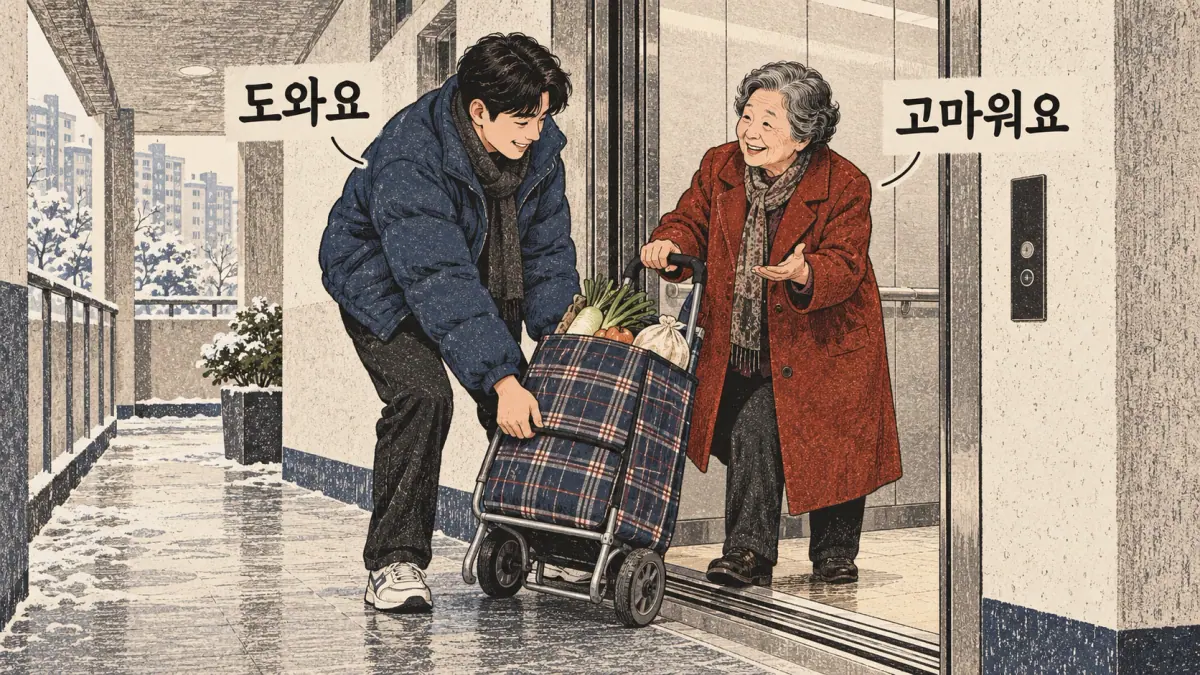
Two exceptions take 와 instead of 워: 돕다 (to help) gives 도와요, and 곱다 (to be pretty) gives 고와요. Every other word in the class takes 워, even after ㅏ: 고맙다 gives 고마워요 and 가깝다 gives 가까워요. The lesson Korean ㅂ irregular verbs and adjectives gives the full rule step by step: a trigger table of nine endings, 20 common words, why old texts write 고마와, and a 10-item practice set. The word list comes next.
Which Words Are ㅂ Irregular?
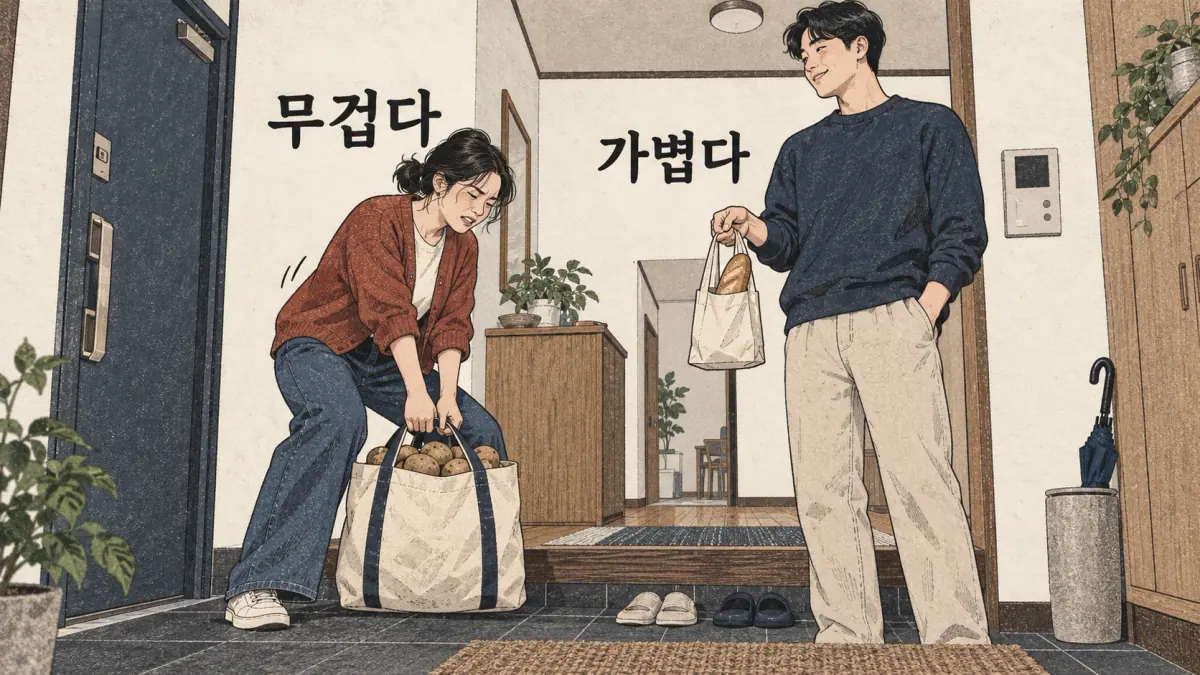
The site's verb dictionary contains 36 ㅂ irregular words, more than any other class: 32 adjectives (including 곱다) and 4 action verbs. The tables group them by ending pattern, because words that share an ending change in the same way. Learning one pattern teaches the whole group. Each table gives the polite present, the polite past and the -(으)면 form ("if").
Which One-Syllable Stems Are ㅂ Irregular?
These four words are the most common ㅂ adjectives. Their stems have one syllable, and they are learned first.
| Dictionary form | Meaning | Polite present | Polite past | If (-(으)면) |
|---|---|---|---|---|
| 덥다 | hot (weather) | 더워요 | 더웠어요 | 더우면 |
| 춥다 | cold (weather) | 추워요 | 추웠어요 | 추우면 |
| 맵다 | spicy | 매워요 | 매웠어요 | 매우면 |
| 쉽다 | easy | 쉬워요 | 쉬웠어요 | 쉬우면 |
Which Words End in -겁다, -갑다, -깝다, -볍다 or -껍다?
These adjectives describe weight, temperature, thickness and distance. The stem ends in 거, 가, 까, 벼 or 꺼 plus ㅂ, and the change gives -워.
| Dictionary form | Meaning | Polite present | Polite past | If (-(으)면) |
|---|---|---|---|---|
| 무겁다 | heavy | 무거워요 | 무거웠어요 | 무거우면 |
| 가볍다 | light | 가벼워요 | 가벼웠어요 | 가벼우면 |
| 두껍다 | thick | 두꺼워요 | 두꺼웠어요 | 두꺼우면 |
| 뜨겁다 | hot (to touch, water) | 뜨거워요 | 뜨거웠어요 | 뜨거우면 |
| 차갑다 | cold (to touch) | 차가워요 | 차가웠어요 | 차가우면 |
| 가깝다 | near | 가까워요 | 가까웠어요 | 가까우면 |
| 즐겁다 | enjoyable | 즐거워요 | 즐거웠어요 | 즐거우면 |
| 싱겁다 | bland | 싱거워요 | 싱거웠어요 | 싱거우면 |
| 반갑다 | glad to meet | 반가워요 | 반가웠어요 | 반가우면 |
Which ㅂ Adjectives Describe Feelings and Difficulty?
This group, with endings such as -렵다, -엽다, -섭다 and -맙다, covers feelings and ease: difficulty, cuteness, fear, darkness, longing and thanks.
| Dictionary form | Meaning | Polite present | Polite past | If (-(으)면) |
|---|---|---|---|---|
| 어렵다 | difficult | 어려워요 | 어려웠어요 | 어려우면 |
| 귀엽다 | cute | 귀여워요 | 귀여웠어요 | 귀여우면 |
| 무섭다 | scary | 무서워요 | 무서웠어요 | 무서우면 |
| 아쉽다 | regrettable | 아쉬워요 | 아쉬웠어요 | 아쉬우면 |
| 어둡다 | dark | 어두워요 | 어두웠어요 | 어두우면 |
| 그립다 | to miss | 그리워요 | 그리웠어요 | 그리우면 |
| 고맙다 | grateful | 고마워요 | 고마웠어요 | 고마우면 |
Which Words End in -럽다, -롭다 or -답다?
Three of these endings are suffixes that build adjectives from nouns: 자랑 (pride) + -스럽다 gives 자랑스럽다, 평화 (peace) + -롭다 gives 평화롭다, and 학생 (student) + -답다 gives 학생답다. Every adjective made with them is ㅂ irregular, so a new word you have not met still follows the rule. The -럽다 words such as 더럽다 and 시끄럽다 are not built from a noun this way, but they change in exactly the same way.
| Dictionary form | Meaning | Polite present | Polite past | If (-(으)면) |
|---|---|---|---|---|
| 더럽다 | dirty | 더러워요 | 더러웠어요 | 더러우면 |
| 시끄럽다 | noisy | 시끄러워요 | 시끄러웠어요 | 시끄러우면 |
| 부럽다 | envious | 부러워요 | 부러웠어요 | 부러우면 |
| 부끄럽다 | shy, ashamed | 부끄러워요 | 부끄러웠어요 | 부끄러우면 |
| 부드럽다 | soft | 부드러워요 | 부드러웠어요 | 부드러우면 |
| 어지럽다 | dizzy | 어지러워요 | 어지러웠어요 | 어지러우면 |
| 자랑스럽다 | proud | 자랑스러워요 | 자랑스러웠어요 | 자랑스러우면 |
| 새롭다 | new | 새로워요 | 새로웠어요 | 새로우면 |
| 외롭다 | lonely | 외로워요 | 외로웠어요 | 외로우면 |
| 괴롭다 | painful, distressing | 괴로워요 | 괴로웠어요 | 괴로우면 |
| 아름답다 | beautiful | 아름다워요 | 아름다웠어요 | 아름다우면 |
Which Action Verbs Are ㅂ Irregular?
Four action verbs and one adjective complete the list. 돕다 and 곱다 are the 와 exceptions, which is why their forms differ from the pattern above.
| Dictionary form | Meaning | Polite present | Polite past | If (-(으)면) |
|---|---|---|---|---|
| 돕다 | help | 도와요 | 도왔어요 | 도우면 |
| 곱다 | pretty, fine | 고와요 | 고왔어요 | 고우면 |
| 줍다 | pick up | 주워요 | 주웠어요 | 주우면 |
| 굽다 | grill, roast | 구워요 | 구웠어요 | 구우면 |
| 눕다 | lie down | 누워요 | 누웠어요 | 누우면 |
Group sizes are 4, 9, 7, 11 and 5, which adds up to 36. The numbers describe the site's word list, not the whole language. Some regular words look exactly like these, so the next section separates them.
Which ㅂ Words Are Regular?

Regular ㅂ words keep their ㅂ before every ending: 입다 (to wear) gives 입어요, never 이워요. The list is short, and it is learned as a list. The test is simple: check the polite present. If it ends in 워요 or 와요, the word is irregular. If the ㅂ is still there before the vowel, as in 입어요 [이버요], it is regular.
| Regular word | Meaning | Polite present | Past | If (-(으)면) |
|---|---|---|---|---|
| 입다 | wear | 입어요 | 입었어요 | 입으면 |
| 잡다 | catch, hold | 잡아요 | 잡았어요 | 잡으면 |
| 좁다 | be narrow | 좁아요 | 좁았어요 | 좁으면 |
| 접다 | fold | 접어요 | 접었어요 | 접으면 |
| 씹다 | chew | 씹어요 | 씹었어요 | 씹으면 |
Most adjectives that end in -ㅂ다 are irregular, with 좁다 as the common exception. Most action verbs ending in -ㅂ다 are regular, with 돕다, 줍다, 굽다 and 눕다 as the exceptions in the other direction. One homograph needs care: 굽다 meaning "to grill" is irregular (구워요), but 굽다 meaning "to be bent" is regular (굽어요). The page regular verbs that look irregular collects these traps. Next, hear the forms.
How Do the Common ㅂ Forms Sound?

The ten forms below are the ones learners need first. Listen to the pattern: every one ends in 워요 except 도와요.
In speech there is nothing extra to learn: the ㅂ is gone from both the spelling and the sound, so 더워요 is read [더워요]. When the stem keeps its ㅂ before a consonant, as in 덥습니다, the spoken form is [덥씀니다]. Words you can hear are easier to use, so the following section places them in context.
Where Do the ㅂ Words Appear in Context?
The ㅂ words cluster in a few everyday topics, and each topic page shows them in full sentences. Weather and temperature are in hot and cold in Korean, which uses 덥다, 춥다, 뜨겁다 and 차갑다. Feelings such as 외롭다, 부럽다 and 그립다 appear in the adjective lists, and ease and difficulty (쉽다, 어렵다) are among the first adjectives most learners need.
Individual dictionary pages list every form of a word, with audio and example sentences:
- 줍다 (to pick up): jupda conjugation
- 돕다 (to help): dopda conjugation
- 굽다 (to grill; to roast): gupda conjugation
- 두껍다 (thick): dukkeopda conjugation
- 무겁다 (heavy): mugeopda conjugation
- 가볍다 (light): gabyeopda conjugation
- 쉽다 (easy): swipda conjugation
- 어렵다 (difficult): eoryeopda conjugation
The other irregular classes are on the Korean irregular verbs hub. A ㅂ irregular word is easiest to remember in a sentence, so pick two or three words from each table and say them aloud with the audio above.
Frequently Asked Questions
Which ㅂ verbs take 와 instead of 워? Only 돕다 (to help) and 곱다 (to be pretty) take 와: 도와요 and 고와요. The Hangul Orthography (Article 18) makes this exception for their one-syllable stems 돕 and 곱. Every other ㅂ irregular word takes 워, even after ㅏ, as in 고마워요 and 가까워요. Older books may still show 고마와요.
Is 입다 a ㅂ irregular word? No. 입다 (to wear) is regular: 입어요, 입었어요, 입으면. The ㅂ stays. Other regular -ㅂ다 words are 잡다, 좁다, 접다 and 씹다. The check is the polite present: ㅂ irregular words end in 워요 or 와요, and regular ones keep ㅂ, as in 입어요.
Which ㅂ irregular words should a beginner learn first? Start with 덥다, 춥다, 쉽다, 어렵다, 맵다, 고맙다 and 귀엽다, because they appear in the first weeks of lessons on weather, food, feelings and thanks. Then add 무겁다, 가깝다, 무섭다 and the action verb 돕다. The patterns repeat, so later words come easily.
Do ㅂ irregular words change before consonants? No. Before a consonant, the stem keeps its ㅂ: 덥고 (hot and), 덥습니다 (formal), 덥지만 (hot but). The change to 우 happens only before an ending that starts with a vowel, including the 으 of -(으)면 and -(으)ㄴ, as in 더우면 and 더운 날.
How many ㅂ irregular words are there? The site's verb dictionary lists 36: 32 adjectives and 4 action verbs. The true number is larger, because the suffixes -롭다, -스럽다 and -답다 build new adjectives that follow the same rule. For beginners, the pattern groups in the tables matter more than the exact count.