
Korean Daily Life Vocabulary at a Glance
Korean daily life vocabulary is the set of nouns for the things you handle every day: rooms, clothes, meals, shops, money, phones, medicine and cosmetics. The eight pages are ordered by how soon a visitor or new resident needs them, with home and shopping first and money, health and beauty later. The table shows each page at a glance.
| Page | Words | Level | Groups inside |
|---|---|---|---|
| House and Home | 50 | A1 | Rooms, house structure, doors and floors, types of housing |
| Clothing | 50 | A1 | Tops, bottoms, outerwear, shoes and socks |
| Daily Routines | 40 | A1 | Morning, meals, work or school, evening |
| Shopping | 45 | A1 | Shops, prices and discounts, paying, returns |
| Money and Banking | 45 | A2 | Notes and coins, cash and cards, savings and loans, taxes |
| Technology and Internet | 45 | A1 | Phones, computers, the internet, accounts |
| Health and Medicine | 50 | A2 | Departments, symptoms, medicine, the doctor's visit |
| Beauty and K-Beauty Vocabulary | 30 | A2 | Makeup, skincare, hair salon, cosmetics |
The levels are editorial estimates, not official levels. The cards below show each page with its size, level and a lead word.






Which List Should You Open First?
Open the list that matches what you are about to do. Moving into a flat needs the home and money lists, a trip to the doctor needs the health list, and a shopping day needs the shopping and clothing lists. The table matches situations to lists.
| Situation | Open first | Then add |
|---|---|---|
| Moving into a flat | House and Home | Money and Banking, Technology and Internet |
| Shopping for clothes | Clothing | Shopping |
| Feeling unwell | Health and Medicine | emergency phrases |
| Describing your day | Daily Routines | Food and Drink |
If you have not studied the first hundred words, begin with Most Common Korean Words. The home list is the first stop.
House and Home
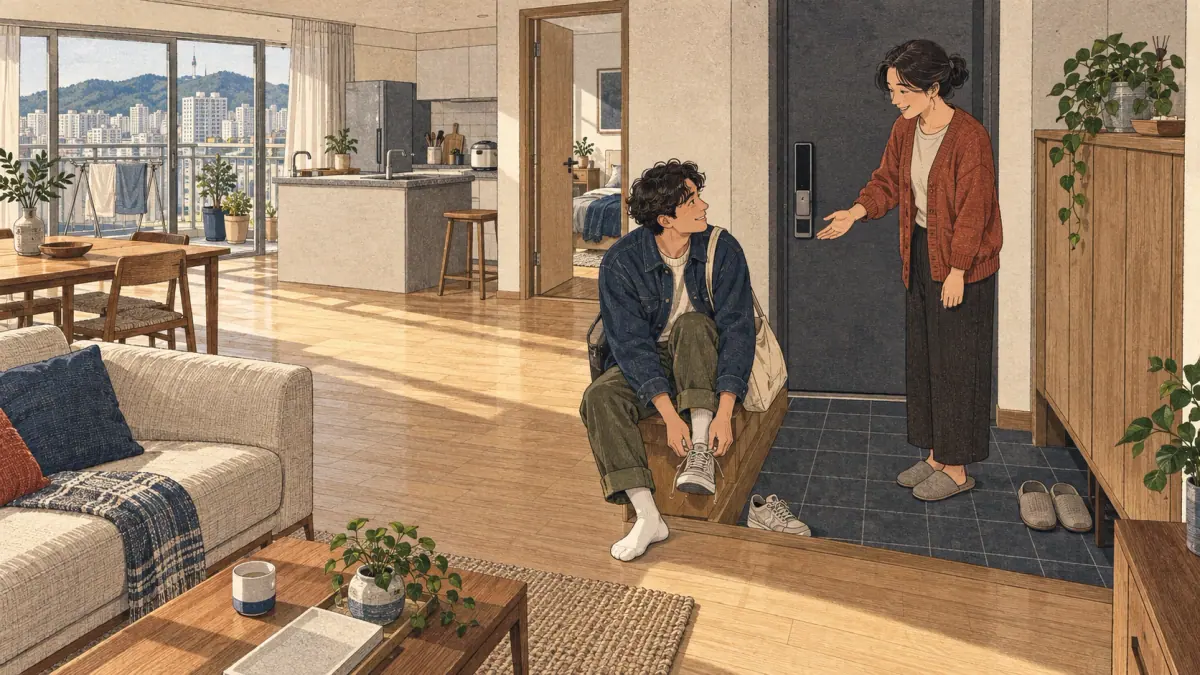
House and Home (A1, 50 words) names rooms, the structure of a house, doors, windows and floors, and the types of housing. It includes features with no exact English twin, such as 현관 (hyeongwan, the entryway where shoes come off) and 온돌 (ondol, underfloor heating). Both explain why Korean homes feel different from Western ones.
이불 (ibul) is a native Korean word for a quilt or duvet; at night it goes on a bed or over a mattress laid on the floor. Learn the home words before the money list, because renting uses both. The next list covers the things you put on.
What Is in the Clothing List?
Clothing (A1, 50 words) covers tops, bottoms, outerwear, shoes and socks, underwear, sizes and traditional hanbok pieces. It also explains which verb goes with which item, since Korean uses 입다 for clothes and 신다 for shoes. A child page, Korean Accessories and Jewelry Vocabulary, adds rings, bags, hats and glasses.
Many clothing words are loanwords, so you can guess 티셔츠 and 코트 from English. The routine list uses clothes and meals together.
Daily Routines
Daily Routines (A1, 40 words) arranges words by the hours of the day: morning, meals, work or school, and evening. It is the list to use when you want to say what you do from waking to sleep. Note that 아침 means both morning and breakfast, and 저녁 means both evening and dinner. The shopping list comes next.
What Is in the Shopping List?
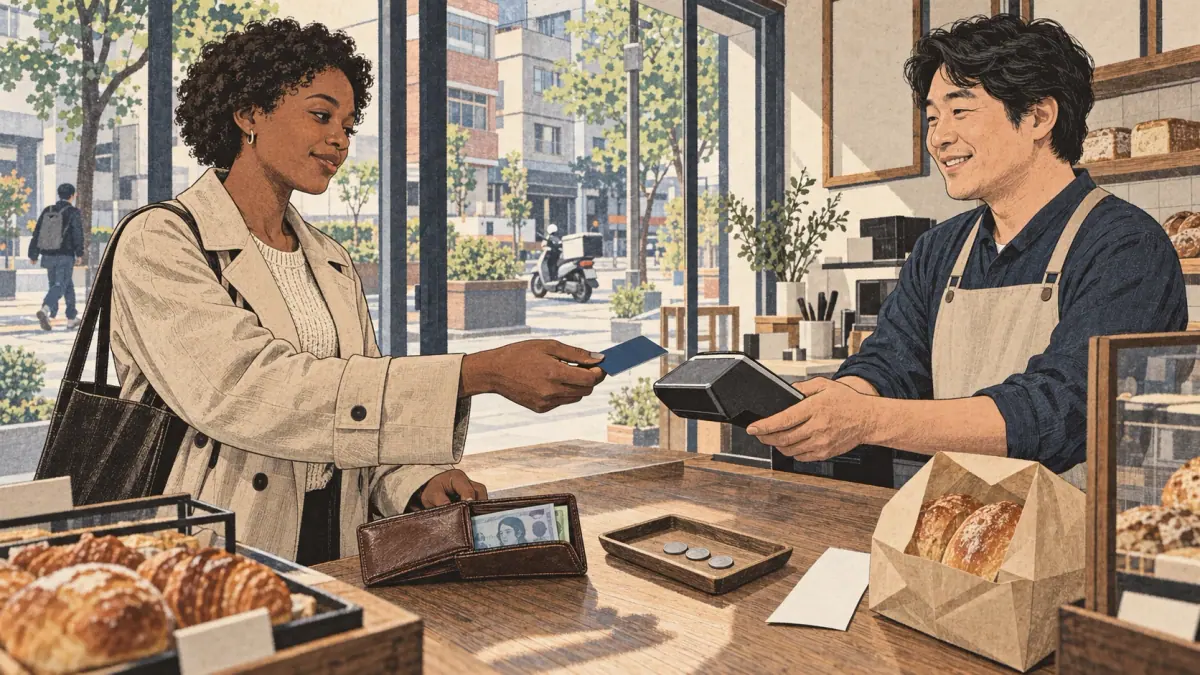
Shopping (A1, 45 words) covers shops and stores, prices and discounts, paying, and returns and receipts. It pairs with the shopping phrases page, which gives whole sentences for asking a price. The prices and money page teaches the numbers you need to read a price tag.
Money and Banking
Money and Banking (A2, 45 words) covers notes and coins, cash and cards, savings and loans, and taxes and fees. Words such as 계좌 (account) and 통장 (bankbook) appear on forms in a bank, and most are Sino-Korean, so they are short and combine easily, as in 계좌 이체 (bank transfer). The money list needs the numbers first, so open the numbers section if you have not.
What Is in the Technology List?
Technology and Internet (A1, 45 words) covers phones, computers, the internet, and accounts and passwords. This is the loanword-heavy list: English borrowings such as 컴퓨터 and 스마트폰 sit side by side with Sino-Korean words such as 비밀번호 (password). Many daily-life words are loanwords, such as 컴퓨터, 에어컨 and 샴푸, so you can often guess them from English.
에어컨 (eeokeon) means air conditioner. It is a loanword shortened from air conditioner.
Health and Beauty
Health and Medicine (A2, 50 words) covers hospital departments, symptoms, medicine and the doctor's visit, and it links to five deeper pages on symptoms, the pharmacy, the dentist, mental health and emergencies. Beauty and K-Beauty Vocabulary (A2, 30 words) covers makeup, skincare, hair salon and cosmetic words.
병원 (byeongwon) means hospital. It is a Sino-Korean word made from the syllables 병 (illness) and 원 (institution). This page does not give medical advice: it teaches words.
What Do All the Lists Have in Common?
Every published list uses the same five parts: Hangul, Revised Romanization, an English meaning, audio and an example sentence. The audio is generated with text-to-speech and checked by a Korean teacher before publication. The romanization is a learning aid, never the only form.
Nouns, adverbs and expressions live in these lists, and verbs and adjectives live in the verbs hub, because they change their endings. See common verbs for the most useful ones. Pages in other topics follow the same layout.
Practice: Flashcards and Worksheet
Practise with the vocabulary flashcard decks and print sheets from the vocabulary worksheets page. Progress in the decks is saved only in your browser.
Where to Go Next
Return to the Korean Vocabulary hub for the other topics, such as People and Relationships and Food and Drink. When you finish one daily life page, open the next from the table above. These eight pages are the Korean daily life vocabulary for a first year in Korea.
Frequently Asked Questions
Which List in Korean Daily Life Vocabulary Should I Start With?
Start with House and Home if you are moving to Korea, Shopping if you are visiting, and Clothing if you plan to shop for clothes. Each takes about five days at 10 words a day. Then add Money and Banking, because most daily tasks involve paying for something.
How Are the Lists in Korean Daily Life Vocabulary Organised?
Each page holds 30 to 50 words in four or five groups, with Hangul, Revised Romanization, an English meaning, audio and an example sentence. The groups follow how you meet the words in life, such as the order of a morning or the steps of a doctor's visit. The levels are editorial estimates.
Do These Lists Include Verbs and Adjectives?
Mostly nouns. Verbs and adjectives are listed separately in the verbs hub, which shows their conjugation. A few verbs appear in example sentences, such as 입다 for clothes, and the lists link to the verb pages instead of repeating conjugations, so each word has one home.
Where Can I Find Flashcards and Worksheets for These Topics?
The vocabulary flashcard decks page lists every deck, and the vocabulary worksheets page lists the printable sheets. Decks for some daily life pages are still planned, so check the deck directory when you finish a list. The tables on each page can also be copied by hand.