
Korean Counters for Times and Floors: the Essentials
A counter is a word that follows a number to say what the number counts. 번 and 층 count two different things: occasions and levels of a building. They are grouped here because both take a Sino-Korean series in at least one use, and learners often pick the wrong number system for them.
| Counter | Counts | Number system | Example | Question |
|---|---|---|---|---|
| 번 | times, occasions | native | 한 번, 두 번, 세 번 | 몇 번 |
| 번 | numbered items | Sino-Korean | 삼 번 버스 | 몇 번 |
| 층 | floors | Sino-Korean | 삼 층, 지하 일 층 | 몇 층 |
Native numbers are the series 하나, 둘, 셋 that shorten to 한, 두, 세 before a counter. Sino-Korean numbers are the series 일, 이, 삼 borrowed from Chinese. The first use of 번 follows the native series. The second use and 층 follow the Sino series.
Ground-floor details are worth learning early. In Korea, the ground floor is 일 층, the floor above it is 이 층, and the floors below are 지하 일 층, 지하 이 층. The roof is 옥상. This is the same logic as the American "first floor".
Pages in This Group
Two lessons cover the counters. Each teaches the number forms, the question word, sentences with audio and a practice set.
Korean counter beon (번): count times and number things teaches 한 번, 두 번 and 세 번 for frequency, then shows how bus lines, exits and phone-style numbers switch to Sino-Korean (삼 번 버스). It explains 몇 번, the difference between 한 번 (once) and 한번 (as an adverb "try"), and the ordinal suffix 번째.
Korean counter cheung (층): how to say floors in Korean teaches 일 층 to 십 층, 지하 for basements and 몇 층 in elevators and hotels. It also covers the habit of labelling the 4th floor F, because 사 sounds like the word for death.
How Do 번 and 층 Differ in Number System?
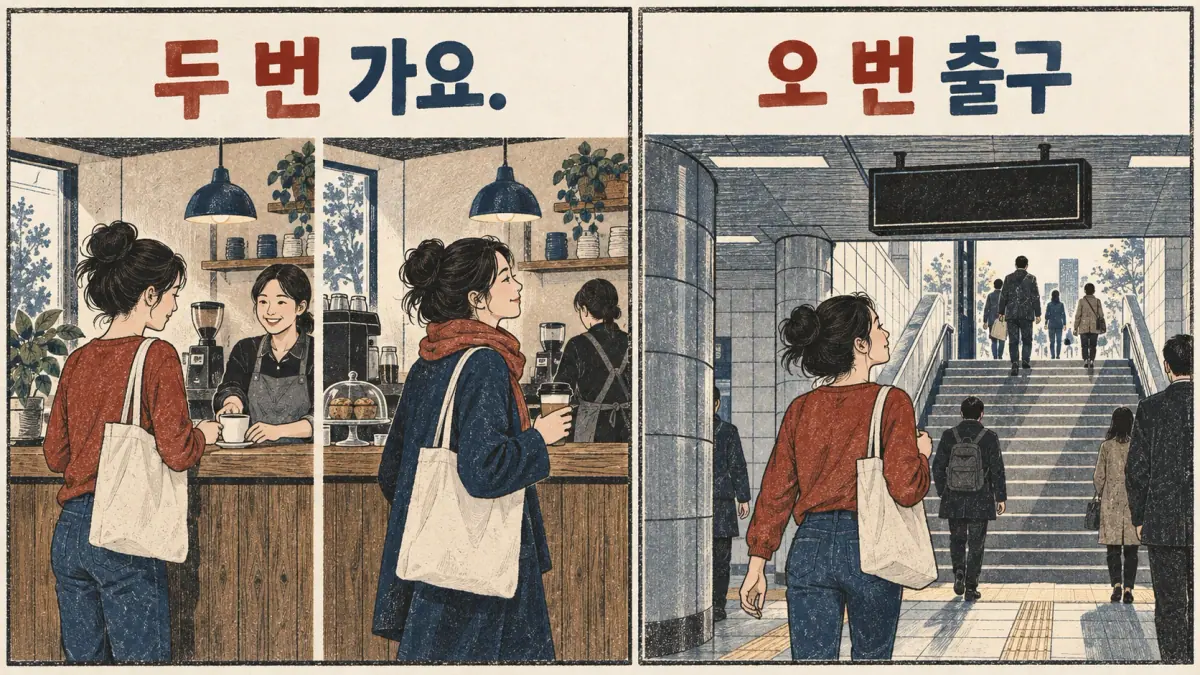
번 takes native numbers when it counts and Sino-Korean numbers when it labels, while 층 always takes Sino-Korean numbers. The rule that separates them is meaning: counting how many uses a native series, and naming a position uses a Sino series.
| Use | Counter | Series | Example |
|---|---|---|---|
| How many times | 번 | native | 두 번 가요. (I go twice.) |
| Item in a list | 번 | Sino-Korean | 오 번 출구 (exit 5) |
| Floor of a building | 층 | Sino-Korean | 오 층이에요. (It is the fifth floor.) |
| Ordinal "-th" | 번째 | native | 세 번째 (the third time) |
The ordinal suffix 번째 attaches to a native number and turns 번 into "the nth time": 첫 번째 (the first), 두 번째 (the second), 세 번째 (the third). The number words for ordinals are on ordinal numbers in Korean. Next, a look at a place where both counters meet.
Elevator and Apartment Phrases
Elevators use 층 with Sino-Korean numbers, and station exits use 번 with Sino-Korean numbers. These five lines cover most situations.
| Korean | Meaning |
|---|---|
| 몇 층 가세요? | Which floor are you going to? |
| 오 층 눌러 주세요. | Please press 5. |
| 지하 일 층에서 내려요. | I get off at B1. |
| 이십 층에 살아요. | I live on the 20th floor. |
| 삼 번 출구로 나가세요. | Please exit through exit 3. |
The Sino-Korean series appears in every row except the question, because the answer to 몇 층 is always a Sino-Korean number. Next comes the counting use of 번, which takes native numbers instead.
How Do You Say Once, Twice and Three Times?
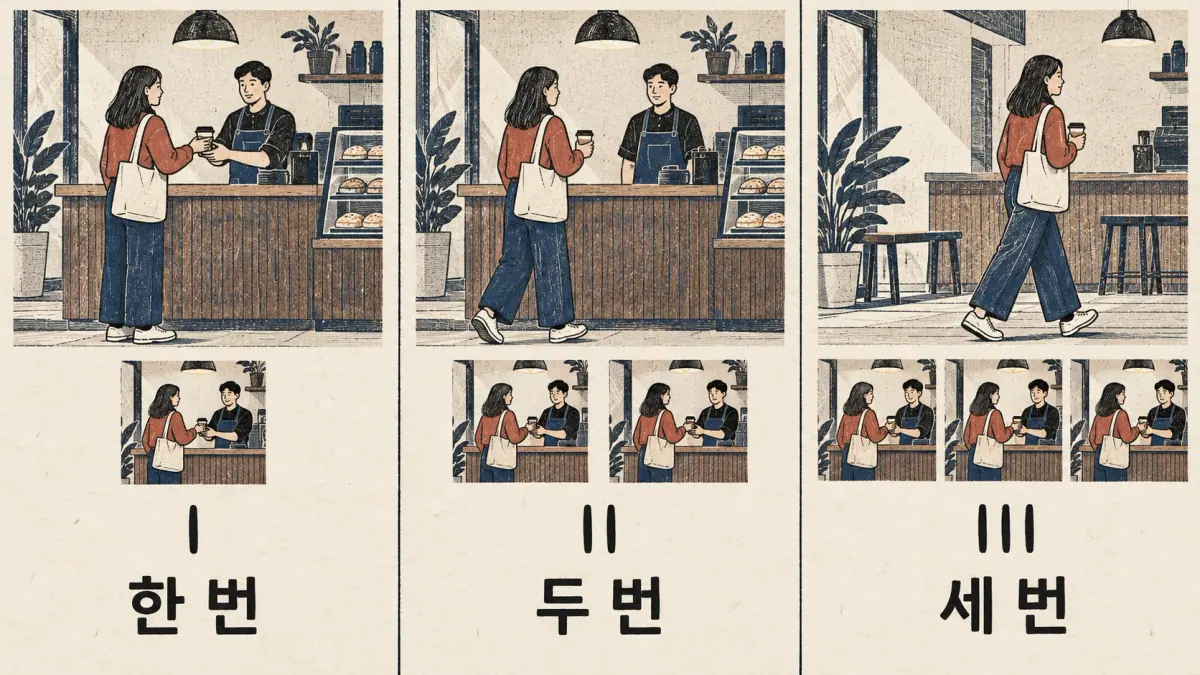
To say how many times, put a native number before 번: 한 번 (once), 두 번 (twice), 세 번 (three times). The sentence puts the frequency before the verb, as in 한국에 두 번 갔어요 (I went to Korea twice). To ask, use 몇 번, which is spoken [멷뻔].
| Times | Korean | Example sentence |
|---|---|---|
| once | 한 번 | 한 번 가 봤어요. |
| twice | 두 번 | 두 번 먹었어요. |
| three times | 세 번 | 일주일에 세 번 운동해요. |
| how many times | 몇 번 | 몇 번 갔어요? |
The phrase 일주일에 세 번 means "three times a week", with 에 meaning "per". This pattern applies to any period: 하루에 두 번 (twice a day) and 한 달에 한 번 (once a month).
Why Do Some Buildings Skip the Fourth Floor?
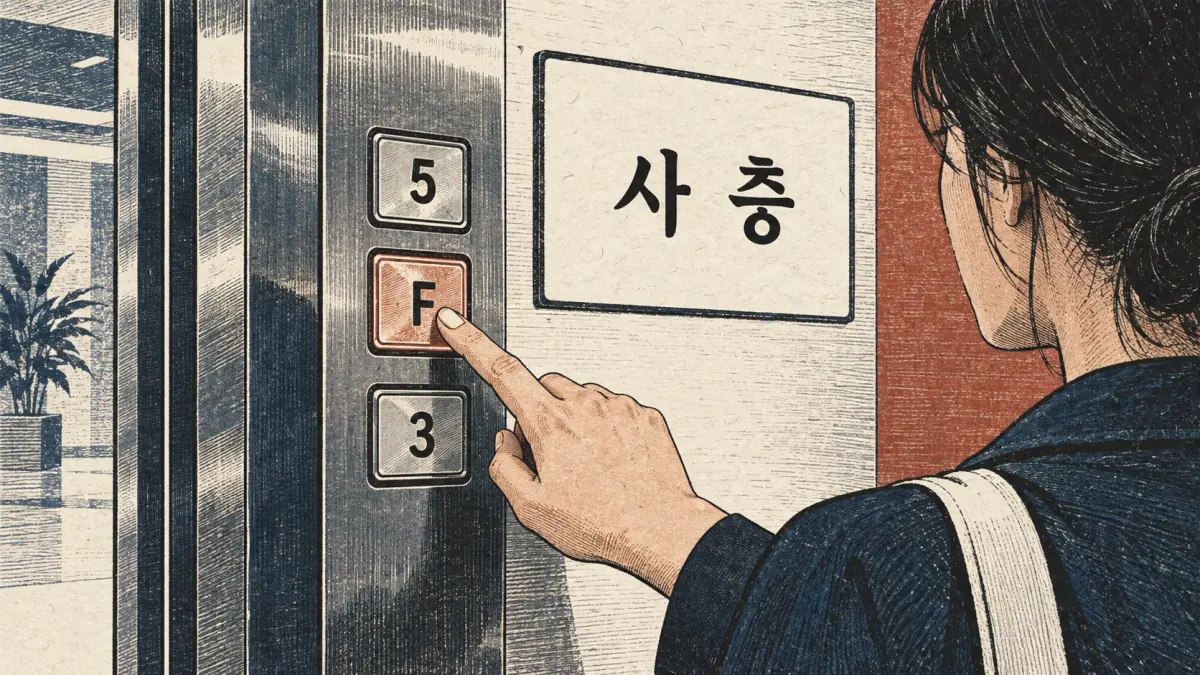
Many buildings in Korea label the fourth floor F instead of 4, or skip it, because the Sino-Korean word for four, 사, sounds like the word for death (死). The practice is a custom, not a rule, and it is not universal. The floor still exists, and you can still say 사 층. In a hospital or a hotel, the buttons may read 3, F, 5. If you want to confirm a floor, ask 몇 층이에요? and listen to the answer.
The habit is a good reminder that floors use Sino-Korean numbers all the way through, because the pun only works with 사. Some tall buildings apply the same habit to floors such as 14 and 24, though practice varies from building to building. When you give an address, always say the floor number as it appears on the door or the lift, not as you expect it to be.
Which Counter Should You Learn First?
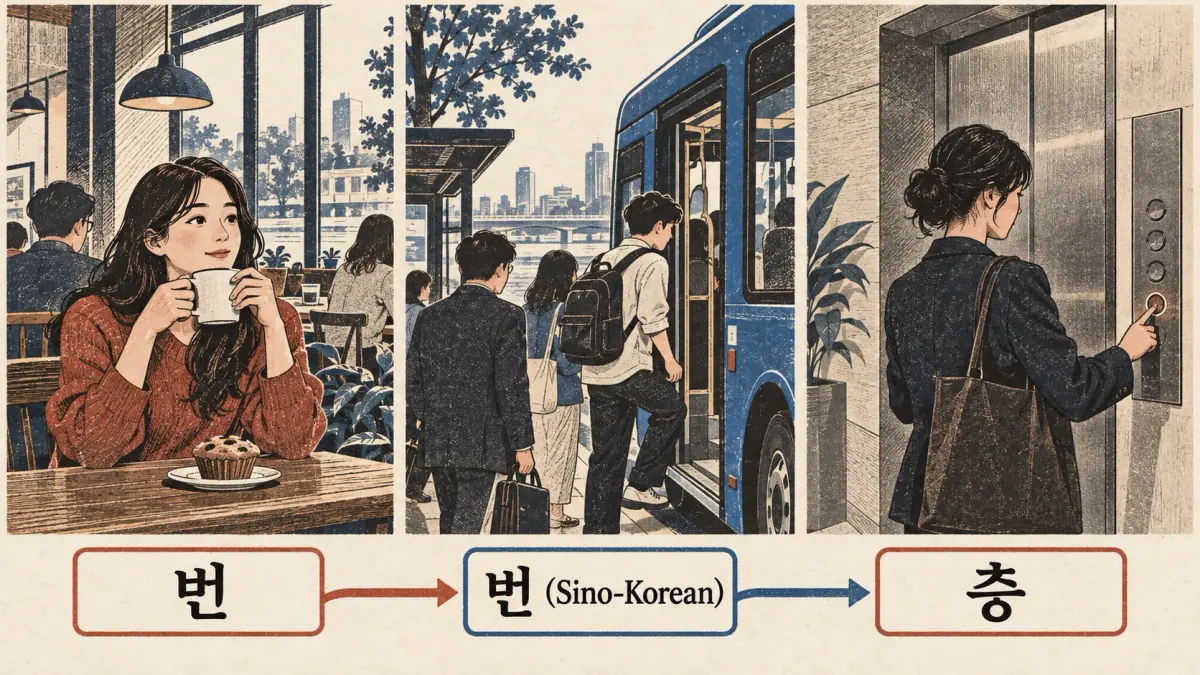
Learn 번 first, because you use it for frequency and for numbered items in daily travel and shopping, and add 층 right after because buildings need it. Together the two counters cover most of the "when" and "where" questions a visitor to Korea asks.
| If you want to... | Start with |
|---|---|
| say how many times you went somewhere | 번 |
| take a bus or subway exit | 번 (Sino-Korean) |
| find a shop in a mall or a room in a hotel | 층 |
| say which time is the first, second, third | 번째 |
Keep both groups of numbers ready. The native series is in native Korean numbers 1-10, and the Sino series is in Sino-Korean numbers 1-100. Learners who master the two series first rarely confuse the two uses of 번.
When you finish both lessons, you will know the Korean counters for times and floors that a beginner meets in practice. Return to Korean Counters to pick the next group.
Frequently Asked Questions
Why does 번 take two number systems?
번 has two jobs. When it counts occasions, it takes native numbers: 두 번 means twice. When it labels an item in a list, such as a bus line or exit, it behaves like a name tag and takes Sino-Korean numbers: 삼 번 버스 means bus number 3. Meaning, not grammar, decides which series you use.
How do I say the ground floor?
Say 일 층, written 1층. Korean buildings treat the ground floor as the first floor, the same as in American English. Floors below ground use 지하 before the number, as in 지하 일 층 (B1). The roof is 옥상. In a lift, the button for ground level is usually labelled 1.
Is there a 4th floor in Korean buildings?
Often yes, but many buildings label it F or skip it, because 사 (4) sounds like the Sino-Korean word for death. The floor still exists and the counter still works: 사 층. When you ask 사 층에 가요?, locals understand. If you cannot find a 4 button, look for an F.
How do I say "twice"?
Say 두 번. The native number 두 (two) comes before 번, so once is 한 번, twice is 두 번 and three times is 세 번. To ask how many times, say 몇 번이에요? or 몇 번 갔어요? Adding the particle 만 limits it to that count: 두 번만 means only twice.
How do I say the floor in an elevator?
Ask 몇 층 가세요? when you hold the buttons, or say 오 층 눌러 주세요 to ask someone to press floor 5. Use the Sino-Korean number with 층. If you are going down, add 지하: 지하 이 층 means second basement. Say 내릴게요 to say that you will get out.