
What Is the ㅎ Irregular in Korean?
The ㅎ irregular is a class of adjectives whose stem-final ㅎ disappears before an ending that starts with a vowel. When the ending is 아 or 어, the stem vowel and the ending also merge into ㅐ. Take 그렇다. The stem is 그렇. Before 어요 the ㅎ drops, leaving 그러, and 그러 + 어요 contracts to 그래요 (geuraeyo). Before a consonant, the stem is unchanged: 그렇고, 그렇지만, 그렇습니다.
The class has two parts, and the second part is the one learners forget. Before 아 or 어, the ㅎ drops and the vowel becomes ㅐ (빨개요). Before 으, as in the modifier -(으)ㄴ or the if form -(으)면, the ㅎ drops with no vowel change (빨간, 빨가면). The table traces 빨갛다 through six endings.
| Ending | 빨갛다 (be red) | What happens |
|---|---|---|
| -아요/어요 (polite present) | 빨개요 | ㅎ drops, vowel becomes ㅐ |
| -았/었어요 (past) | 빨갰어요 | ㅎ drops, vowel becomes ㅐ |
| -(으)ㄴ (before a noun) | 빨간 | ㅎ drops, no vowel change |
| -(으)면 (if) | 빨가면 | ㅎ drops, no vowel change |
| -고 (and) | 빨갛고 | no change: consonant ending |
| -습니다 (formal) | 빨갛습니다 | no change: consonant ending |
The lesson Korean ㅎ irregular adjectives works through the rule step by step. Next, the ten words that follow it.
Which Words Are ㅎ Irregular?
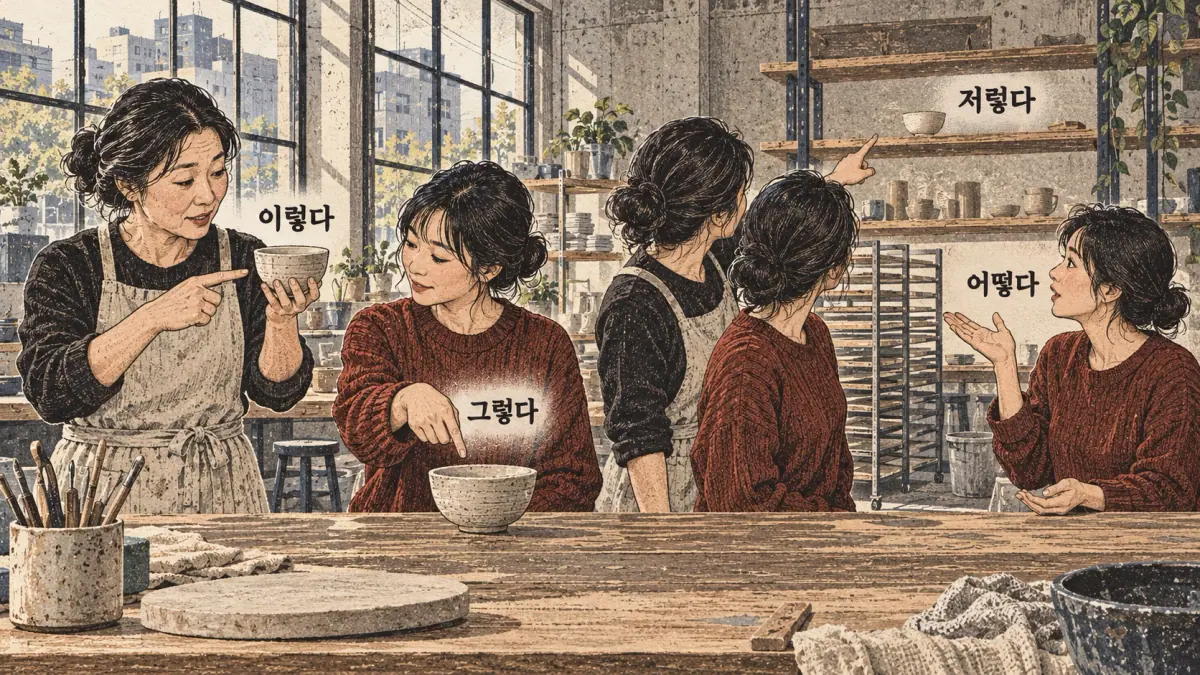
Every ㅎ irregular word is an adjective. This hub covers the ten that beginners meet first: four question-and-pointer words (이렇다, 그렇다, 저렇다, 어떻다) and six colour or shape words (빨갛다, 노랗다, 파랗다, 하얗다, 까맣다, 동그랗다). The class is larger: size and shade words such as 조그맣다 (be small), 커다랗다 (be big) and 누렇다 (be yellowish) follow the same rule. The table gives the polite present, the past, the if form and the form before a noun.
| Dictionary form | Meaning | Polite present | Polite past | If (-(으)면) | Before a noun (present) |
|---|---|---|---|---|---|
| 그렇다 | be so, be like that | 그래요 | 그랬어요 | 그러면 | 그런 |
| 이렇다 | be like this | 이래요 | 이랬어요 | 이러면 | 이런 |
| 저렇다 | be like that (far) | 저래요 | 저랬어요 | 저러면 | 저런 |
| 어떻다 | be how | 어때요 | 어땠어요 | 어떠면 | 어떤 |
| 빨갛다 | be red | 빨개요 | 빨갰어요 | 빨가면 | 빨간 |
| 노랗다 | be yellow | 노래요 | 노랬어요 | 노라면 | 노란 |
| 파랗다 | be blue | 파래요 | 파랬어요 | 파라면 | 파란 |
| 하얗다 | be white | 하얘요 | 하얬어요 | 하야면 | 하얀 |
| 까맣다 | be black | 까매요 | 까맸어요 | 까마면 | 까만 |
| 동그랗다 | be round | 동그래요 | 동그랬어요 | 동그라면 | 동그란 |
Two details deserve a note. First, 하얗다 gives 하얘요: the stem vowel ㅑ merges with 아 into ㅒ, so this word shows ㅒ where the others show ㅐ. Second, the pointer words 이렇다, 그렇다, 저렇다 and 어떻다 are the same group of words with different first syllables ("like this", "like that", "like that over there", "how"), so one rule covers all four.
How Do the Colour Adjectives Work?
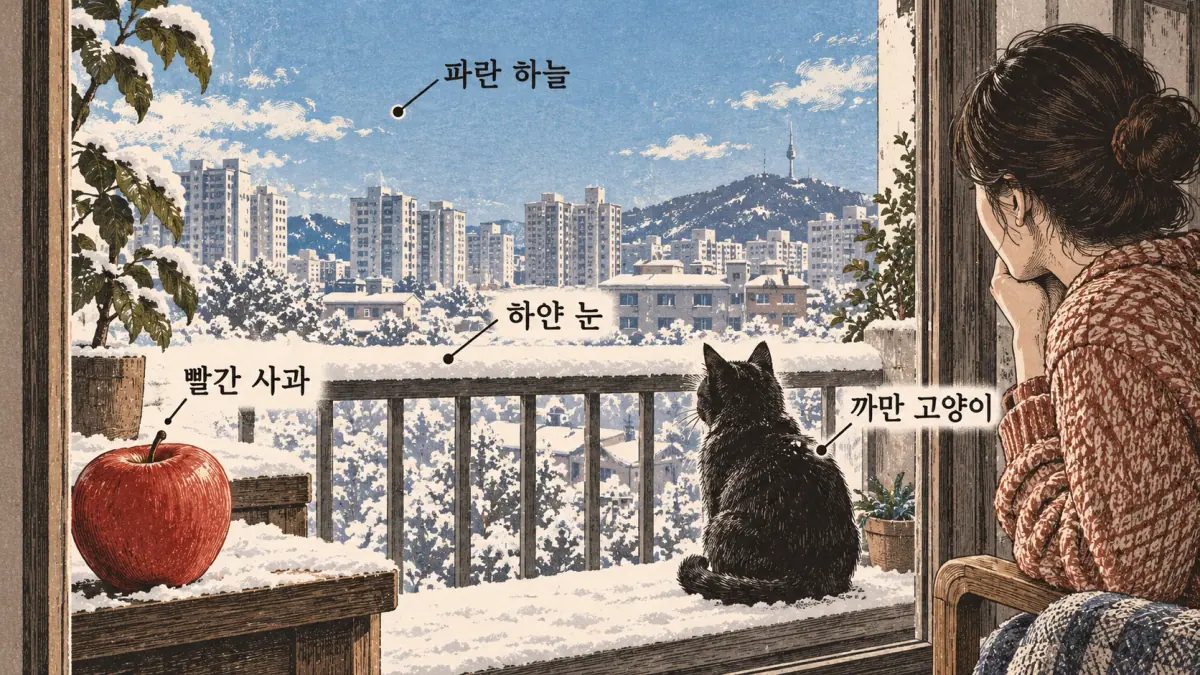
Colour adjectives of the ㅎ class form the polite present with ㅐ and the modifier with -ㄴ: the modifier is the form that goes before a noun. 빨간 사과 means "a red apple" and 파란 하늘 means "a blue sky". The table pairs each colour with its noun form and the colour noun that ends in 색 ("colour").
| Adjective | Polite present | Before a noun | Colour noun |
|---|---|---|---|
| 빨갛다 (red) | 빨개요 | 빨간 | 빨간색 |
| 노랗다 (yellow) | 노래요 | 노란 | 노란색 |
| 파랗다 (blue) | 파래요 | 파란 | 파란색 |
| 하얗다 (white) | 하얘요 | 하얀 | 하얀색 |
| 까맣다 (black) | 까매요 | 까만 | 까만색 |
Black has a second word, 검다, which is regular: 검어요 and 검은. The ㅎ word 까맣다 is the one that follows this class. Colour nouns without 색, such as 빨강 and 파랑, also exist, but they are nouns and not covered here. The colour vocabulary is in Korean colour adjectives and colors in Korean. Now to the words that look like members but are not.
Which ㅎ Words Are Regular?
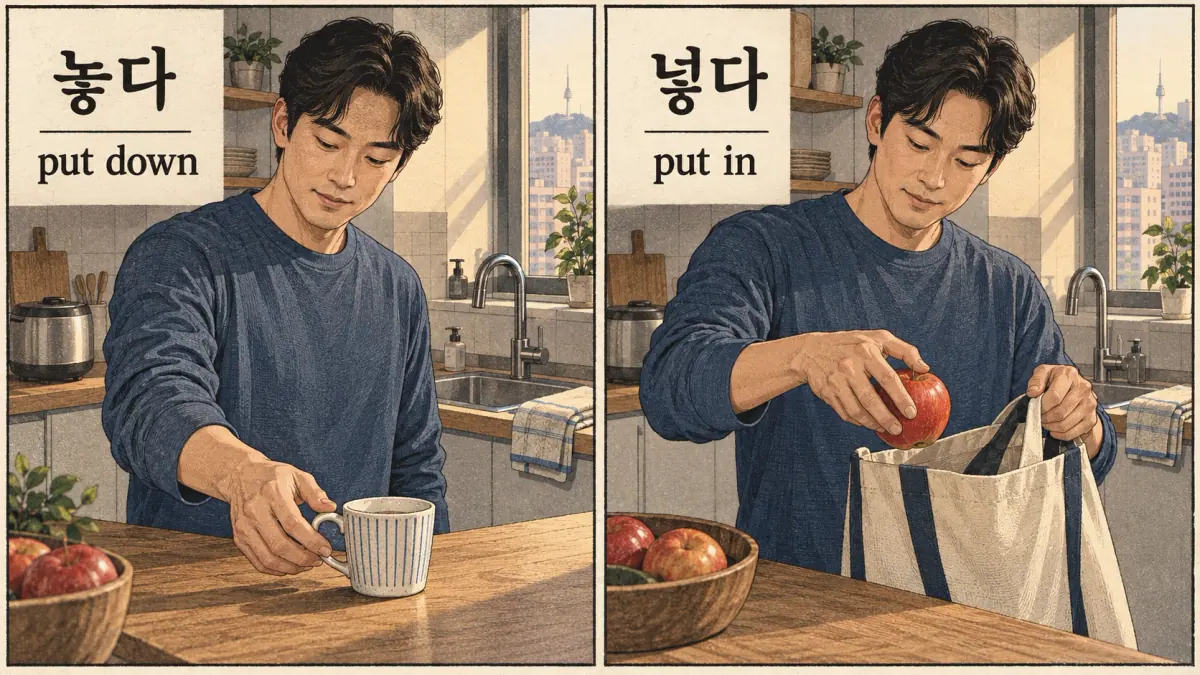
Regular ㅎ words keep the ㅎ in the spelling before a vowel: 좋다 (to be good) gives 좋아요, not 조아요. Common regular ones are 좋다, 많다, 싫다 and 괜찮다 among adjectives and 놓다 and 넣다 among verbs. They share the final letter ㅎ with the class but have no ㅐ change.
| Regular word | Meaning | Polite present | Past | If (-(으)면) |
|---|---|---|---|---|
| 좋다 | be good | 좋아요 | 좋았어요 | 좋으면 |
| 많다 | be many | 많아요 | 많았어요 | 많으면 |
| 싫다 | dislike, be unwanted | 싫어요 | 싫었어요 | 싫으면 |
| 괜찮다 | be okay | 괜찮아요 | 괜찮았어요 | 괜찮으면 |
| 놓다 | put down | 놓아요 | 놓았어요 | 놓으면 |
| 넣다 | put in | 넣어요 | 넣었어요 | 넣으면 |
A rule of thumb helps with adjectives. Adjectives that end in -랗다, -갛다, -맣다 or -얗다, together with the -렇다 words and 어떻다, are ㅎ irregular. Adjectives like 좋다, 많다, 싫다 and 괜찮다 are regular. All verbs that end in ㅎ, such as 놓다, 넣다 and 낳다, are regular as well. In speech, a final ㅎ before a vowel is not pronounced (Standard Pronunciation Article 12), so 좋아요 is read [조아요] and 많아요 [마나요], but the ㅎ stays in the spelling. A ㅎ that is silent in sound but kept in spelling is the opposite of the irregular class, where the ㅎ is gone from the spelling too. The page regular verbs that look irregular collects all such traps. After the traps, a look at where the class shows up every day.
Which Everyday Words Come from This Class?

The ㅎ class gives Korean many of its most common connecting words. 그래서 (so, therefore), 그러면 (if so, then), 그런데 (but, by the way), 그러니까 (so) and 어떻게 (how) are all built from the stems 그렇 and 어떻, and they follow the same ㅎ-drop rule. Knowing the class lets you see why they have the shapes they do.
| Everyday word | Meaning | Built from |
|---|---|---|
| 그래서 | so, therefore | 그렇다 + 어서 |
| 그러면, 그럼 | if so, then | 그렇다 + (으)면 |
| 그런데 | but, by the way | 그렇다 + (으)ㄴ데 |
| 그러니까 | so, therefore | 그렇다 + (으)니까 |
| 그래도 | even so | 그렇다 + 어도 |
| 어때요? | how is it? | 어떻다 + 어요 |
| 어떻게 | how | 어떻다 + 게 |
| 이런, 그런, 저런 | this kind of, that kind of | 이렇다, 그렇다, 저렇다 + ㄴ |
The question 어때요? (How is it?) shows the vowel change in a sentence: 날씨가 어때요? (How is the weather?). The reply 좋아요 (It's good) is the regular look-alike, so one short exchange contains both a ㅎ irregular word and a regular ㅎ word.
How Do You Conjugate 빨갛다 Step by Step?
You conjugate 빨갛다 in four steps: remove 다, check the ending, drop the ㅎ, and apply the vowel change if the ending is 아 or 어. The steps work for every word in the class, from 노랗다 to 그렇다.
- Remove 다. 빨갛다 → 빨갛.
- Check the ending. The polite present ending 아요/어요 starts with a vowel, so the rule fires.
- Drop the ㅎ. 빨갛 → 빨가.
- Merge into ㅐ. 빨가 + 아요 → 빨개요.
You'll know it worked when no ㅎ remains and the ending vowel has become ㅐ. The past follows the same path: 빨가 + 았어요 → 빨갰어요. The polite present of all ten words is in the audio above. Dictionary pages list every form with example sentences:
- 그렇다 (to be so): geureota conjugation
- 이렇다 (to be like this): ireota conjugation
- 저렇다 (to be like that, far): jeoreota conjugation
- 어떻다 (to be how): eotteota conjugation
- 빨갛다 (to be red): ppalgata conjugation
- 노랗다 (to be yellow): norata conjugation
- 파랗다 (to be blue): parata conjugation
- 하얗다 (to be white): hayata conjugation
The other classes are on the Korean irregular verbs hub. A ㅎ irregular word sticks best when you pair it with an everyday sentence, so practise 날씨가 어때요? and 그래서 until the vowel change feels natural.
Frequently Asked Questions
Is 좋다 a ㅎ irregular word? No. 좋다 (to be good) is regular: 좋아요, 좋았어요, 좋으면. The ㅎ stays in the spelling, though it is silent in speech, so 좋아요 is read [조아요]. Only adjectives like 그렇다 and 빨갛다 drop the ㅎ and change the vowel. 많다, 싫다 and 괜찮다 are regular too.
Why is it 그래요 and not 그렇어요? The stem 그렇 loses its ㅎ before the vowel ending 어요, which leaves 그러. Then 그러 and 어 contract into 그래. The result, 그래요, is the only correct spelling. The form 그렇어요 is a common learner error, as is 그렇아요. The same path gives 이래요, 저래요 and 어때요.
What is the past tense of 하얗다? The polite past of 하얗다 is 하얬어요. The ㅎ drops, the stem vowel ㅑ merges with 았 into ㅒ, and the past marker ends in ㅆ. The polite present is 하얘요 and the form before a noun is 하얀, as in 하얀 눈 (white snow). The long form 하얗았어요 is wrong.
Which colour words are ㅎ irregular? 빨갛다 (red), 노랗다 (yellow), 파랗다 (blue), 하얗다 (white) and 까맣다 (black) are ㅎ irregular. 검다 is a second word for black and it is regular: 검어요. Colour nouns such as 빨간색 and 파란색 are built from the modifier forms 빨간 and 파란 plus 색.
Does the ㅎ drop before every vowel? Yes, the ㅎ in this class drops before every ending that starts with a vowel, but the vowel changes to ㅐ only before 아 or 어. Before 으 the vowel stays: 빨간, 빨가면, 그러면. Before a consonant the ㅎ stays too: 빨갛고, 그렇지만, 그렇습니다.