
What Are Hanja Radicals?
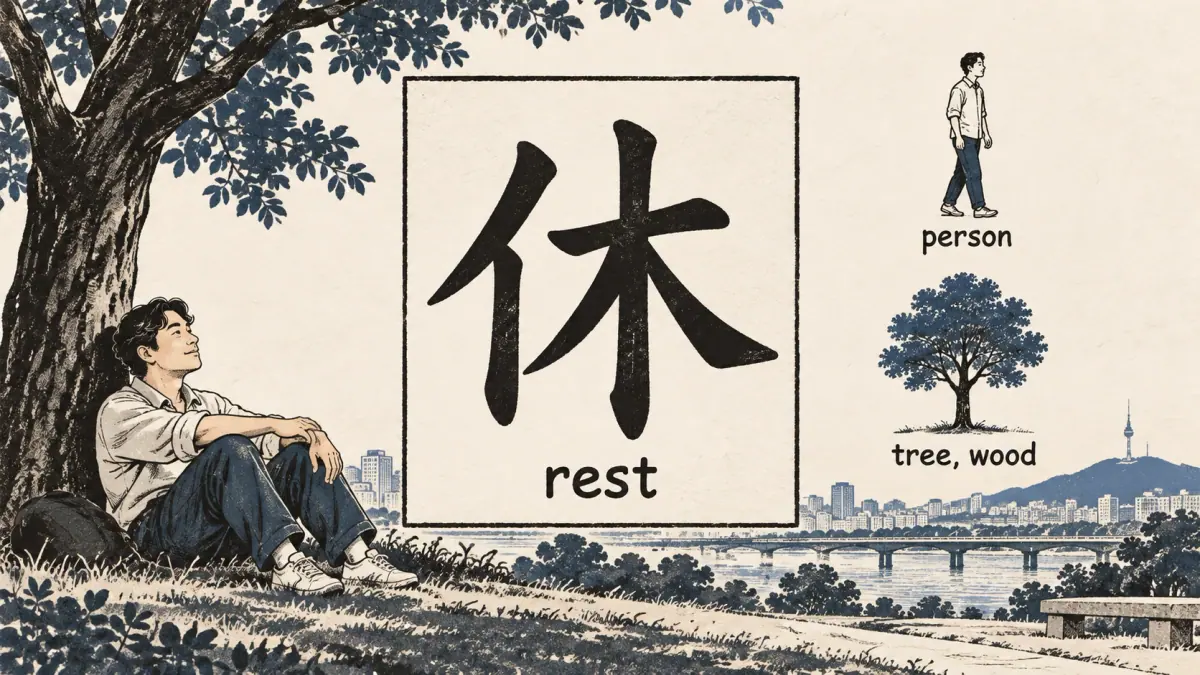
Hanja radicals are the 214 components that dictionaries use as headings to file every character. Each character belongs to exactly one radical, usually the part that carries a meaning hint. 休 ("rest") is a person 亻 next to a tree 木, and it is filed under 人, "person". The word 부수 (部首, busu) means "head of a section".
Most hanja are built from two kinds of parts. The radical gives a clue to meaning, and a second part, the phonetic component, often gives a clue to sound. The family of 門 (gate, read 문) shows both at work:
| Character | 음훈 (meaning + sound) | Radical | Sound part | What the parts tell you |
|---|---|---|---|---|
| 門 | 문 문, gate | 門 | (itself) | the character is its own radical |
| 問 | 물을 문, ask | 口 mouth | 門 → 문 | you ask with your mouth; it sounds like 門 |
| 聞 | 들을 문, hear | 耳 ear | 門 → 문 | you hear with your ear; it sounds like 門 |
| 間 | 사이 간, between | 門 gate | (none) | sun 日 seen through a gate; here 門 is the radical |
The radical takes a different shape depending on where it sits. On the left side, 水 "water" becomes 氵, called 삼수변 (samsubyeon, "three-drop water side"), and 人 "person" becomes 亻, called 사람인변 (saraminbyeon, [사라민변]). The common radicals table below shows more of these side forms.
Ten Radicals with Clear Meaning Hints
| Radical | Form at the side | Meaning | Example character | Korean word |
|---|---|---|---|---|
| 水 | 氵 | water | 海 바다 해 | 해외 (overseas) |
| 手 | 扌 | hand | 打 칠 타 | 타자 (typing) |
| 人 | 亻 | person | 休 쉴 휴 | 휴일 (holiday) |
| 心 | 忄 | heart, feeling | 情 뜻 정 | 감정 (emotion) |
| 口 | 口 | mouth | 味 맛 미 | 의미 (meaning) |
| 木 | 木 | tree, wood | 校 학교 교 | 학교 [학꾜] (school) |
| 日 | 日 | sun, day | 明 밝을 명 | 설명 (explanation) |
| 言 | 言 | speech | 語 말씀 어 | 한국어 [한구거] (Korean language) |
| 艸 | 艹 | grass, plants | 茶 차 다/차 | 녹차 (green tea) |
| 金 | 金 | metal | 銀 은 은 | 은행 (bank) |
Most of these ten head large radical groups, so together they cover many of the characters you will meet. The next section describes the pages in this subhub.
What Pages Are in This Subhub?
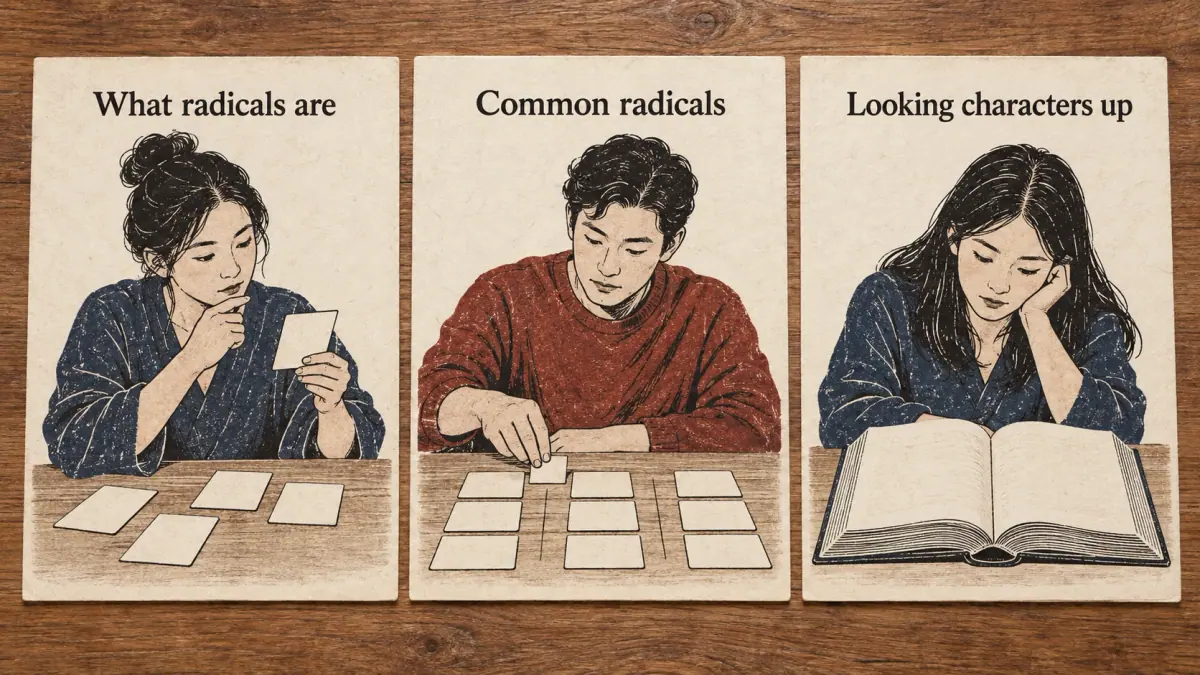
This subhub has three pages, one for each step: understanding radicals, learning the common ones and using them to look characters up.


What Radicals Are
Korean hanja radical explained: what 부수 are and why they matter. The full explanation of the 214-radical system, the side forms such as 氵 and 扌, the Korean names for radicals such as 삼수변 and 초두머리 (艹), and the difference between a radical and a sound component.
Common Radicals
Common hanja radicals: 30 you will see most. The 30 radicals that cover most characters in the basic lists, each with its side form, Korean name, meaning hint and two example characters from everyday words.
Looking Characters Up
Korean hanja lookup: find a character by radical, strokes or sound. Step-by-step use of a printed 옥편 and of online dictionaries, including handwriting input, with worked examples.
The steps themselves are short enough to learn now, as the next section shows.
How Do You Look up a Character by Radical?
Look up a character in four steps: find the radical, find its section, count the remaining strokes, and scan. Take 海 (sea) as the example.
- Find the radical. In 海 the meaning part is 氵 on the left. Side forms are filed under their full form, so 氵 goes under 水.
- Find the radical's section. The radical index (부수 색인) lists radicals by their own stroke count. 水 is a four-stroke radical.
- Count the remaining strokes. Cover the radical and count what is left: 每 has 7 strokes.
- Scan the list. Under 水, go to the characters with 7 extra strokes and find 海. The entry reads 바다 해: "sea", read 해.
You will know it worked when the 음훈 and example words make sense in your sentence. If the radical is unclear, use the total-stroke index (총획 색인) or the sound index (자음 색인) instead; a dictionary that accepts handwriting avoids counting altogether.
Do You Need to Learn All 214 Radicals?
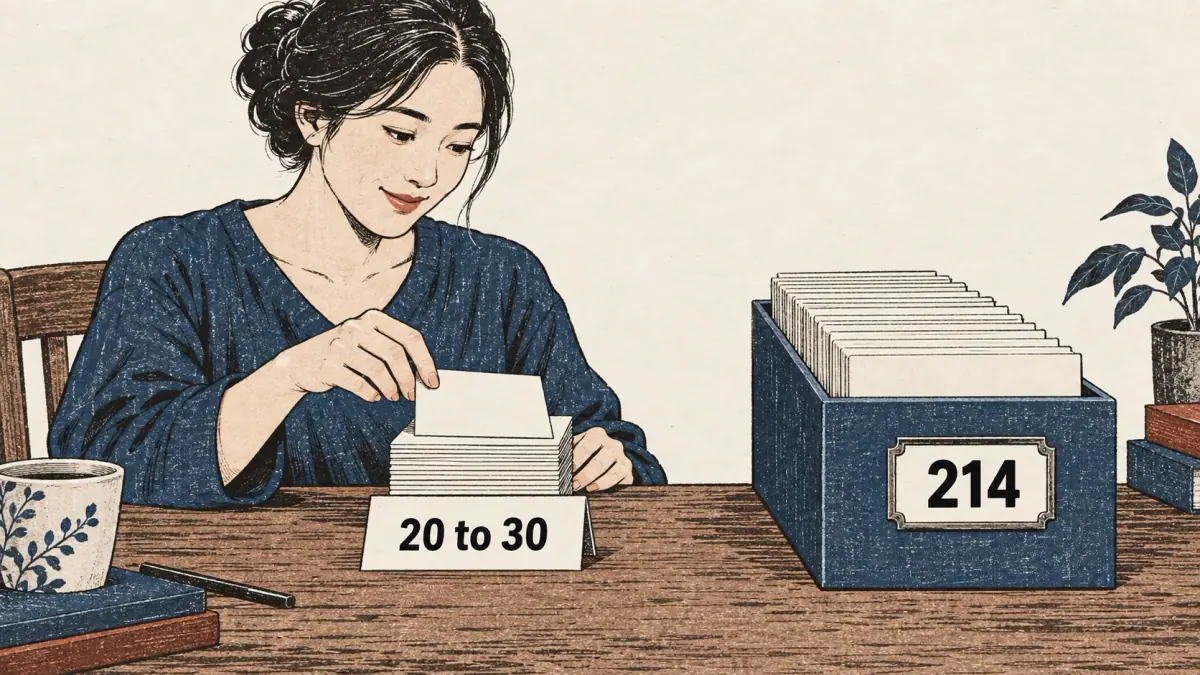
No. Most learners need about 20 to 30, because a small number of radicals file a large share of everyday characters. Many of the 214 are rare or appear only in a handful of characters. Learn the ten in the table above, add the rest of the set on the common hanja radicals page, and look up the others when you meet them.
Radicals are a tool, not a goal. If you study hanja through words, as the basic hanja and hanja word families sections do, you will absorb the common radicals without drilling them. The next section sets out what radicals cannot do.
What Are the Limits of Radicals?
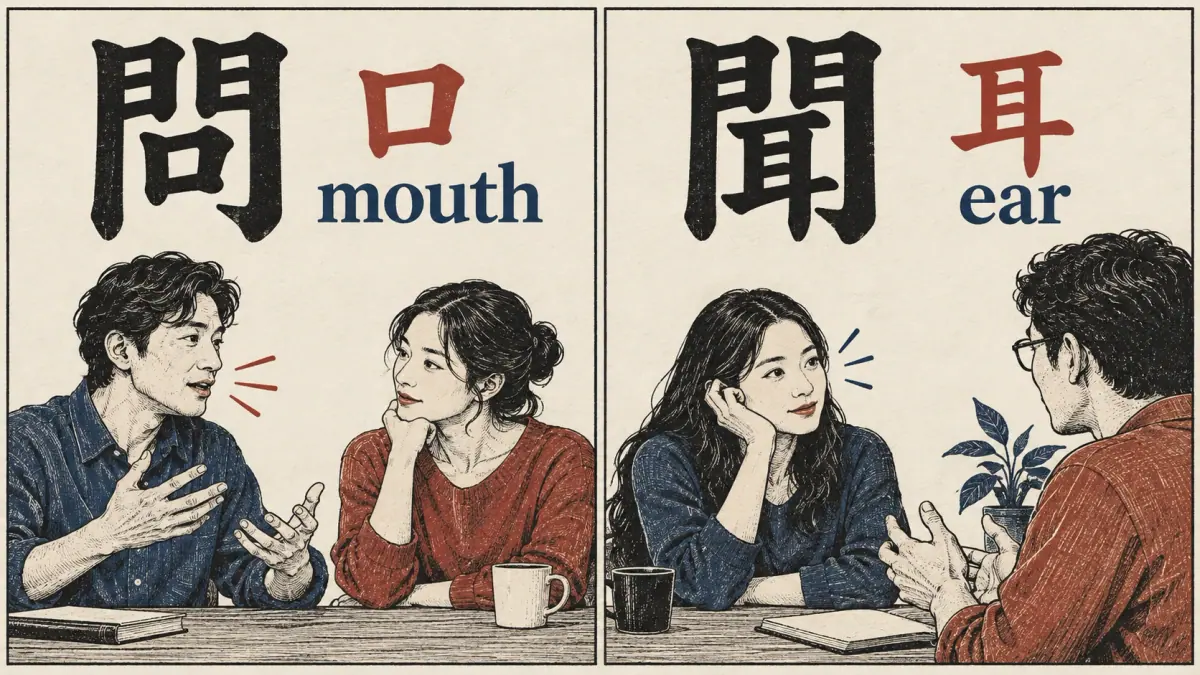
Radicals give hints, not definitions, and the hints sometimes mislead. 問 ("ask") is filed under 口 (mouth), not 門, and 聞 ("hear") under 耳 (ear), even though 門 is the larger part of both. Some radical choices are historical and make little sense today. Simplified Chinese dictionaries also use a different radical set, so a radical number from a Chinese app may not match a Korean 옥편.
This subhub does not teach stroke order or handwriting; for that, see how to write hanja. For where radicals fit in the bigger picture, return to the hanja hub, or see Hangul vs Hanja for how the two writing systems differ. Learn a few hanja radicals well and the rest of the 214 can wait.
Frequently Asked Questions
Which radicals are most common?
The largest groups in the Kangxi system include grass (艸, written 艹 on top), water (水, 氵 on the left), wood (木), mouth (口), hand (手, 扌) and heart (心, 忄). Person (人, 亻), speech (言) and metal (金) are also very frequent. Learning these few first lets you file a large share of everyday characters.
Can I look up hanja without knowing the radical?
Yes. A printed dictionary also has a sound index, if you know the Korean reading, and a total-stroke index. Online dictionaries such as the Naver Hanja Dictionary accept handwritten input, so you can draw the character with a finger or mouse. The radical method still helps when a character has an unknown reading.
What is an 옥편?
옥편 (玉篇, okpyeon) is the everyday Korean word for a hanja dictionary, also called 자전 (字典). It lists characters by radical and stroke count and gives each one its 음훈, the meaning word and sound, such as 바다 해 for 海. Most also list common Sino-Korean words that use the character.
Is the radical always on the left side?
No. The left side is the most common position, as in 海 and 休, but radicals also sit on top (艹 in 花), at the bottom (心 in 思), on the right, or around the character (門 in 間). Some characters are radicals themselves, such as 木 and 口. Checking the dictionary entry is the only sure test.