
Hanja Vocabulary: the Essentials
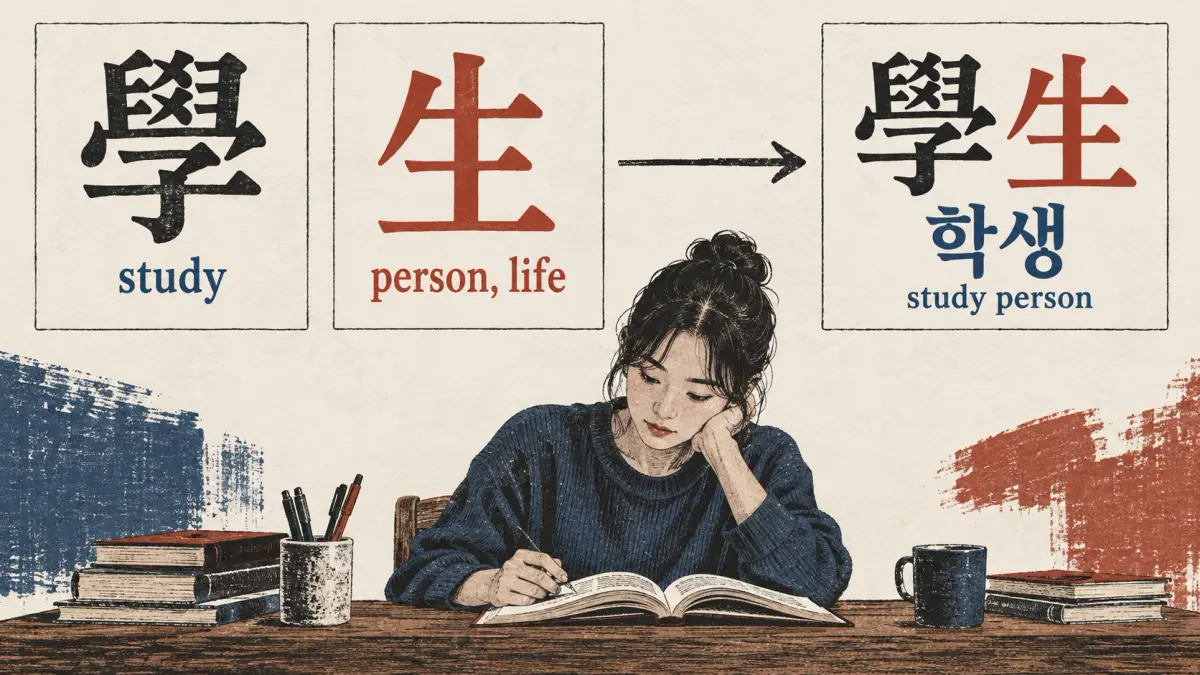
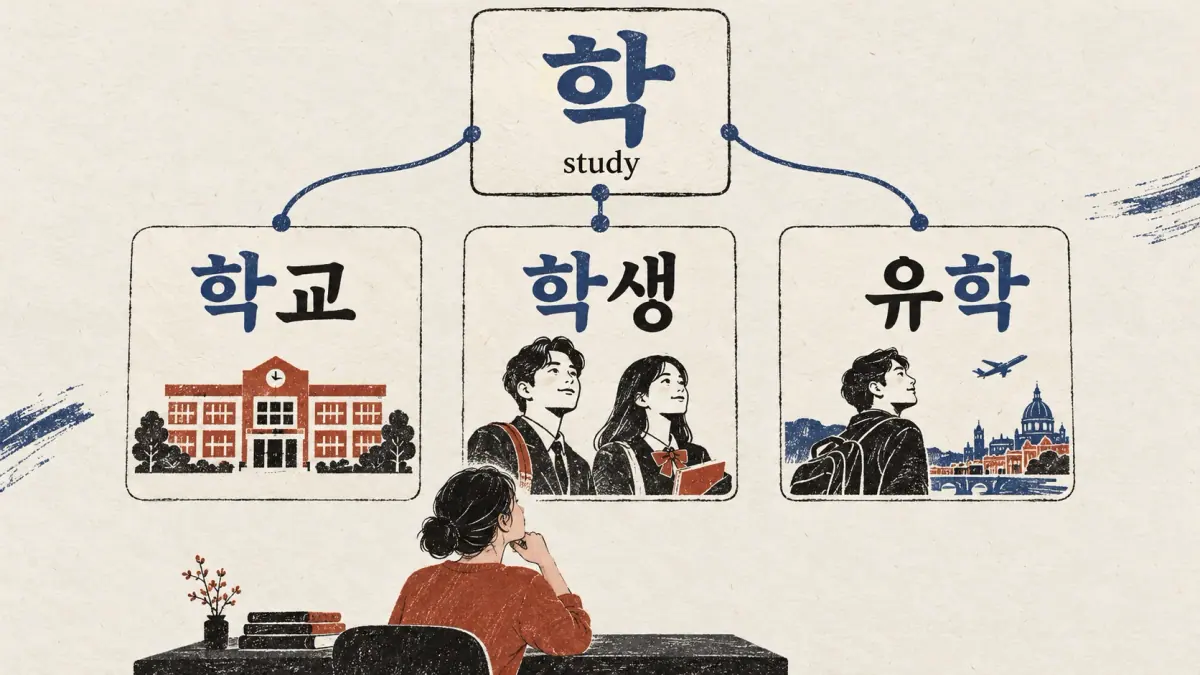
Hanja vocabulary means the Sino-Korean words (한자어) whose syllables come from Chinese characters, and a word family groups them by a shared character. In 학생 (學生, student), 學 means "study" and 生 means "person, life", so the word is literally "study person". Once you know both, 생일 (生日, "birth day") and 유학 (留學, "stay and study", studying abroad) explain themselves.
Three facts make this work. Each character has one main Korean reading, so the syllable 학 in a common Sino-Korean word usually means "study". The same characters recur across thousands of words, so each new one gets cheaper to learn. And you never need to see the characters in daily life: the meaning lives in the Hangul syllable. The table lists all 16 families with the reading, the core meaning and the best-known word in each.
| Character | Reading | Core meaning | Best-known word | Family page |
|---|---|---|---|---|
| 學 | 학 | study | 학교 [학꾜] (school) | 學 family |
| 生 | 생 | life, birth | 생일 (birthday) | 生 family |
| 人 | 인 | person | 한국인 [한구긴] (Korean person) | 人 family |
| 大 | 대 | big, great | 대학 (university) | 大 family |
| 國 | 국 | country | 외국 (foreign country) | 國 family |
| 中 | 중 | middle, during | 중국 (China) | 中 family |
| 電 | 전 | electricity | 전화 (telephone) | 電 family |
| 家 | 가 | home; expert | 가족 (family) | 家 family |
| 事 | 사 | matter, affair | 사실 (fact) | 事 family |
| 物 | 물 | thing, object | 동물 (animal) | 物 family |
| 時 | 시 | time | 시간 (time) | 時 family |
| 會 | 회 | meet, society | 회사 (company) | 會 family |
| 不 | 불 / 부 | not | 불안 [부란] (anxiety) | 不 family |
| 氣 | 기 | air, spirit, mood | 기분 (mood) | 氣 family |
| 力 | 력 / 역 | power, ability | 능력 [능녁] (ability) | 力 family |
| 水 | 수 | water | 수요일 (Wednesday) | 水 family |
The next section describes each family in three groups.
Which Families Are Covered?

The 16 families fall into three groups: study and people, society and things, and two characters whose reading changes. Each page has a table of 12 words with Revised Romanization (RR, shown only as a learning aid), sound notes, audio and a short decoding quiz.









Study and People
- 學 (학): study and school. 학교, 학생, 대학, 유학 (study abroad), 수학 (mathematics) and 입학 (entering school). Before ㄴ the final ㄱ nasalises: 학년 is said [항년].
- 生 (생): life and birth. 생일, 생활 (daily life), 인생 (life) and 선생 (teacher, "born earlier"). The honorific word for an elder's birthday is 생신, not 생일.
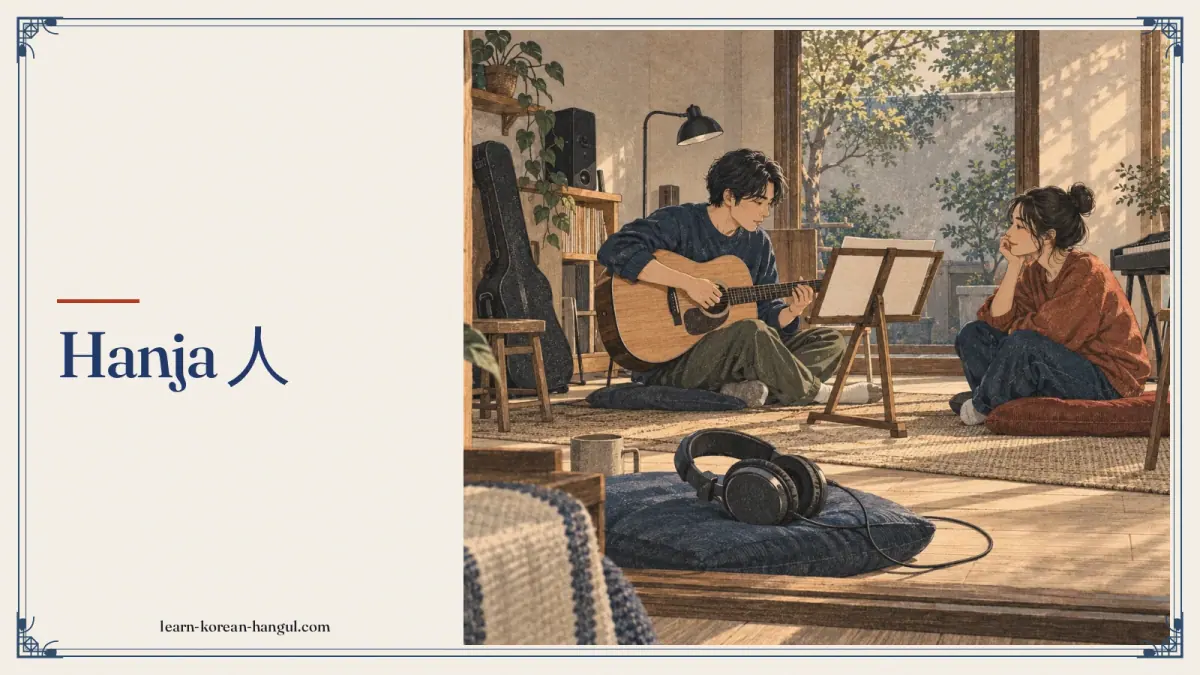
- 人 (인): people. 한국인, 외국인 [외구긴] (foreigner), 인구 (population) and 인기 (popularity), said [인끼]. 인사 means both "greeting" and "personnel".
- 大 (대): big and great. 대학, 대한민국, 대통령 (president) and 대부분 (most). It works as a prefix meaning "large-scale", as in 대기업 (large company).
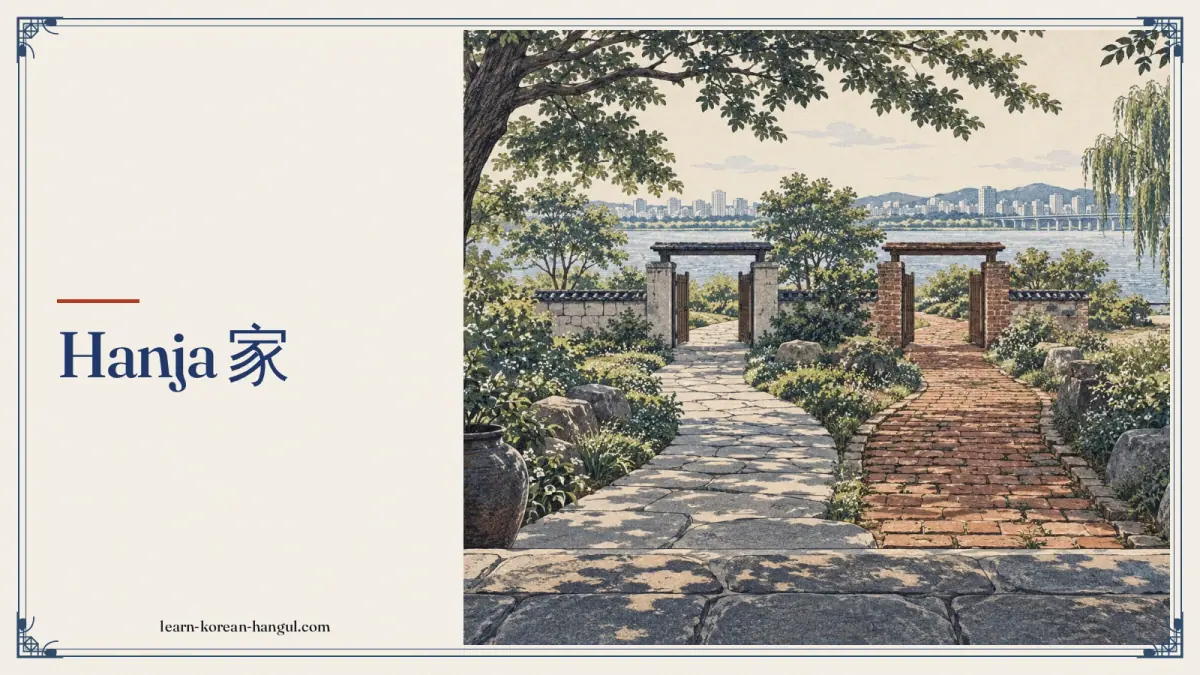
- 家 (가): home and expert. 가족 and 가구 (furniture) use the "home" sense; as a suffix -가 names a practitioner: 작가 (writer), 화가 (painter), 전문가 (expert).
Society and Things
- 國 (국): country and nation. 한국, 외국, 국제 (international) and 국민 (citizen), said [궁민]. Korea writes the traditional form 國; Japan and mainland China use 国.
- 中 (중): middle and during. 중국, 중간 (middle) and 중학교 (middle school). After a noun it means "in the middle of": 식사 중 (during a meal), 회의 중 (in a meeting).
- 電 (전): electricity. 전화, 전기 (electricity), 충전 (charging) and 정전 (power cut). Do not confuse it with 前 "before" in 오전 or 全 "whole" in 전부.
- 事 (사): things and matters. 사실 (fact), 사고 (accident), 식사 (meal) and 행사 (event). 事, 四 (four), 社 (company) and 死 (death) are all read 사.
- 物 (물): things and objects. 동물, 식물 (plant), 건물 (building) and 물가 (prices). The everyday word 물 "water" is native Korean, a different word.
- 時 (시): time. 시간 (duration), 시계 (clock), 시대 (era) and 동시 (at the same time). The 시 in 세 시 ("three o'clock") is this character.
- 會 (회): meetings and society. 회사, 회의 (meeting), 사회 (society) and 회식 (staff dinner after work).
- 氣 (기): air, spirit and mood. 기분 (mood), 공기 (air), 분위기 (atmosphere) and the weather words 기온 (air temperature) and 기후 (climate).
- 水 (수): water. 수요일, 수영 (swimming), 수도 (water supply) and 수준 (level). As a radical it becomes 氵 on the left of characters such as 海; see hanja radicals.
Sound-Change Characters
- 不 (불/부): not. Read 부 before ㄷ and ㅈ (부족, shortage; 부동산, real estate) and 불 elsewhere (불안, anxiety; 불가능, impossible).
- 力 (력/역): power and ability. Read 력 after another syllable (능력, ability; 노력, effort; 실력, skill) and 역 at the start of a word (역량, capability), under the initial-sound rule 두음법칙. 능력 is said [능녁].
Spelling stays fixed even when the sound changes: 능력 is written with 력 but said [능녁], because ㄹ after ㅇ is pronounced ㄴ. For tense sounds inside Sino-Korean words, such as 발전 [발쩐], see Sino-Korean tensification. The next section turns the families into a study method.
How Should You Study Word Families?

Study one family at a time in five steps, about 15 minutes per family. The order matters: words first, character second, new words last.
- Pick a family where you already know two words. For most learners that is 學 (학교, 학생) or 人 (한국인, 외국인).
- Read the word list in Hangul and mark the shared syllable. Say each word aloud before you look at any character.
- Learn the character's core meaning. Link it to the words you know: 學 "study" is why 학교 is a school.
- Decode an unseen word. 입학 [이팍] is 入 "enter" + 學 "study": entering school. Guess first, then check the meaning.
- Review with flashcards a day later. The Sino Korean Words Flashcards deck covers many of the same words with audio.
Check yourself: you will know a family has stuck when you can explain three of its words by their characters without looking. The common mistake is treating every 전 or 사 as the same character, so note the homophones on each family page. The next section explains how families relate to the other hanja pages.
Which Family Should You Start With?
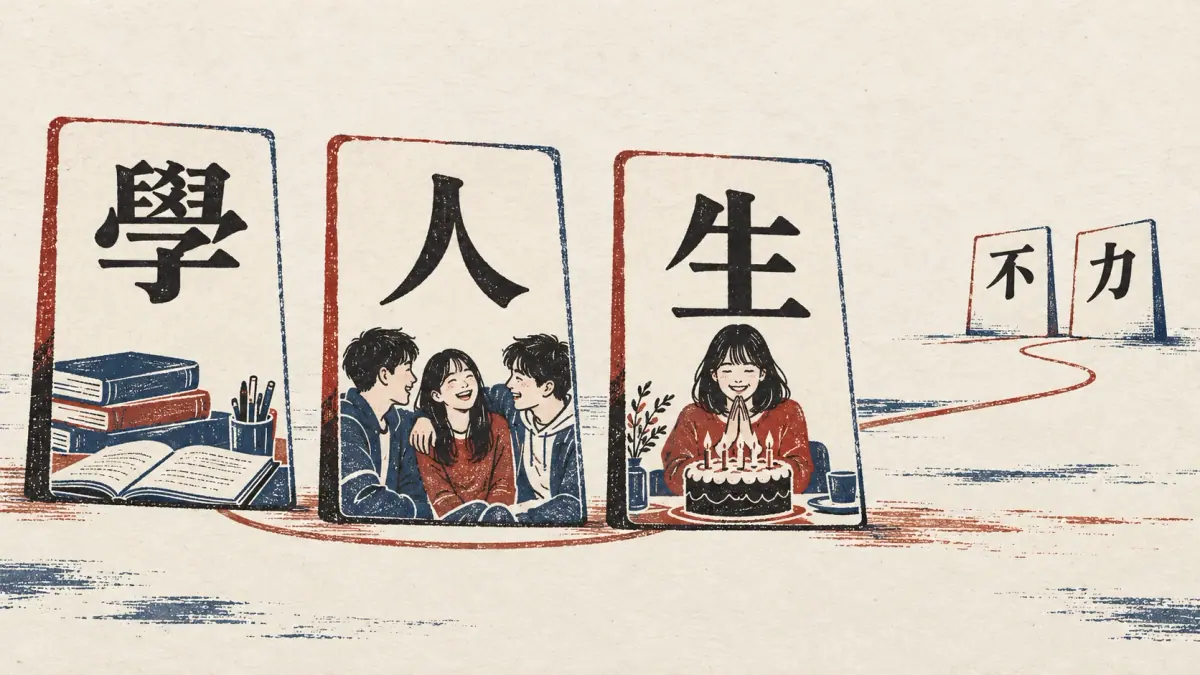
Start with 學, then 人 and 生, because their words are beginner vocabulary and their readings never change. Leave 不 and 力 until last, since their sound changes are easier once you trust the method. If you have not met hanja before, the basic hanja section introduces 100 characters by theme, and many of the 16 family characters appear there first. For exam-focused characters such as 社, 經 and 化, see TOPIK hanja.
This section teaches Sino-Korean vocabulary through one hanja character and its word family; the page on sino korean vocabulary is the Sino-Korean word list organised by topic, with no character study required. The lesson on Sino-Korean prefixes and suffixes covers word-building parts such as 불-, 무- and -적. For where word families sit among the other character pages, return to the hanja hub. Hanja vocabulary grows fastest when every new word is linked to a character you already know.
Frequently Asked Questions
How many words does one character build?
It depends on the character. A productive one such as 學 or 人 appears in dozens of common words and in hundreds of dictionary entries. Each family page on this site lists 10 to 12 everyday words, because those are the ones worth learning first. Rare or technical compounds can wait until you meet them in reading.
Do I need to write the characters?
No. Word families work through recognition. You need to know that the syllable 학 in 학교, 학생 and 유학 carries the meaning "study"; seeing 學 helps fix that link, but drawing it is optional. Learners preparing for a hanja proficiency test, or who remember better by writing, can add handwriting later.
Are all word families equally difficult?
No. 學, 人 and 時 are easy because their reading never changes and most of their words are everyday vocabulary. 不 and 力 are harder because the reading changes with position or the next sound. 事 and 電 need extra care because other characters share their sound, such as 四 사 and 前 전.
What is the difference between this page and the Sino-Korean word list?
This page teaches Sino-Korean vocabulary through one hanja character and its word family. The Sino-Korean vocabulary page is a word list organised by topic, with no character study required. Use the list if you only want words; use the families if you want to understand why the words mean what they do.