
What Are the Basic Hanja?
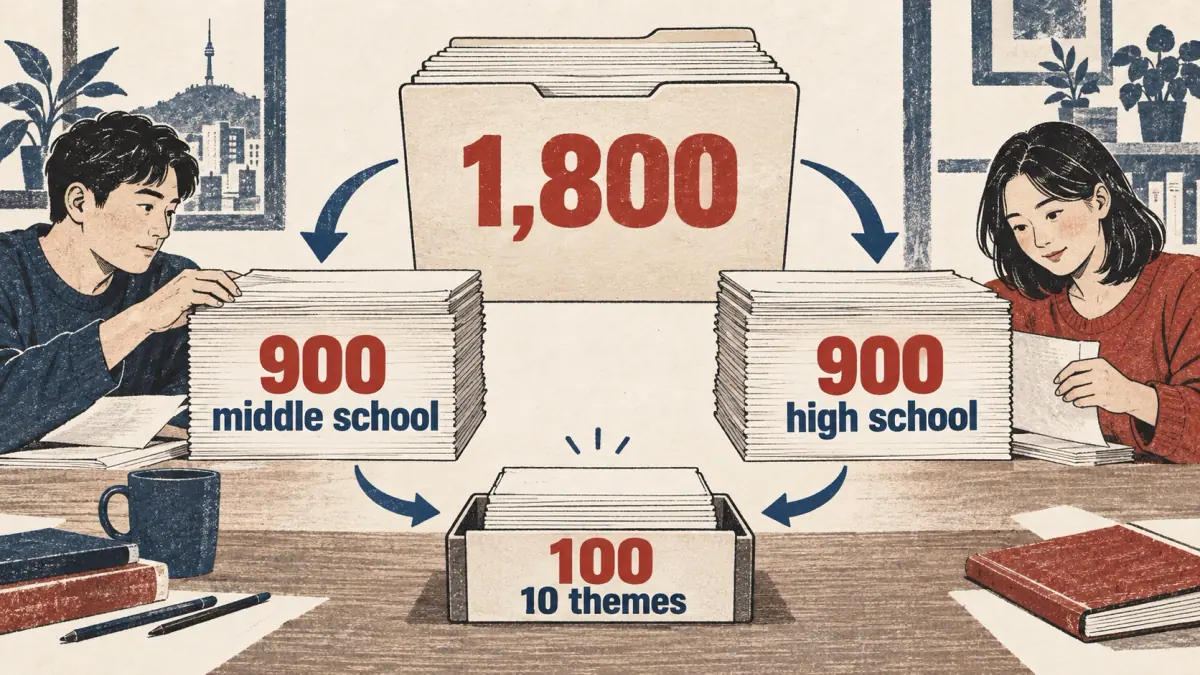
Basic hanja are the characters a learner meets first because they sit inside common Korean words. Korea's official reference is the Ministry of Education's list of 1,800 basic hanja for education (교육용 기초 한자): 900 for middle school and 900 for high school. This section picks 100 of them and sorts them by theme, so related characters, such as 東 西 南 北, are learned together.
The table shows all 100 characters by theme, with the Korean reading in brackets after each one and one word you may already know.
| Theme | The 10 characters and their readings | A word you may know |
|---|---|---|
| Numbers | 一 (일), 二 (이), 三 (삼), 四 (사), 五 (오), 六 (육), 七 (칠), 八 (팔), 九 (구), 十 (십) | 삼월 三月 [사뭘] (March) |
| Size and quantity | 百 (백), 千 (천), 萬 (만), 大 (대), 小 (소), 多 (다), 少 (소), 長 (장), 高 (고), 重 (중) | 중요 重要 (important) |
| Nature and weekdays | 日 (일), 月 (월), 火 (화), 水 (수), 木 (목), 金 (금), 土 (토), 山 (산), 川 (천), 天 (천) | 월요일 月曜日 (Monday) |
| People and family | 人 (인), 男 (남), 女 (녀/여), 子 (자), 父 (부), 母 (모), 兄 (형), 弟 (제), 家 (가), 民 (민) | 부모 父母 (parents) |
| Body and mind | 口 (구), 目 (목), 手 (수), 足 (족), 心 (심), 耳 (이), 身 (신), 面 (면), 氣 (기), 力 (력/역) | 공기 空氣 (air) |
| Directions and places | 東 (동), 西 (서), 南 (남), 北 (북), 上 (상), 下 (하), 中 (중), 內 (내), 外 (외), 方 (방) | 외국 外國 (foreign country) |
| School and learning | 學 (학), 校 (교), 敎 (교), 書 (서), 文 (문), 字 (자), 語 (어), 先 (선), 生 (생), 讀 (독) | 학교 學校 (school) |
| Country and society | 國 (국), 韓 (한), 社 (사), 會 (회), 公 (공), 場 (장), 市 (시), 門 (문), 世 (세), 界 (계) | 한국 韓國 (Korea) |
| Time | 年 (년/연), 時 (시), 間 (간), 今 (금), 前 (전), 後 (후), 午 (오), 夜 (야), 新 (신), 古 (고) | 시간 時間 (time) |
| Actions and abstract words | 行 (행), 出 (출), 入 (입), 事 (사), 物 (물), 不 (불/부), 無 (무), 有 (유), 同 (동), 動 (동) | 동물 動物 (animal) |
Readings with a slash change by position or by the next sound, as the theme pages explain. Pronunciation can also differ from the spelling inside words: 학교 is said [학꾜] and 월요일 [워료일]. The next section explains why these 100 were chosen.
How Were the 100 Chosen?

The 100 were chosen editorially, for how many common words each character helps you read. Three tests were applied: the character appears in several words learners meet in daily life, school or TOPIK texts; it belongs to the 1,800 basic list; and it fits a theme with nine partners, so the group can be learned as a set. No official body publishes a "top 100", so this is a practical starting core, not a ranking.
The section is built as 10 theme pages rather than 100 single-character pages. A character on its own tells you little; its value comes from the words it builds. A theme page can show ten related characters with two words each, a reading note and a short drill. The 16 most productive characters, such as 學, 生 and 人, also get their own hanja word families pages, where each one opens a family of 10 to 12 words. The next section lists the pages in this subhub.
Pages in This Subhub

This subhub has 12 pages: two overview pages and ten theme pages. The snippets below say what each one covers.







Overview
- Common hanja characters: the 100 most useful. The master table, one row per character, with 음훈, reading and an example word. It flags every irregular reading, such as 女 녀/여 and 六 륙/육.
- 1800 hanja: the basic list explained. How the official list is split into 900 middle-school and 900 high-school characters, where to find it, and how to use it without memorising it in order.
10 Theme Groups
- Numbers. 一 to 十 are the written form of the Sino-Korean numbers 일 to 십. Two month names are irregular: 六月 is 유월 (June) and 十月 is 시월 (October).
- Size and quantity. 百 千 萬 are the number units 백, 천, 만. Opposites come in twos: 大/小 and 多/少. Watch the homophones: 小 "small" and 少 "few" are both read 소.
- Nature and weekdays. The first seven characters, 日 月 火 水 木 金 土, are the seven days of the week in Korean order. 월요일 (月曜日) is literally "moon day". 金 is also read 김, the surname.
- People and family. Pairs teach themselves: 男/女, 父/母, 兄/弟. 女 shows the initial-sound rule: 여자 (woman) but 자녀 (children). Native family words are on Korean family words.
- Body and mind. 口 "mouth" gives 입구 [입꾸] (entrance), 출구 (exit) and 인구 (population, literally "people mouths"). 力 reads 역 at the start of a word (역량 [영냥], capability) and 력 after another syllable (능력 [능녁], ability).
- Directions and places. The compass characters come in opposing pairs: 東西, 南北, 上下, 內外. 以上 (이상) and 以下 (이하), "or more" and "or less", appear on forms and price tags.
- School and learning. 先生 (선생, teacher) literally means "born earlier". 學 and 語 each start a long chain: 학교, 학생 [학쌩], 대학 and 국어 [구거], 영어, 외국어 [외구거].
- Country and society. 社會 (사회, society) and 會社 (회사, company) use the same two characters in reverse order. 大韓民國 (대한민국) joins characters from three different themes.
- Time. 午前 (오전, a.m.) and 午後 (오후, p.m.) are "before midday" and "after midday". 年 is 년 inside a word or after a number (삼 년) but 연 at the start of a word (연말, year end).
- Actions and abstract words. Opposites come in pairs: 有料/無料 (유료/무료, paid/free) and 出口/入口 (출구/입구, exit/entrance). 不 reads 부 before ㄷ and ㅈ (부족, shortage) and 불 elsewhere (불안 [부란], anxiety).
The next section helps you pick a first group.
Which Group Should You Start With?
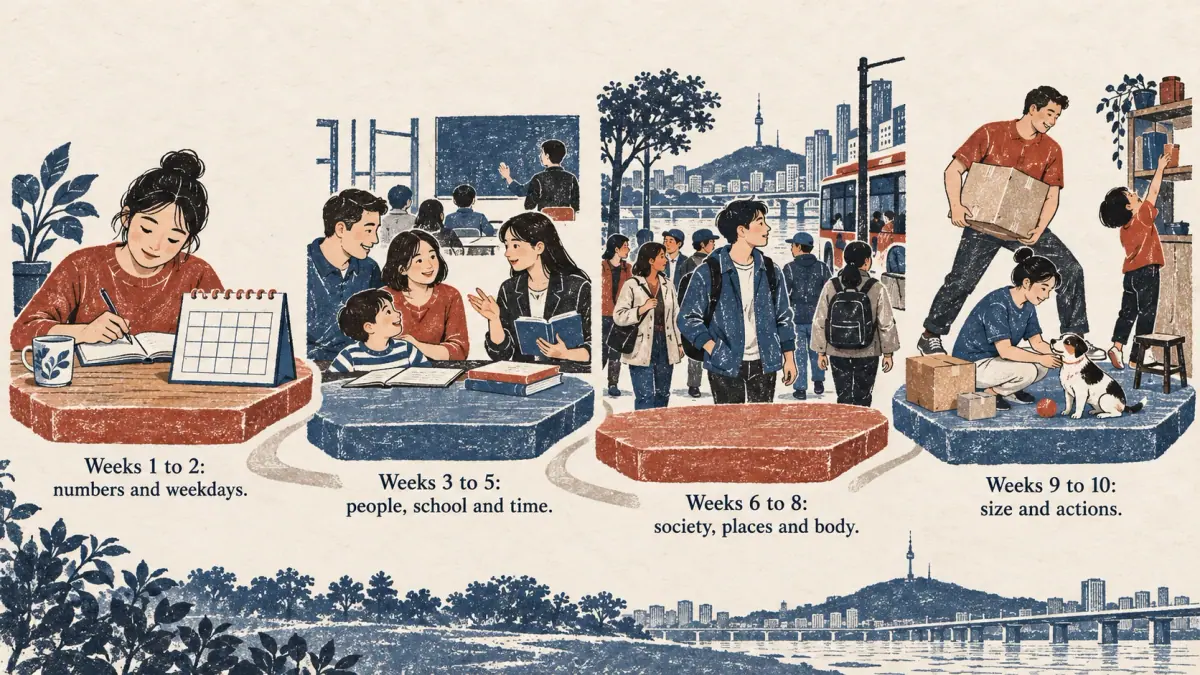
Start with numbers and weekdays, because you already say those words every day. Recognising 一 二 三 and 日 月 火 costs almost nothing when 일, 이, 삼 and 월요일 are already in your head. Then follow your needs:
- Weeks 1 to 2: numbers and weekdays. Twenty characters you can check against months in Korean and the calendar.
- Weeks 3 to 5: people, school and time. The words 가족, 학교 and 시간 appear in every beginner textbook.
- Weeks 6 to 8: society, places and body. These give the vocabulary of news, signs and health.
- Weeks 9 to 10: size and actions. These contain the sound changes (不 불/부) and the homophones (小/少), so leave them until your reading habits are steady.
At ten characters a week, the whole set takes ten weeks. The 100 basic hanja are the foundation; the hanja hub shows what comes after them, including radicals for looking characters up and TOPIK hanja for exam-focused vocabulary.
What Does This Section Not Cover?
This section teaches recognition of 100 characters inside words. It does not reproduce the full 1,800 list, teach stroke order or prepare you for a hanja proficiency test. Stroke order is taught in how to write hanja, and the test levels are explained in Korean hanja proficiency tests. If you are still deciding whether to study characters at all, read Hangul vs Hanja first. One limit to keep in mind: the 음훈 shown here follow common dictionary practice, and some characters have alternative meaning words in other dictionaries.
Frequently Asked Questions

Why 100 hanja and not more?
One hundred is small enough to finish in about ten weeks at ten characters a week, and large enough to explain hundreds of everyday words such as 학교, 시간, 외국 and 회사. After the 100, the word-family pages and the official 1,800 list give a clear way to keep going, so nothing you learn here is wasted.
Are these the 100 most common hanja?
They are a high-value set, not a ranked frequency list. The selection is editorial: characters that appear in many words learners meet at school, in daily life and in TOPIK texts. A frequency count of newspaper text would rank some characters differently, so treat the 100 as a practical core rather than an official ranking.
Do I need to write the characters by hand?
No. For most learners the aim is recognition: seeing 學 and thinking 학, "study". Writing helps memory for some people and is needed for hanja tests, but it takes much longer. If you want to write, learn the basic stroke order rules first and practise the simplest characters, such as 一, 人 and 大.
Why is 六月 read 유월 and 十月 read 시월?
These two month names drop a final consonant for easier pronunciation, and standard spelling follows the spoken form. 六 is normally 육 and 十 is 십, so you might expect 육월 and 십월, but the correct forms are 유월 (June) and 시월 (October). All other months keep the regular reading, such as 칠월 and 팔월.