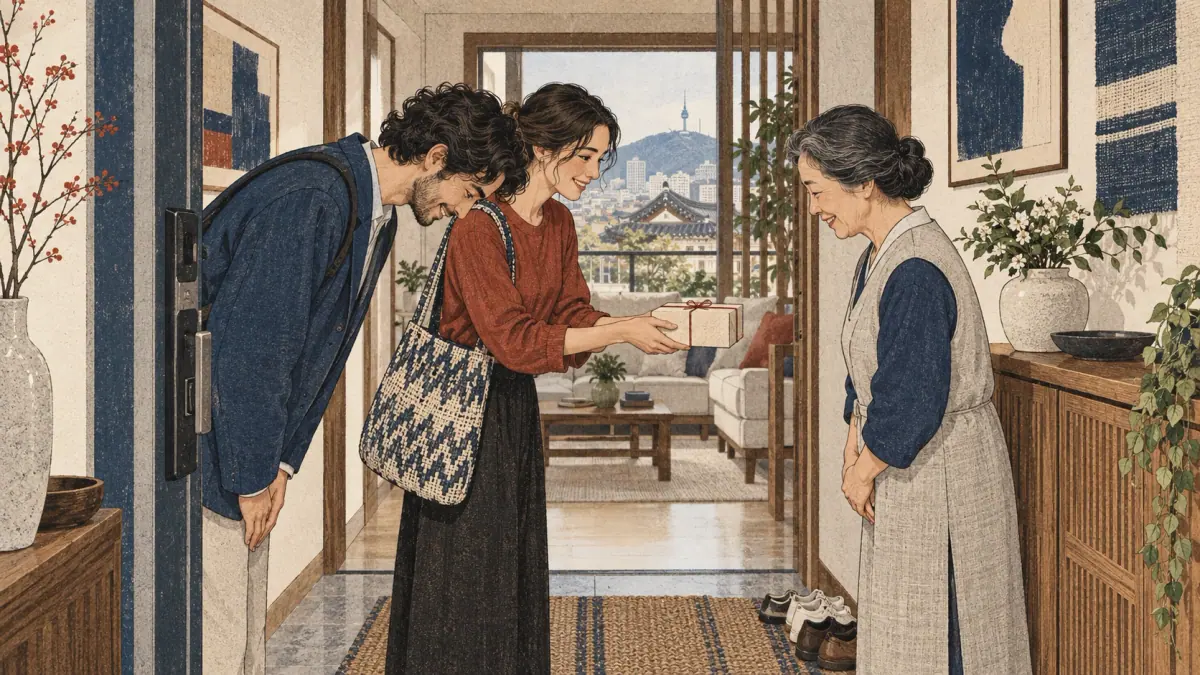
Korean etiquette is built into the language itself, through speech levels, honorific titles and the habit of establishing age and relationship before choosing words. This section shows learners how to greet, how to address elders, colleagues and friends, and when casual speech is acceptable, with the exact Korean for each situation.
Korean Etiquette: the Essentials
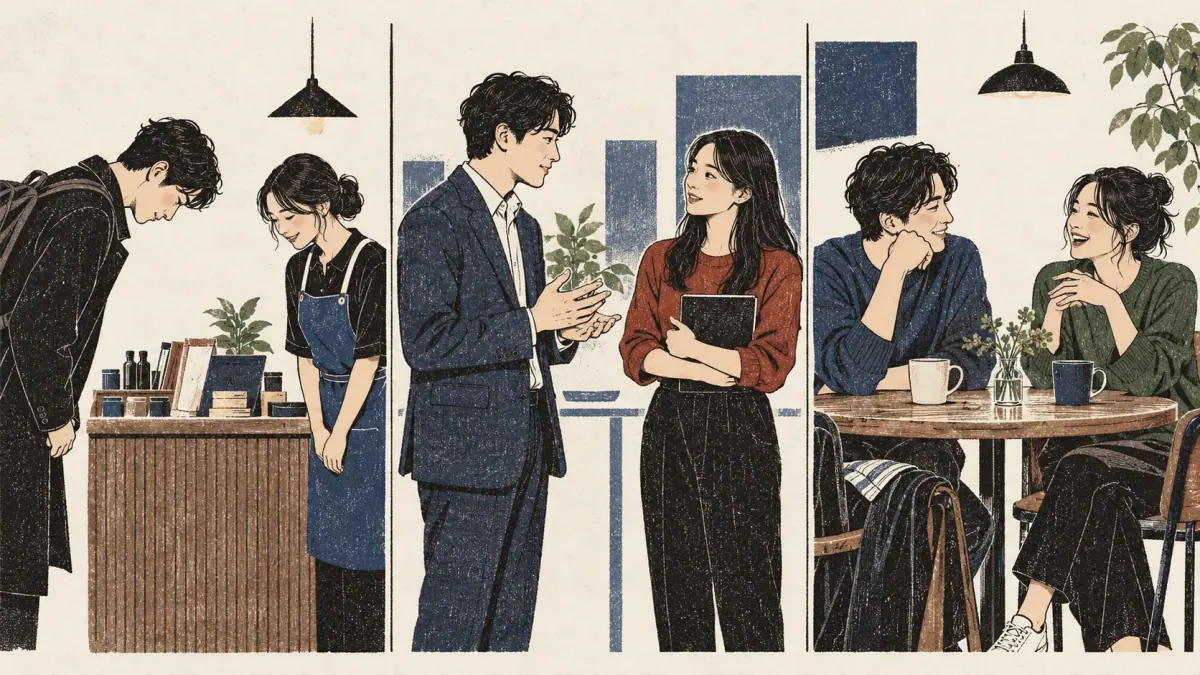
Korean etiquette for learners comes down to four habits. Each one changes the words you say, not only what you do.
- Greet with 안녕하세요 and a slight bow. A small bow of the head and shoulders goes with an everyday greeting. A deeper bow is for elders, formal meetings and apologies.
- Use polite speech with anyone you do not know well. Polite speech means the -아요/어요 endings, as in 감사해요 or 맛있어요. It is the safe default with strangers, colleagues and anyone older.
- Use a name and a title instead of "you". Say 민준 씨 to a colleague of similar rank and 선생님 or 부장님 to a teacher or manager.
- Switch to casual speech only when invited. Casual speech, called 반말 (banmal), is for close friends, family and children. The switch is usually agreed out loud.
The fourth habit has its own phrases. Between people of about the same age, one may suggest 우리 말 놓을까요? (uri mal noeulkkayo?), "Shall we speak casually?". To an older person who still uses polite speech with you, you can say 말씀 편하게 하세요 (malsseum pyeonhage haseyo), "Please speak comfortably with me."
These habits apply in different ways to different people. The situation map below makes the choice concrete.
Which Words Fit Which Situation?
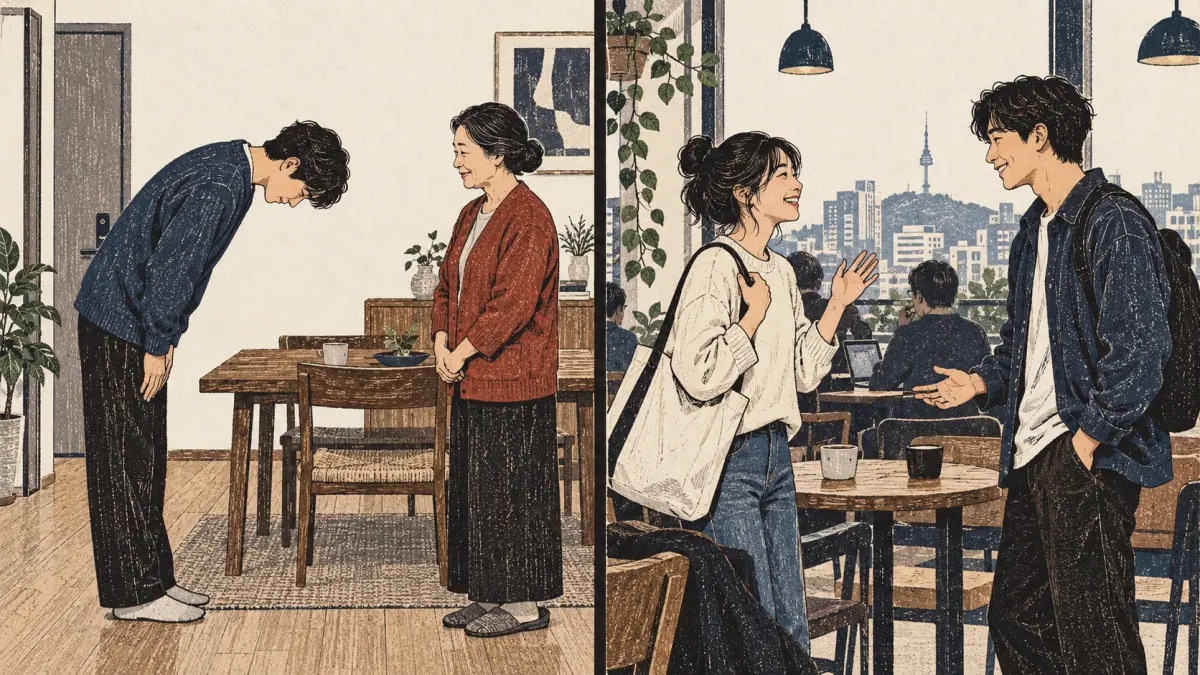
The right words depend on two questions: how well you know the person, and whether they are older or higher in rank. The table maps five common situations to a greeting, a way of addressing the person and a speech level.
| Situation | Greeting | How to address them | Speech level |
|---|---|---|---|
| A stranger or shop staff | 안녕하세요, slight bow | 저기요 (jeogiyo, "excuse me") to get attention | polite, -아요/어요 |
| An older person, such as a friend's parent | 안녕하세요, deeper bow | a respectful title, never the name | polite, with the honorific -(으)시- |
| A colleague of similar rank | 안녕하세요 | full or given name + 씨 (민준 씨), or title + 님 | polite; formal -ㅂ니다/습니다 in meetings |
| A manager or teacher | 안녕하세요, or the formal 안녕하십니까 | title + 님 (부장님, 선생님) | polite or formal, with -(으)시- |
| A close friend your age or younger | 안녕, 잘 지냈어? | given name + 아/야 (민준아, 지수야) | casual (반말), once both agree |
The honorific -(으)시- in the second row raises the person you talk about. A common example is a mealtime greeting to an elder:
식사하셨어요?
siksahasyeosseoyo?
Have you eaten? (a polite greeting to an older person)
The last row uses 아 after a name that ends in a consonant (민준아) and 야 after a vowel (지수야). Use it only with close friends and people younger than you. The pages below teach each of these choices in detail.
What Pages Are in This Subhub?
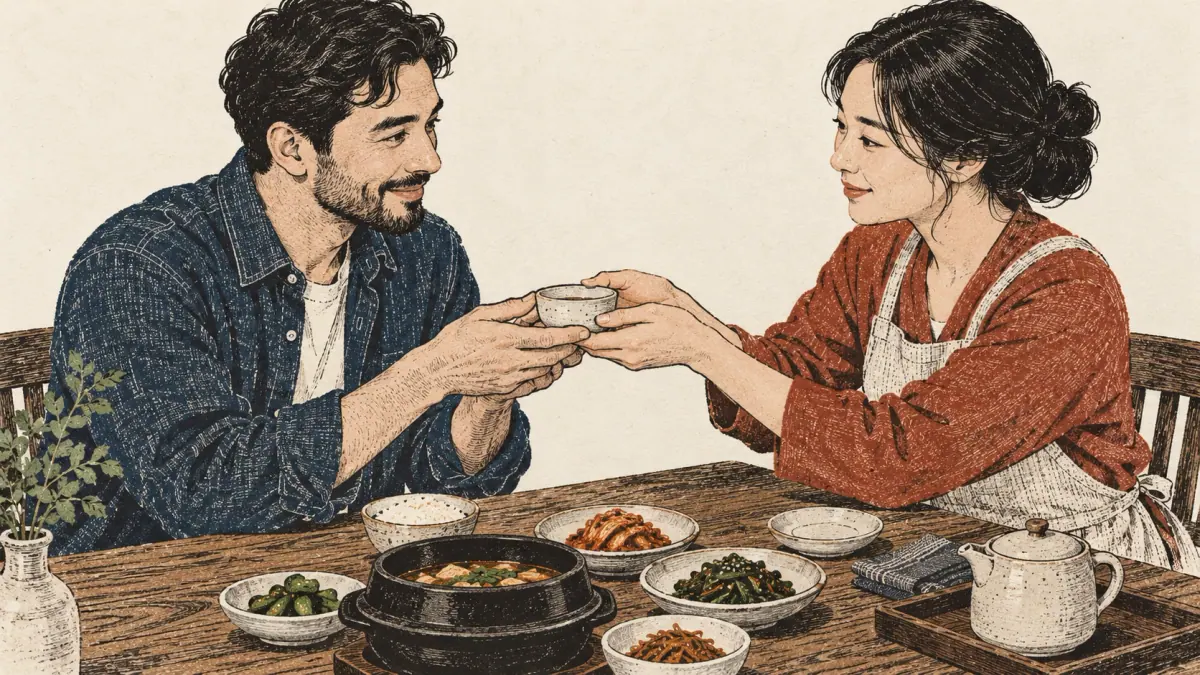
This subhub groups the etiquette pages into four sets: greetings and age, titles and address terms, informal speech, and practical situations. Grammar and phrase pages that teach the exact forms are linked alongside the etiquette guides.



Greeting and Age
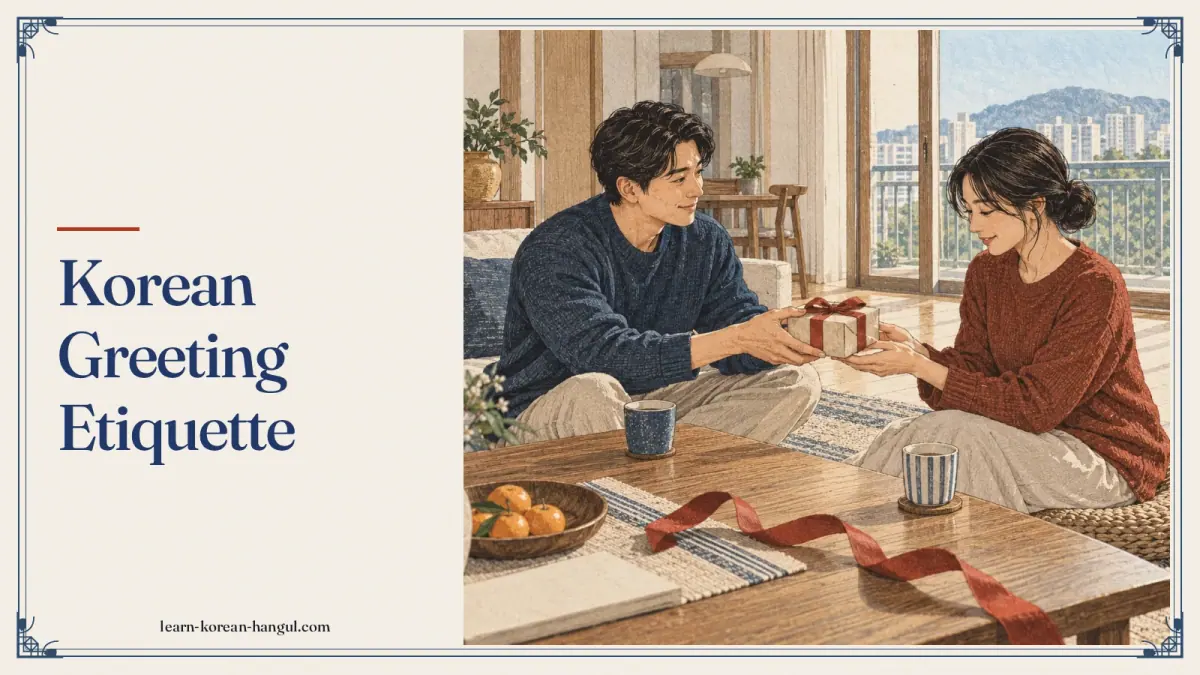
Korean greeting etiquette covers how deep to bow, how to show respect in a handshake by supporting your right forearm with your left hand, and the two goodbyes, 안녕히 가세요 and 안녕히 계세요. Korean age etiquette explains why age sets the speech level, what 동갑 (same age) means, and how to ask someone's age politely with 몇 년생이세요? (What year were you born?).
Two published pages cover the basics now. Hello in Korean compares 안녕하세요, 안녕하십니까 and 안녕. Korean age explains how Koreans count and say ages, which you need before any age conversation.
Titles and Address Terms
Titles replace names and the word "you" in polite Korean. Korean honorifics ssi vs nim explains when 씨 is enough and when a title with 님 is needed. What does oppa mean covers the title a woman uses for an older brother or an older male friend.
The wider set is in Korean terms of address, which covers titles for strangers, staff and colleagues. Sunbae and hoobae explains the senior and junior terms used at school and work.
Informal Speech
What is banmal in Korean teaches the casual endings and who you can use them with. When to use banmal walks through the signals that the switch is welcome and how to ask for it with 말 놓아도 돼요? ("May I speak casually?").
Practical Etiquette
Korean etiquette for tourists focuses on what to say in shops, restaurants, taxis and homes, along with habits such as giving and receiving with two hands. One set phrase worth learning early is 잘 먹겠습니다 (jal meokgetseumnida), said before a meal, especially when someone else has cooked or is paying.
The next section lists the mistakes these pages help you avoid.
What Mistakes Do Beginners Make with Korean Etiquette?
Most etiquette mistakes in Korean are word choices, not actions. Each one below is grammatically fine but socially awkward, and each has a simple fix.
- Calling someone 당신. 당신 is a dictionary word for "you", but in conversation it can sound cold or even hostile. Use the person's name with 씨, or a title. The Korean word for you explains the options.
- Adding 씨 to your own name. 씨 is respect for someone else. Say 저는 민준이에요, not 저는 민준 씨예요.
- Calling a manager by name plus 씨. It treats the manager as an equal. Use the title: 부장님 or 김 부장님.
- Using casual speech with a stranger. 이거 얼마야? to a shop assistant sounds rude. Say 이거 얼마예요?.
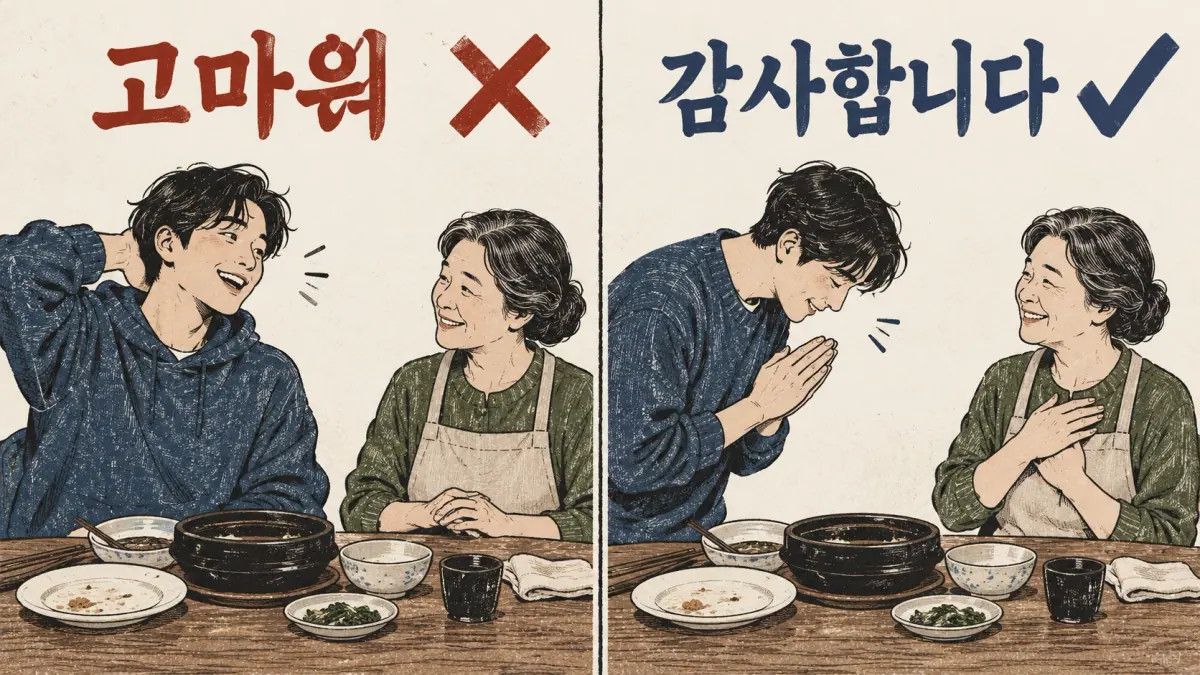
- Thanking an older person casually. 고마워 is for friends. Say 감사합니다 or 고맙습니다.
- Calling an older friend 너. Use their name with a title, or 언니, 오빠, 형 or 누나 if you are close.
Korean honorific mistakes covers the grammar side of these errors, such as using -(으)시- for yourself.
Is Korean Etiquette Strict for Foreigners?

Korean etiquette is relaxed about a learner's mistakes but firm about the basics. Most Koreans do not expect foreigners to know bowing depths or every title, and they respond well to effort. Casual speech with a stranger or an older person still stands out, even from a foreigner.
The honest limit of any etiquette guide is that relationships vary. A young start-up may use first names and casual speech, while a bank or a school keeps titles and formal endings. Customs also shift by generation: younger Koreans often move to casual speech faster than their parents did. When you are unsure, polite speech and a title are never wrong.
Frequently Asked Questions
Do I have to bow in Korea?
You are not required to, but a slight bow with 안녕하세요 is the normal greeting and is appreciated from learners. Lower your head and shoulders a little; there is no need to bend at the waist in everyday meetings. Save a deeper bow for elders, formal introductions and sincere apologies.
Can I call someone by their name in Korean?
Yes, with a suffix. Use the full or given name plus 씨 for colleagues and acquaintances of similar rank, as in 민준 씨. Use a title with 님 for teachers, managers and customers. A bare given name, or the name plus 아 or 야, is only for close friends and people younger than you.
When can I speak informally in Korean?
Speak informally with close friends of your age, younger friends who are comfortable with it, family members and children. With anyone else, wait until the switch is agreed, often when the older person says 말 편하게 해 or you ask 말 놓아도 돼요? and get a yes. Until then, keep using polite speech.
How should I greet an older person in Korean?
Say 안녕하세요 with a slightly deeper bow than usual, and use polite speech with the honorific -(으)시- in what follows. At mealtimes, 식사하셨어요? (Have you eaten?) is a warm greeting. Address the person with a title rather than a name, and never with 너 or 당신.
What should I call a stranger in Korean?
To get a stranger's attention, say 저기요 (excuse me), which works in shops, restaurants and on the street. Avoid any word for "you". Staff will call you 손님 (customer). For a person whose role you know, use the title, such as 기사님 for a driver, which shows respect without needing a name.
What Is Not Covered Here?
This section covers Korean etiquette where it changes your words. The grammar behind it lives in the grammar hub: Korean speech levels teaches the endings, and Korean honorifics teaches -(으)시-, honorific verbs and humble forms. Dining and gift customs appear only where language is involved, and names have their own section, Korean names. For the wider picture, return to Korean language and culture.