
Key facts
- Law in force: 28 June 2023, with international age as the legal standard.
- 세는나이 (counting age): 1 at birth, plus one every 1 January.
- 만 나이 (international age): 0 at birth, plus one on each birthday.
- 연 나이 (year age): current year minus birth year; still used in a few laws.
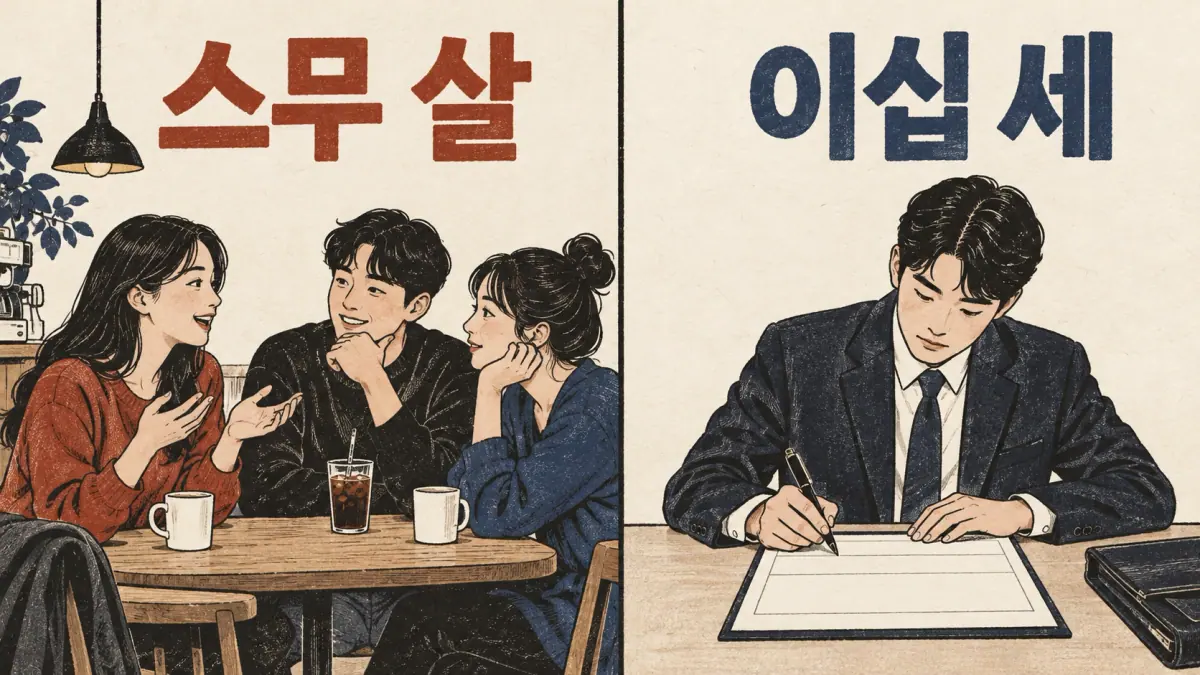
- Counters: 살 with native numbers in speech, 세 with Sino numbers on forms.
What Is Korean Age?
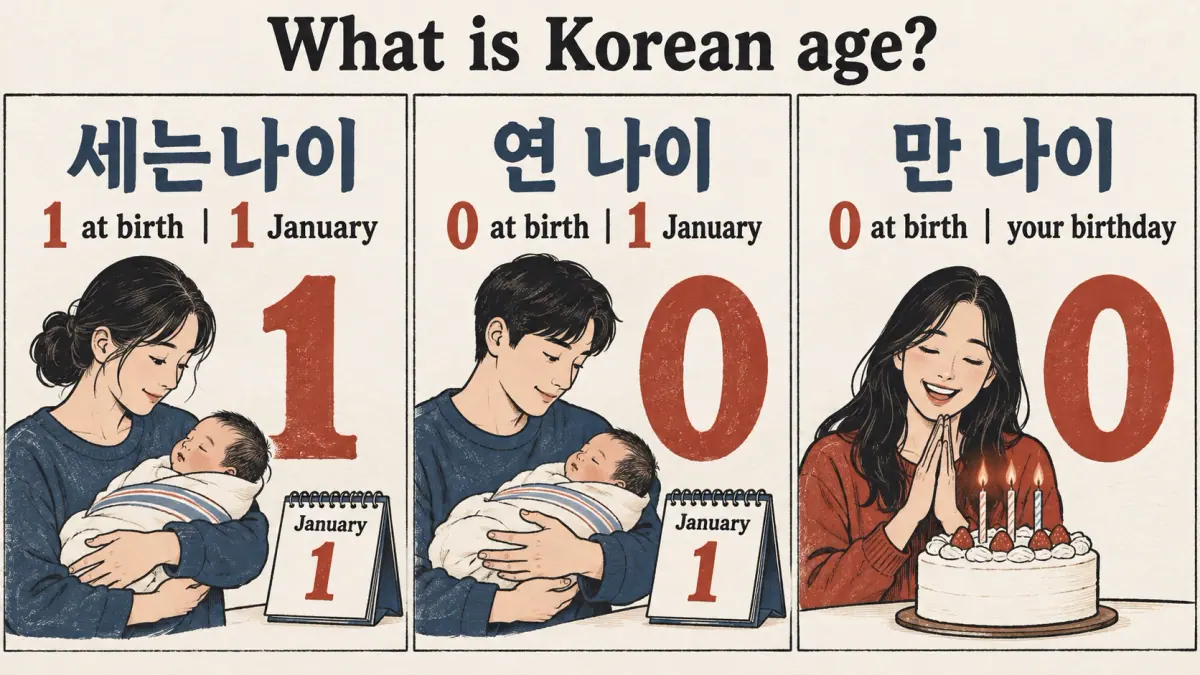
Korean age is the traditional way of counting age in Korea, in which a newborn is 1 and everyone becomes a year older together on 1 January. Today the term is used loosely for any of three systems, which differ in the starting age and the day a year is added.
| System | Korean | Age at birth | Changes on | Used today |
|---|---|---|---|---|
| Counting age | 세는나이 | 1 | 1 January | conversation only |
| Year age | 연 나이 | 0 | 1 January | a few laws (alcohol, tobacco, military service) |
| International age | 만 나이 | 0 | your birthday | law, contracts, medicine, forms |
A quick example shows the gap. On 1 March 2026, a person born on 15 May 1995 is 32 in counting age, 31 in year age and 30 in international age. After 15 May, the international age becomes 31. The numbers converge and diverge through the year, which is why a single legal standard was needed.
What Changed in 2023?
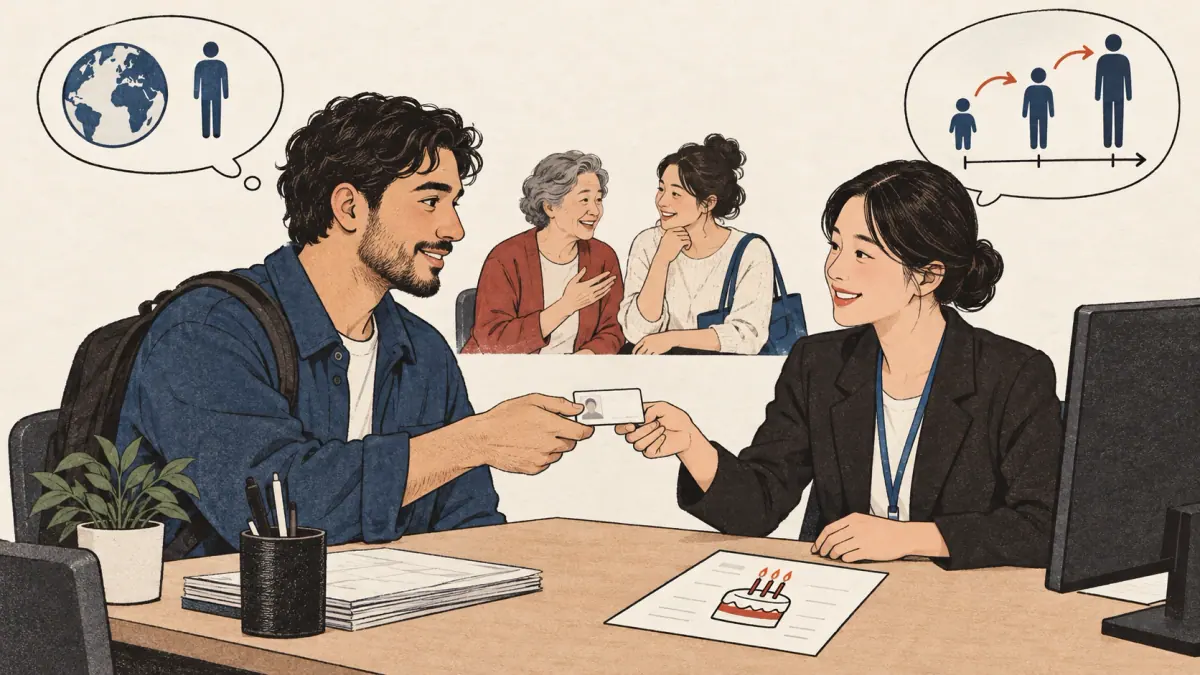
On 28 June 2023, amendments to the Civil Act (민법) and the Framework Act on Public Administration (행정기본법) made international age the default meaning of "age" in South Korean law and administration. Three steps led there:
- From the early 1960s: legal age was already counted in full years from birth under the Civil Act (1962 is the year usually cited).
- December 2022: the National Assembly passed amendments to make that standard explicit everywhere unless a specific law says otherwise.
- 28 June 2023: the amendments took effect. Counting age lost every official role; a few year-based rules stayed.
The change did not ban counting age in speech, and it did not alter anyone's birth date. The full story, including the exceptions and the social effects, is on the page about Korean age abolished. The pages below take each part of the topic in turn.
Pages in This Section
The Age in Korean section has four pages. They move from the legal background to calculation, then to the words and phrases you need in conversation.
The Legal Change

Korean age abolished explains what the June 2023 amendments did and did not change. It compares counting age, year age and international age in one table, works through a birth date of 31 December 2000 that produces three different ages on one day, and lists the rules that stayed year-based, such as buying alcohol. Read it first if you want to understand news reports or older texts.
Calculating Each Age

How to calculate Korean age gives the formula for each system and applies it to several birth dates, including birthdays early and late in the year. It lets you convert any age you read in a Korean drama, book or profile into international age.
Saying Age in Korean


How to say age in Korean covers the full sentences: 스무 살이에요 ("I'm 20"), 몇 살이에요? ("How old are you?") and the honorific 연세가 어떻게 되세요? for older people. It also shows when to use 세 instead of 살. The 살 counter focuses on the number forms, from 한 살 to 아흔아홉 살, and the common errors such as 이십 살.
Choosing among four pages is easier with a clear goal, so the next section maps goals to pages.
Where Should You Start?
Start with the page that matches what you need to do. These five questions cover the usual reasons learners arrive here.
- "Is Korean age still a thing?" Read Korean age abolished for the legal answer and the social reality.
- "What is my Korean age?" Use how to calculate Korean age; it takes under a minute per date.
- "How do I tell someone my age?" Go to how to say age in Korean.
- "Why is it 스무 살 and not 이십 살?" See the 살 counter and the general rule in Sino vs native Korean numbers.
- "Why do Koreans ask what year I was born?" The birth-year custom (몇 년생이에요?) is explained in the abolition explainer.
| Page | Main question | Type | Best for |
|---|---|---|---|
| Korean age abolished | What did the 2023 law change? | explainer | news, culture, older texts |
| Calculate Korean age | What is my age in each system? | worked examples | converting ages |
| How to say age in Korean | What do I say? | phrase lesson | conversation |
| The 살 counter | Which number form goes with 살? | counter lesson | accuracy with numbers |
If you are new to Korean numbers, read the counter lesson before the phrase lesson, because 살 depends on native numbers. With the starting point chosen, it helps to know what this section leaves out.
What Is Not Covered Here?
This section does not teach the general word for age as a vocabulary item; the dictionary-style entry age in korean covers 나이 and 연세 with pronunciation and examples. It also does not cover dates and birthdays in full, or the number systems themselves, which live in Korean Numbers. The legal descriptions are for learners, not legal advice; check current Korean law for anything official. Within those limits, these pages give you everything you need to understand and use Korean age.
Frequently Asked Questions

Is Korean age still used? Korean counting age has no role in any law, form or official notice, and since 28 June 2023 international age is the legal default. It is still heard in casual conversation, especially among older speakers, and in books and dramas from before the change. Many people now give their international age, or simply state their birth year with 몇 년생 to avoid confusion.
Does the Korean age law apply to foreigners? Yes, inside South Korea. The rules set how age is calculated in Korean law and administration, so a foreign resident's age on a contract, hospital form or government application is their international age. The year-based exceptions, such as the rule for buying alcohol, also apply to everyone. Outside Korea the law has no effect.
How old am I in Korean age? Your traditional Korean age is the current year minus your birth year, plus one. In 2026, someone born in 2000 is 27 in Korean counting age. Their international age is 26 after their birthday and 25 before it. The calculation page works through more dates step by step.
How do I ask someone's age politely in Korean? With an adult of similar age, ask 나이가 어떻게 되세요? With someone clearly older, use the honorific word 연세: 연세가 어떻게 되세요? With a child, 몇 살이에요? is fine. Many Koreans prefer to ask 몇 년생이에요? ("What year were you born?"), which avoids any confusion between age systems.