
How Do Korean Money Numbers Work?

Korean money numbers work in three steps: read the amount as a Sino-Korean number, group it in blocks of four digits, then add 원. Sino-Korean numbers are the series 일, 이, 삼 borrowed from Chinese, and they are the only series used for prices. The key unit is 만 (10,000), which stands between 천 (1,000) and 억 (100,000,000).
| Amount | Korean | How it is built |
|---|---|---|
| 1,000원 | 천 원 | 천 (1,000) |
| 5,000원 | 오천 원 | 오 (5) + 천 |
| 10,000원 | 만 원 | 만 (10,000) |
| 35,000원 | 삼만 오천 원 | 삼 (3) + 만, 오 (5) + 천 |
| 100,000원 | 십만 원 | 십 (10) + 만 |
Notice that Korean does not say 일 (one) before 천, 백 or 만: it is 천 원, not 일천 원. The single exception is 억, where 일억 원 is the normal reading for 100,000,000 won.
Why Does 만 Make Prices Easier?
English groups digits in threes (thousand, million), but Korean groups them in fours: 일, 십, 백, 천, 만. Once you treat 만 as the pivot, any amount splits into two blocks that you read separately. The price 35,000 is 3 + 5,000 around the pivot, so you say 삼만 오천. The price 15,500 is 1 + 5,500, so you say 만 오천오백. Reading the number left to right then sounds natural.
If you try to apply English thousands to Korean prices, the numbers feel too large. Think in 만 and the numbers shrink: 3.5 만 is 35,000.
One sound detail helps your listening. The final ㄴ of 만 links to the vowel of 원, so 만 원 is spoken [마눤], as one smooth word. The same linking happens in 삼만 원 [삼마눤]. Do not pause between the number and 원 when you say a price aloud.
Pages in This Section
The section has three lessons that move from the currency, to reading price tags, to the big units. Each lesson has audio for every number and a practice set.
The Currency
Korean won: notes, coins and how to say prices names each banknote and coin in Korean: notes of 1,000, 5,000, 10,000 and 50,000 won, and coins of 10, 50, 100 and 500 won. It reads amounts such as 15,500원 aloud and covers common unit mistakes.
Reading Prices
Korean counter won (원): how to read and say prices teaches ten price tags, the question 얼마예요?, the placement of 원 and the suffixes 짜리 (an item worth, as in 만 원짜리 "a 10,000 won one") and 어치 (an amount's worth, as in 만 원어치 "10,000 won's worth"). It shows why 원 follows Sino-Korean numbers and never native ones.
Big Units
Korean numbers million and billion: 만, 억, 조 explained converts English million, billion and trillion into 만, 억 and 조. It reads 3.5 billion won correctly and shows why the English and Korean number words do not line up one to one.
Notes and Coins in Korean
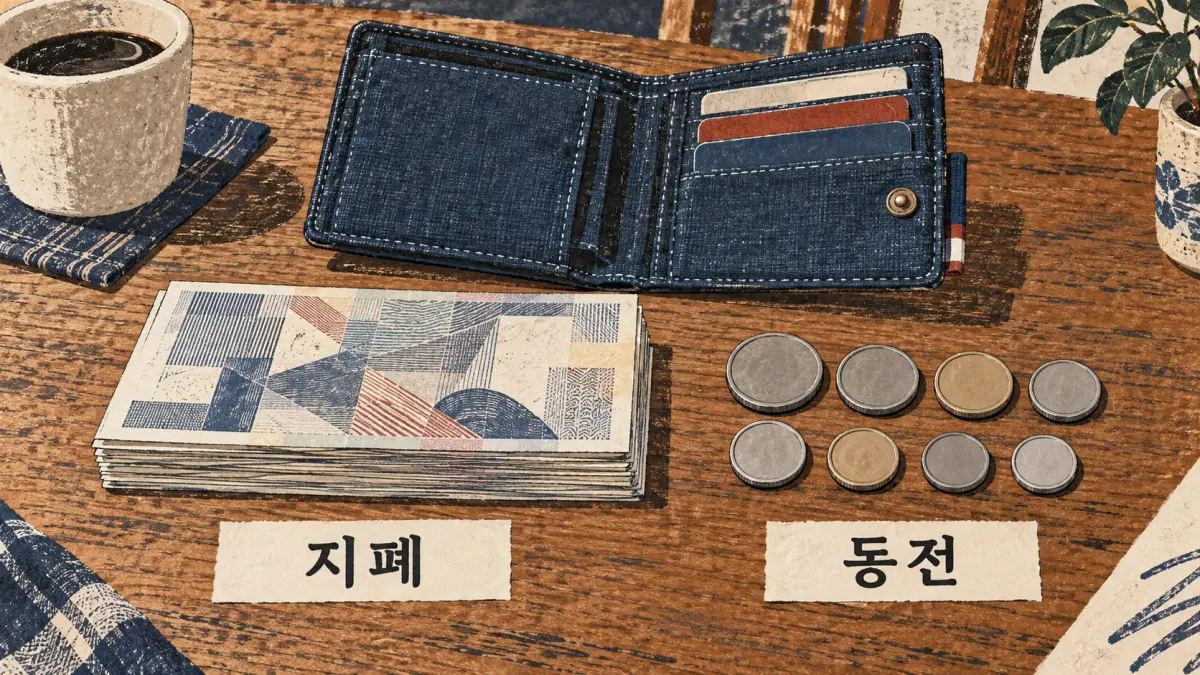
The word for a banknote is 지폐 and the word for a coin is 동전. Each note and coin is named by its value plus 원, so the names reuse the ladder from the first section. The table lists the set in common use.
| Kind | Value | Korean |
|---|---|---|
| banknote | 1,000원 | 천 원 |
| banknote | 5,000원 | 오천 원 |
| banknote | 10,000원 | 만 원 |
| banknote | 50,000원 | 오만 원 |
| coin | 10원 | 십 원 |
| coin | 50원 | 오십 원 |
| coin | 100원 | 백 원 |
| coin | 500원 | 오백 원 |
The 50,000 won note is 오만 원 because 5 × 10,000 is 5 만. Each value on the list is a number you can read with the pivot 만 or with the units 천 and 백. Coins of 1 and 5 won are still legal tender but are not seen in daily use, so cash prices usually end in 0.
A Short Price Dialogue

A price dialogue has three beats: the question, the price and a decision. The dialogue below uses numbers from the ladder at a market stall.
- 손님: 이거 얼마예요? (How much is this?)
- 상인: 만 오천 원이에요. (It is 15,000 won.)
- 손님: 너무 비싸요. 만 이천 원에 주세요. (It is too expensive. Please give it for 12,000 won.)
- 상인: 그럼 만 삼천 원에 드릴게요. (Then I will give it for 13,000 won.)
The particle 에 after a price means "for" or "at": 만 삼천 원에. In large stores, prices are fixed and bargaining is unusual, so the pattern is mainly for markets. Details of the phrases are on the Korean shopping phrases page.
Three Slips to Avoid
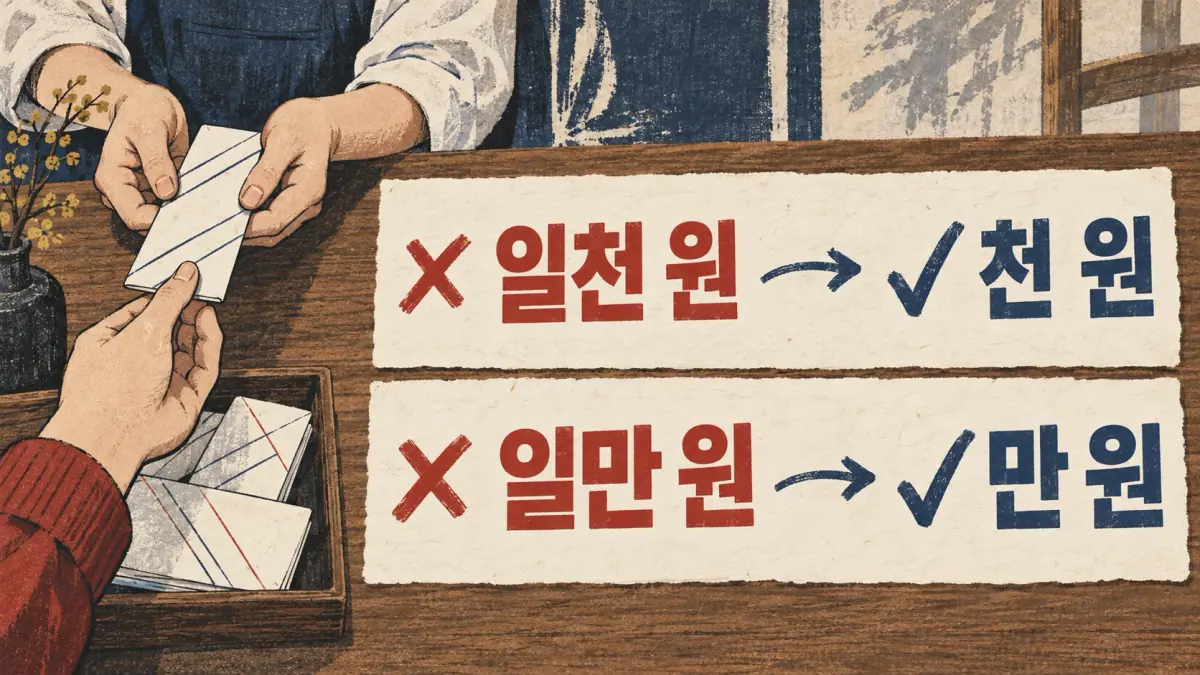
Three mistakes account for most wrong prices. Say 천 원, not 일천 원. Say 만 원, not 일만 원, when you mean 10,000 won. Say 삼만 오천 원, not 삼십오 천 원, because 35,000 is split at 만. The English habit of thousand-based groups causes all three.
Where Are Shopping Phrases and Money Words?
Shopping phrases and money vocabulary live in other sections, so this hub stays focused on numbers. Use these pages for the language around the price.
- Korean money vocabulary lists words such as 돈 (money), 현금 (cash) and 카드 (card).
- Korean shopping phrases gives scripts for asking a price, bargaining and paying.
Where Can You Convert Amounts?
The Korean converters page lists a number converter that turns digits into Korean number words, which helps you practice saying 35,000원. It does not show exchange rates. Rates change every day, so check a bank or an exchange app for dollars, euros or other currencies, and use the rate only as a guide.
Which Money Page Should You Read First?
Read the won page first if you are new to Korean currency, and read the price-reading page first if you already know the notes. The table maps your goal to a page.
| If you want to... | Start with |
|---|---|
| recognise notes and coins | Korean won |
| read a price tag or ask 얼마예요? | Korean counter won (원) |
| understand 3.5 billion won in a news item | Korean numbers million and billion |
After the three pages you will know the essential Korean money numbers: the pivot 만, the unit 원 and the big units 억 and 조. Return to Korean Numbers for the other sections.
Frequently Asked Questions
How do I say prices in Korean?
Read the number in Sino-Korean and add 원: 오천 원 for 5,000 won and 삼만 오천 원 for 35,000 won. Ask the price with 얼마예요? and listen for the block with 만. Say the amount in groups of four digits, not three, so 15,500 reads as 만 오천오백 원.
What is 만 원?
만 원 is 10,000 won, the value of the 10,000 won banknote. 만 means ten thousand and is the main pivot of Korean money numbers. Korean does not say 일만 원 in daily speech, so you drop the 일. Larger amounts build on it: 이만 원 is 20,000 and 십만 원 is 100,000.
Do I use native numbers for money?
No. Prices use Sino-Korean numbers only: 오천 원, never 다섯천 원. Native numbers appear only when you count the items themselves, as in 사과 세 개 (three apples), and then the price follows separately: 사과 세 개에 오천 원 (5,000 won for three apples).
Where can I convert won to dollars?
Exchange rates change daily, so use a bank, an exchange app or a currency tool for live rates. This site's converters turn digits into Korean number words, which helps you say amounts but does not show exchange rates. Use any rate you find only as a guide before you shop.
Can I pay in Korea without cash?
In most shops, yes. Credit and debit cards and phone payments are widely accepted, but small stalls and traditional markets may prefer cash, and some terminals reject foreign cards. Carry a little cash in 1,000 and 10,000 won notes. Policies vary by shop, so ask 카드 돼요? (Can I use a card?).