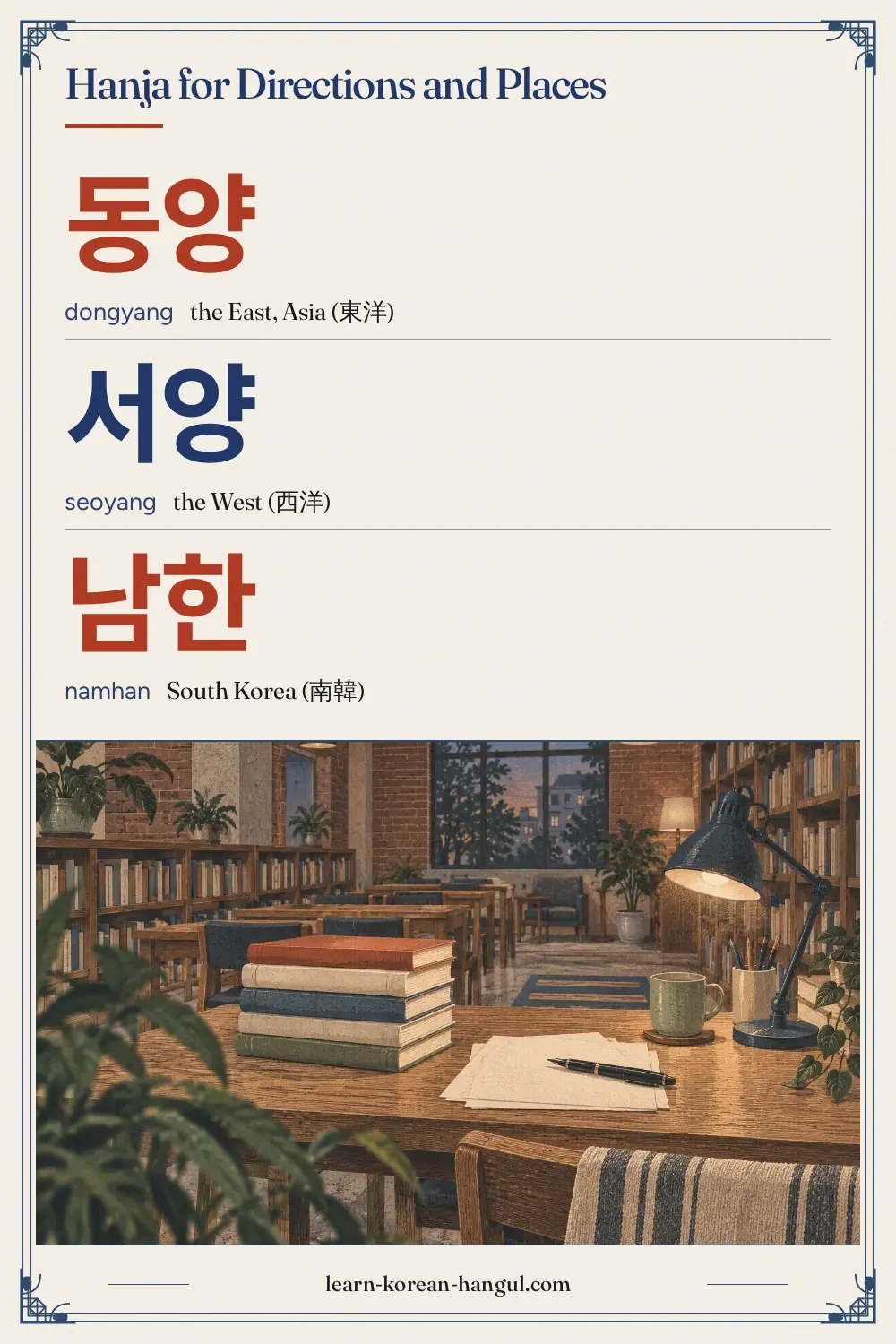
Hanja (한자) are Chinese characters used in Korean. You do not write them every day, but they explain Sino-Korean words, which commonly cited estimates put at roughly half or more of dictionary words. Direction characters are among the most useful because they appear on signs and in the news.
This is the sixth of ten theme groups in the basic hanja set. Plan about 20 minutes. If you only want phrases for asking the way, see travel phrases for directions.
Hanja for Directions and Places: the Essentials
The table gives each character with its 음훈, the traditional way Korean dictionaries teach a character: a native meaning word, then the Sino-Korean sound. So 東 is "동녘 동", "east, sound dong". The ten characters fall into three sets: the four compass points (東西南北), the vertical and inner pairs (上下, 內外) and two flexible characters (中, 方).
| Character | 음훈 (meaning word + sound) | Reading | Core meaning | Two words it builds |
|---|---|---|---|---|
| 東 | 동녘 동 | 동 | east | 동양, 동남아 |
| 西 | 서녘 서 | 서 | west | 서양, 서해 |
| 南 | 남녘 남 | 남 | south | 남한, 남극 |
| 北 | 북녘 북 | 북 | north | 북한, 북극 |
| 上 | 윗 상 | 상 | up; above | 이상, 상반기 |
| 下 | 아래 하 | 하 | down; below | 이하, 지하철 |
| 中 | 가운데 중 | 중 | middle; in | 중간, 중국 |
| 內 | 안 내 | 내 | inside | 국내, 내용 |
| 外 | 바깥 외 | 외 | outside | 외국, 외출 |
| 方 | 모 방 | 방 | direction; way | 방법, 방향 |
Learn them as opposing pairs: 東 with 西, 南 with 北, 上 with 下, 內 with 外. 中 (middle) sits between each pair, and 方 turns any of them into a direction or a way. The usual order is 東西南北: east, west, south, north.
How Do You Read Each Character?
Each character has one reading in Korean, with one small exception for 北. The notes give a picture and a sound fact. The pictures are memory aids, not strict word histories.
- 東 동 (동녘 동). The sun (日) caught in the branches of a tree (木), the picture of sunrise in the east. 동양 is the traditional name for East Asia, and 동남아 is the everyday short form of Southeast Asia. The ending 亞 (아) is short for Asia. It shares its sound with 動 (to move) and 同 (same).
- 西 서 (서녘 서). A basket or a nest shape, often remembered as a bird settling at sunset in the west. 서양 is the West and 서해 is the sea on Korea's west coast. The native direction word is 서쪽, with the Sino-Korean 서 followed by the native word 쪽 (side).
- 南 남 (남녘 남). A frame with a cross and hooks inside; the shape is complex, so tie it to the sound. 남한 is used for the southern half of the peninsula, as in 남한과 북한, and 남극 is the South Pole. It shares its sound with 男 (man), so 남자 and 남쪽 begin the same.
- 北 북 (북녘 북). Two people standing back to back. In 북한 the ㄱ and ㅎ blend into an aspirated ㅋ, [부칸], and Revised Romanization keeps the h in a noun: bukhan. 北 has a second reading, 배, in 패배 (敗北, defeat), where it means "to turn away".
- 上 상 (윗 상). A short line above a long line, so "above the base". On forms and tickets, 이상 means "this number or more": 18세 이상 is 18 years and older, including 18. 상반기 is the first half of the year, the "upper half", and its partner is 하반기, the second half.
- 下 하 (아래 하). A short line below a long line, so "below the base". 이하 means "this number or less": 12세 이하 is 12 years and younger, including 12. In 지하철, 下 sits under 地 "ground": the iron (鐵) line below the ground. Its partner 上 is the best pair to learn together.
- 中 중 (가운데 중). A line through the middle of a box. 중국 is "the middle country", the Korean name for China. 중간 is the middle, as in 중간고사 (mid-term exam). After a noun, 중 (written with a space) means "in the middle of": 공사 중 is "under construction". Do not mix it up with 重 (heavy), also 중.
- 內 내 (안 내). A person (人) going in under a roof. 국내 is the opposite of 해외 (overseas), as in 국내선 (domestic flight): the ㄱ before ㄴ turns nasal, [궁내]. 내용 is what is inside, the content. The 내 of 내일 (tomorrow) is a different character, 來, so do not link it to 內.
- 外 외 (바깥 외). An evening mark (夕) next to a divining stick (卜), and one way to remember it is "outside at night". 외국 is the country outside, and 외출 is going out of the house. It is the opposite of 內. Combined with 人 it gives 외국인 (foreigner), which is on the family and people page.
- 方 방 (모 방). A small flag on a pole, a good picture of pointing in a direction. 방향 is 方 "direction" + 向 "towards", and 방법 is 方 "way" + 法 "law", a method. The 방 of 방 (room) is a different character, 房, so 방법 has nothing to do with rooms.
Sino-Korean direction words are usually joined to the native word 쪽 (side) in speech: 동쪽 (east side), 서쪽, 남쪽, 북쪽, 위쪽 and 아래쪽. When you see 東 in a sign you read 동, and when you speak you say 동쪽. The native words for up and down (위, 아래) are what you use in sentences.
Which Words Does Each Character Build?
Each character builds two common words. The "Said" column shows the pronunciation where it differs from the spelling, and the romanization follows the official Revised Romanization rules, which keep the h in nouns such as 북한 (bukhan).
| Character | Word | Hanja | Revised Romanization | Said | Meaning |
|---|---|---|---|---|---|
| 東 | 동양 | 東洋 | dongyang | as spelled | the East, Asia |
| 東 | 동남아 | 東南亞 | dongnama | as spelled | Southeast Asia |
| 西 | 서양 | 西洋 | seoyang | as spelled | the West |
| 西 | 서해 | 西海 | seohae | as spelled | the West Sea (Yellow Sea) |
| 南 | 남한 | 南韓 | namhan | as spelled | South Korea |
| 南 | 남극 | 南極 | namgeuk | as spelled | the South Pole |
| 北 | 북한 | 北韓 | bukhan | [부칸] | North Korea |
| 北 | 북극 | 北極 | bukgeuk | as spelled | the North Pole |
| 上 | 이상 | 以上 | isang | as spelled | or more, above |
| 上 | 상반기 | 上半期 | sangbangi | as spelled | first half of the year |
| 下 | 이하 | 以下 | iha | as spelled | or less, below |
| 下 | 지하철 | 地下鐵 | jihacheol | as spelled | subway |
| 中 | 중간 | 中間 | jungan | as spelled | middle |
| 中 | 중국 | 中國 | jungguk | as spelled | China |
| 內 | 국내 | 國內 | gungnae | [궁내] | domestic, within the country |
| 內 | 내용 | 內容 | naeyong | as spelled | content |
| 外 | 외국 | 外國 | oeguk | as spelled | foreign country |
| 外 | 외출 | 外出 | oechul | as spelled | going out |
| 方 | 방법 | 方法 | bangbeop | as spelled (often heard [방뻡]) | method |
| 方 | 방향 | 方向 | banghyang | as spelled | direction |
Twelve of the twenty are place or direction words: 동양, 서양, 동남아, 서해, 남한, 북한, 남극, 북극, 지하철, 중국, 국내, 외국. The other eight are measures, actions or abstract nouns: 이상, 이하, 상반기, 중간, 내용, 외출, 방법, 방향. A good test: read a station or building sign and look for the direction syllables 동, 서, 남 and 북 in it.
Listen to the first word of each pair in the flashcard deck below, and to the second words here:
How Do the Characters Pair up and Combine?
Pairs build words of their own, and the compass points build the names of the seas around Korea.
| Characters | Word | Meaning |
|---|---|---|
| 東 + 西 | 동서 (dongseo) | east and west |
| 南 + 北 | 남북 (nambuk) | north and south |
| 上 + 下 | 상하 (sangha) | up and down |
| 內 + 外 | 내외 (naeoe) | inside and outside; about, or so |
| 東 + 海 | 동해 (donghae) | East Sea |
| 西 + 海 | 서해 (seohae) | West Sea (Yellow Sea) |
| 南 + 海 | 남해 (namhae) | South Sea |
After a noun, 중 (中, written with a space) means "in the middle of": 회의 중 (in a meeting), 공사 중 (under construction) and 통화 중 (on the phone). On forms, 以上 and 以下 mark age limits and ranges, and 미만 and 초과 exclude the limit. For a larger view of the pattern, see Sino-Korean vocabulary.
What Reading or Spelling Traps Should You Know?
- 以上 and 以下 include the number. 18세 이상 means 18 and older, and 12세 이하 means 12 and younger. If you want to exclude the number, the words are 초과 (over) and 미만 (under).
- Homophones. 이상 can be 以上 (or more), 異常 (abnormal) or 理想 (ideal). 중 is 中 or 重. 방 is 方 or 房 (room). 내 is 內 or 來 (as in 내일, tomorrow). Context decides.
- Nasal changes. 국내 is [궁내] (ㄱ before ㄴ becomes ㅇ). Revised Romanization shows it as gungnae.
- Aspiration. 북한 is [부칸], with ㄱ and ㅎ blending into ㅋ. Revised Romanization keeps the h in a noun: bukhan.
- Spelling-based pronunciation. The dictionary pronunciation of 방법 is [방법], as spelled, although [방뻡] is often heard in speech. Revised Romanization follows the spelling either way: bangbeop.
- A rare second reading. 北 is read 북 in almost every word, but 배 in 패배 (defeat). Treat it as a one-word exception.
- Native versus Sino-Korean. In speech, say 동쪽 (not just 동) and 위, 아래 for up and down. Use the single character forms for signs, compounds and written words.
Practice This Group
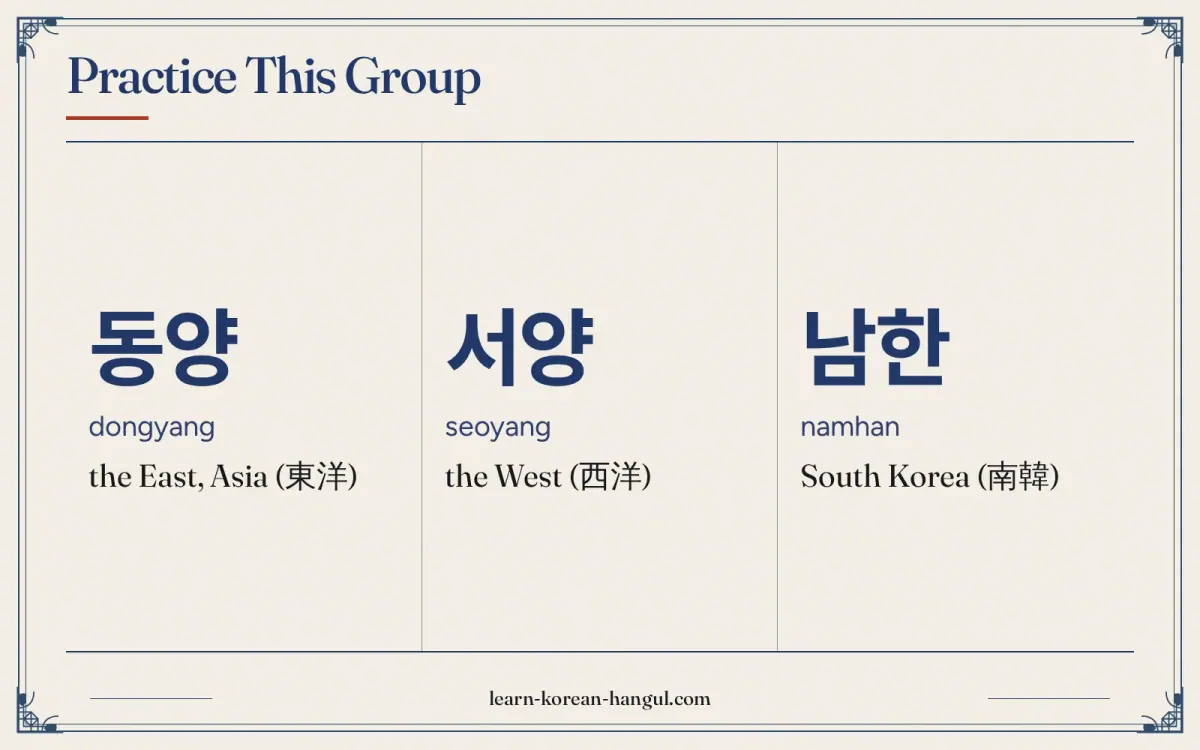
The deck uses the first word from each pair, and the table shows exactly what is in it. Read the table, run the deck and then answer the questions.
| # | Korean | Revised Romanization | Meaning | Character note |
|---|---|---|---|---|
| 1 | 동양 | dongyang | the East, Asia (東洋) | 東 (동녘 동). Sun in a tree: sunrise, the east. 東南亞 = Southeast Asia. |
| 2 | 서양 | seoyang | the West (西洋) | 西 (서녘 서). A nest at sunset: the west. 西洋 = the West. |
| 3 | 남한 | namhan | South Korea (南韓) | 南 (남녘 남). A frame with hooks: the south. 南極 = South Pole. |
| 4 | 북한 | bukhan | North Korea (北韓) | 北 (북녘 북). Two people back to back: the north. 北韓 = North Korea. |
| 5 | 이상 | isang | or more, above (以上) | 上 (윗 상). A short mark above a line: up. 以上 = this and above. |
| 6 | 이하 | iha | or less, below (以下) | 下 (아래 하). A short mark below a line: down. 地下鐵 = subway. |
| 7 | 중간 | jungan | middle (中間) | 中 (가운데 중). A line through a box. 中國 = China; -中 = "in the middle of". |
| 8 | 국내 | gungnae | domestic, within the country (國內) | 內 (안 내). A person going under a roof: inside. 國內 = domestic. |
| 9 | 외국 | oeguk | foreign country (外國) | 外 (바깥 외). Evening beside a stick: outside. 外國 = foreign country. |
| 10 | 방법 | bangbeop | method (方法) | 方 (모 방). A flag pointing somewhere: a direction or a way. |
Practice · 10
- 01동양
Show answer
dongyang
the East, Asia (東洋)
- 02서양
Show answer
seoyang
the West (西洋)
- 03남한
Show answer
namhan
South Korea (南韓)
- 04북한
Show answer
bukhan
North Korea (北韓)
- 05이상
Show answer
isang
or more, above (以上)
- 06이하
Show answer
iha
or less, below (以下)
- 07중간
Show answer
jungan
middle (中間)
- 08국내
Show answer
gungnae
domestic, within the country (國內)
- 09외국
Show answer
oeguk
foreign country (外國)
- 10방법
Show answer
bangbeop
method (方法)
Recall drill. Say the characters in pairs: 東 and 西, 南 and 北, 上 and 下, 內 and 外. Then name the word each pair builds in the table above. Finally, read these signs aloud and say what each means: 출구 (exit), 지하 1층 (basement level 1), 외국인 (foreigner) and 13세 이상 (13 and older).
Check Yourself
Practice · 6
On a ticket, 18세 이상 means which people?
Show answer
18 and older, including 18
以上 (이상) means "this number or more", and it includes the number. 이하 is the opposite: this number or less.
How is 북한 (North Korea) actually pronounced?
Show answer
[부칸]
The final ㄱ of 북 and the ㅎ of 한 blend into an aspirated ㅋ, which moves onto the second syllable: [부칸].
In 지하철 (subway), what does 下 (하) mean?
Show answer
below
下 means "below". 地下鐵 is the iron (railway) below the ground.
Which character means "outside" and is read 외?
Show answer
外
外 is "outside", as in 외국 and 외출. 內 is "inside", read 내.
What does 방향 (方向) mean?
Show answer
direction
方 "direction" + 向 "towards" = direction. 방법 is method, and 방 (room) uses another character.
How is 국내 (domestic) actually pronounced?
Show answer
[궁내]
The ㄱ before ㄴ becomes nasal ㅇ, so 국내 is [궁내].
A Four-Day Plan for This Group
- Day 1. Learn 東西南北 as two pairs, with 동양, 서양, 남한 and 북한.
- Day 2. Learn 上下 and 內外 with 이상, 이하, 지하철, 국내 and 외국.
- Day 3. Learn 中 and 方 and the second word of each pair, and play the ten audio buttons.
- Day 4. Run the flashcards, then the quiz. Revisit missed characters after one day.
What to Learn Next
Next in the set are hanja for school and learning, hanja for country and society, hanja for time and hanja for actions and abstract words, which complete the 100. You can see all ten themes in one table on common hanja characters. For travel phrases that use these direction words, see travel phrases for directions. If you want more on how one character such as 外 opens a family of words, go to hanja word families.
Frequently Asked Questions
What does 以上 mean?
以上 (이상) means "this number or more" and includes the number itself: 20세 이상 is 20 years old and older. Its pair 以下 (이하) means "this number or less". To exclude the number, Korean uses 초과 (over) and 미만 (under). You will see these four words on forms, price lists and age limits.
Is 地下鐵 related to 下?
Yes. 지하철 is 地 "ground" + 下 "below" + 鐵 "iron", which describes the iron rails under the ground. The same 下 appears in 지하 (basement, underground), as in 지하 일 층 (first basement floor), so you can read the signs inside a department store or a station.
Why are 南 and 北 used in Korean country names?
They are the everyday words for the two halves of the peninsula in South Korean speech: 남한 (the south part) and 북한 (the north part). The official names of the two states are different, and formal writing uses those. For learners, 남한 and 북한 are the common geographic words you will hear in everyday South Korean speech.
Do 內 and 外 appear in 國內 and 外國?
Yes, and they come in opposite order. 국내 is 國 "country" + 內 "inside", and 외국 is 外 "outside" + 國 "country". The order is reversed, and so is the meaning: domestic versus foreign. Remembering the pair 國內 and 外國 together is a good test of the two characters.
Are 동양 and 서양 still used?
Yes. 동양 (East) and 서양 (West) are common in culture words, such as 동양화 (East Asian painting) and 서양 음식 (Western food). They are the standard terms for the broad cultural sense of East and West.