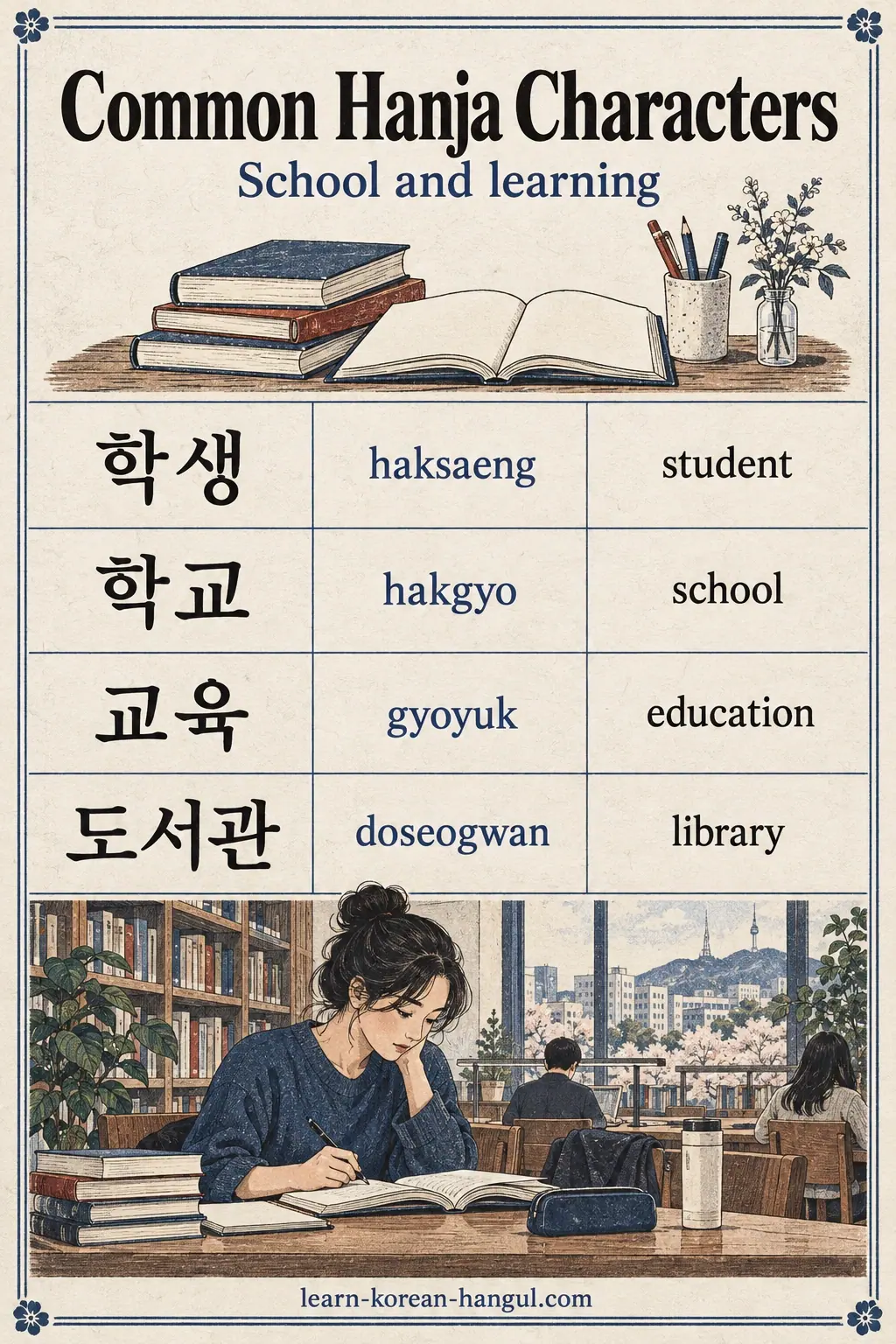
Hanja (한자) are Chinese characters used in Korean. Korean is written in Hangul, but commonly cited estimates say that roughly half or more of dictionary words are Sino-Korean, built from characters like these. Knowing a small core lets you see the parts inside new words, so 학생 (student) and 학교 (school) share the same first character, 學.
Common Hanja Characters: the Essentials
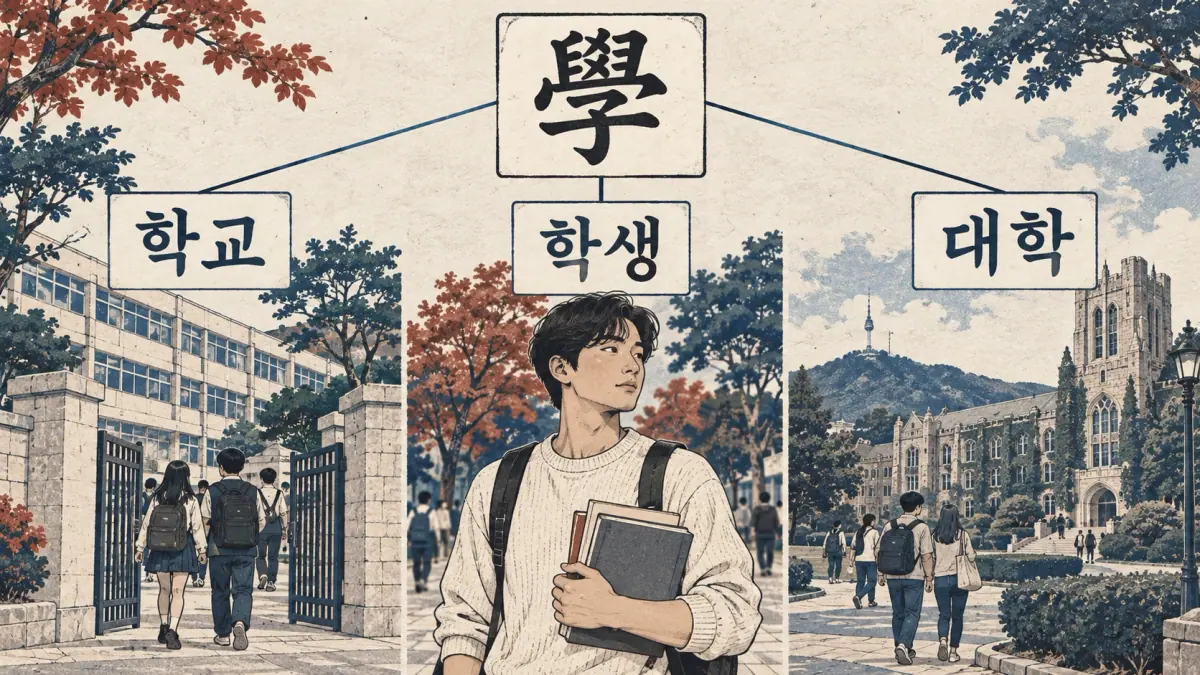
The core idea is simple: a character is a piece of vocabulary. The syllable 학 in 학교, 학생 and 대학 is the character 學 "study", and once you know it you can read the beginning of all three words. This page lists the 100 characters that open the most words, in ten groups of ten. The groups are the same ones used across the basic hanja section.
| Group | What it covers | Page |
|---|---|---|
| 1. Numbers | Ten characters that are the written form of 일 to 십. | Korean numbers in hanja |
| 2. Size and quantity | The number units 百千萬 and the words for big, small, many, few, long, high and heavy. | hanja for size and quantity |
| 3. Nature and weekdays | The seven weekday characters 日月火水木金土 plus mountain, stream and sky. | days of the week in Korean hanja |
| 4. People and family | Person, man, woman, child, father, mother, brothers, house and citizens. | hanja for family and people |
| 5. Body and mind | Mouth, eye, hand, foot, heart, ear, body, face, energy and power. | hanja for body and mind |
| 6. Directions and places | The four compass points, up, down, middle, inside, outside and direction. | hanja for directions and places |
| 7. School and learning | Study, school, teach, book, writing, letter, language, teacher, life and read. | hanja for school and learning |
| 8. Country and society | Country, Korea, company and society, public, market, city, gate and world. | hanja for country and society |
| 9. Time | Year, time, interval, now, before, after, noon, night, new and old. | hanja for time |
| 10. Actions and abstract words | Go, out, in, matter, thing, not, none, have, same and move. | hanja for actions and abstract words |
Open a group page when you want the full picture: two words per character, notes on sound changes, flashcards and a quiz. Use this page when you want to see all 100 at once, check a reading or plan your order of study.
The 100 Common Hanja Characters, Group by Group
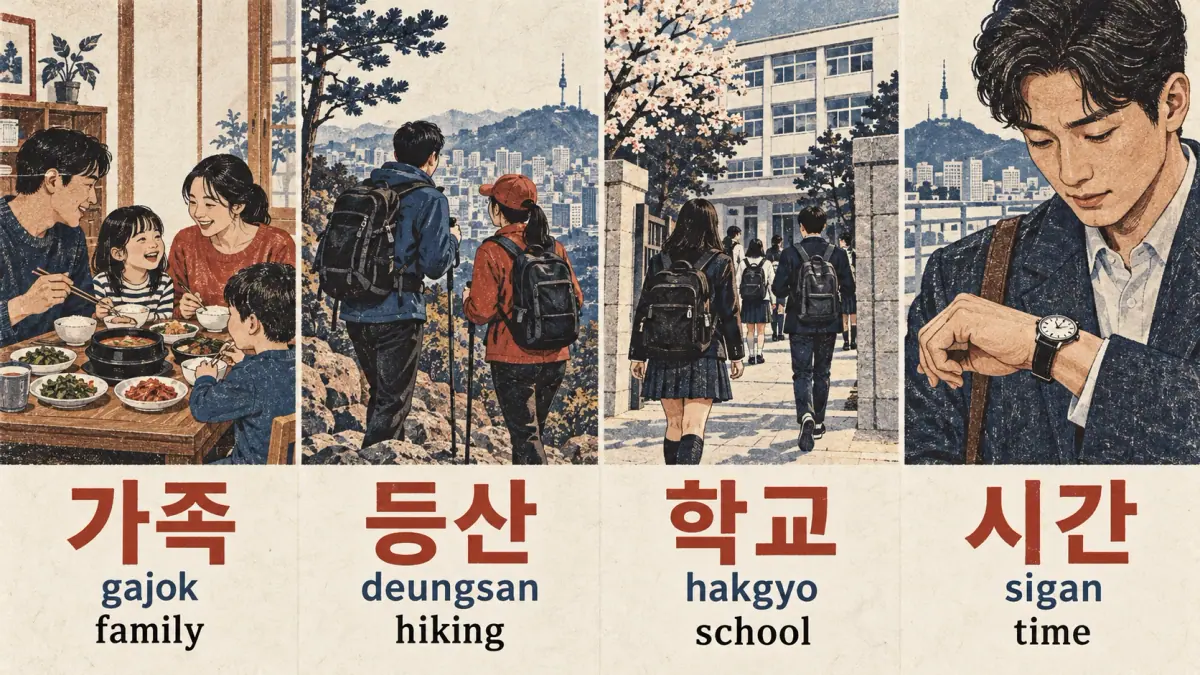
Read each table from left to right: the character, its 음훈, its Korean reading, then one example word with its hanja, Revised Romanization, spoken form (where it differs) and meaning. The spoken form is shown in brackets only when it differs from the spelling. Revised Romanization is the official romanization system; it writes tense letters such as ㄲ (kk) but does not show tensing caused by a neighbouring sound.
1. Numbers
Group page: Korean numbers in hanja. It covers ten characters that are the written form of 일 to 십.
| Character | 음훈 | Reading | Example word | Hanja | Revised Romanization | Said | Meaning |
|---|---|---|---|---|---|---|---|
| 一 | 한 일 | 일 | 일월 | 一月 | irwol | [이뤌] | January |
| 二 | 두 이 | 이 | 이월 | 二月 | iwol | as spelled | February |
| 三 | 석 삼 | 삼 | 삼월 | 三月 | samwol | [사뭘] | March |
| 四 | 넉 사 | 사 | 사계절 | 四季節 | sagyejeol | as spelled | four seasons |
| 五 | 다섯 오 | 오 | 오월 | 五月 | owol | as spelled | May |
| 六 | 여섯 륙 | 륙/육 | 유월 | 六月 | yuwol | as spelled | June |
| 七 | 일곱 칠 | 칠 | 칠월 | 七月 | chirwol | [치뤌] | July |
| 八 | 여덟 팔 | 팔 | 팔월 | 八月 | parwol | [파뤌] | August |
| 九 | 아홉 구 | 구 | 구월 | 九月 | guwol | as spelled | September |
| 十 | 열 십 | 십 | 시월 | 十月 | siwol | as spelled | October |
Watch for: Two month names are irregular: 六月 is 유월 and 十月 is 시월, not 육월 or 십월.
2. Size and Quantity
Group page: hanja for size and quantity. It covers the number units 百千萬 and the words for big, small, many, few, long, high and heavy.
| Character | 음훈 | Reading | Example word | Hanja | Revised Romanization | Said | Meaning |
|---|---|---|---|---|---|---|---|
| 百 | 일백 백 | 백 | 백화점 | 百貨店 | baekhwajeom | [배콰점] | department store |
| 千 | 일천 천 | 천 | 천만 | 千萬 | cheonman | as spelled | ten million |
| 萬 | 일만 만 | 만 | 만일 | 萬一 | manil | [마닐] | if, in case |
| 大 | 큰 대 | 대 | 대학 | 大學 | daehak | as spelled | university |
| 小 | 작을 소 | 소 | 소설 | 小說 | soseol | as spelled | novel |
| 多 | 많을 다 | 다 | 다양 | 多樣 | dayang | as spelled | diverse |
| 少 | 적을 소 | 소 | 소년 | 少年 | sonyeon | as spelled | boy |
| 長 | 긴 장 | 장 | 장점 | 長點 | jangjeom | [장쩜] | strength, good point |
| 高 | 높을 고 | 고 | 고등학교 | 高等學校 | godeunghakgyo | [고등학꾜] | high school |
| 重 | 무거울 중 | 중 | 중요 | 重要 | jungyo | as spelled | important |
Watch for: 小 and 少 are both read 소, so learn each word with its meaning.
3. Nature and Weekdays
Group page: days of the week in Korean hanja. It covers the seven weekday characters 日月火水木金土 plus mountain, stream and sky.
| Character | 음훈 | Reading | Example word | Hanja | Revised Romanization | Said | Meaning |
|---|---|---|---|---|---|---|---|
| 日 | 날 일 | 일 | 일요일 | 日曜日 | iryoil | [이료일] | Sunday |
| 月 | 달 월 | 월 | 월요일 | 月曜日 | woryoil | [워료일] | Monday |
| 火 | 불 화 | 화 | 화요일 | 火曜日 | hwayoil | as spelled | Tuesday |
| 水 | 물 수 | 수 | 수요일 | 水曜日 | suyoil | as spelled | Wednesday |
| 木 | 나무 목 | 목 | 목요일 | 木曜日 | mogyoil | [모교일] | Thursday |
| 金 | 쇠 금 | 금 | 금요일 | 金曜日 | geumyoil | [그묘일] | Friday |
| 土 | 흙 토 | 토 | 토요일 | 土曜日 | toyoil | as spelled | Saturday |
| 山 | 메 산 | 산 | 등산 | 登山 | deungsan | as spelled | hiking |
| 川 | 내 천 | 천 | 산천 | 山川 | sancheon | as spelled | mountains and rivers |
| 天 | 하늘 천 | 천 | 천국 | 天國 | cheonguk | as spelled | heaven |
Watch for: 金 is read 금 in words and 김 as a surname, and 日 and 月 each mean both the thing (sun, moon) and the unit (day, month).
4. People and Family
Group page: hanja for family and people. It covers person, man, woman, child, father, mother, brothers, house and citizens.
| Character | 음훈 | Reading | Example word | Hanja | Revised Romanization | Said | Meaning |
|---|---|---|---|---|---|---|---|
| 人 | 사람 인 | 인 | 인간 | 人間 | ingan | as spelled | human being |
| 男 | 사내 남 | 남 | 남자 | 男子 | namja | as spelled | man |
| 女 | 계집 녀 | 녀/여 | 여자 | 女子 | yeoja | as spelled | woman |
| 子 | 아들 자 | 자 | 의자 | 椅子 | uija | as spelled | chair |
| 父 | 아비 부 | 부 | 부모 | 父母 | bumo | as spelled | parents |
| 母 | 어미 모 | 모 | 모국어 | 母國語 | mogugeo | [모구거] | mother tongue |
| 兄 | 형 형 | 형 | 형 | 兄 | hyeong | as spelled | older brother (said by a man) |
| 弟 | 아우 제 | 제 | 제자 | 弟子 | jeja | as spelled | disciple, student |
| 家 | 집 가 | 가 | 가족 | 家族 | gajok | as spelled | family |
| 民 | 백성 민 | 민 | 국민 | 國民 | gungmin | [궁민] | citizens, the people |
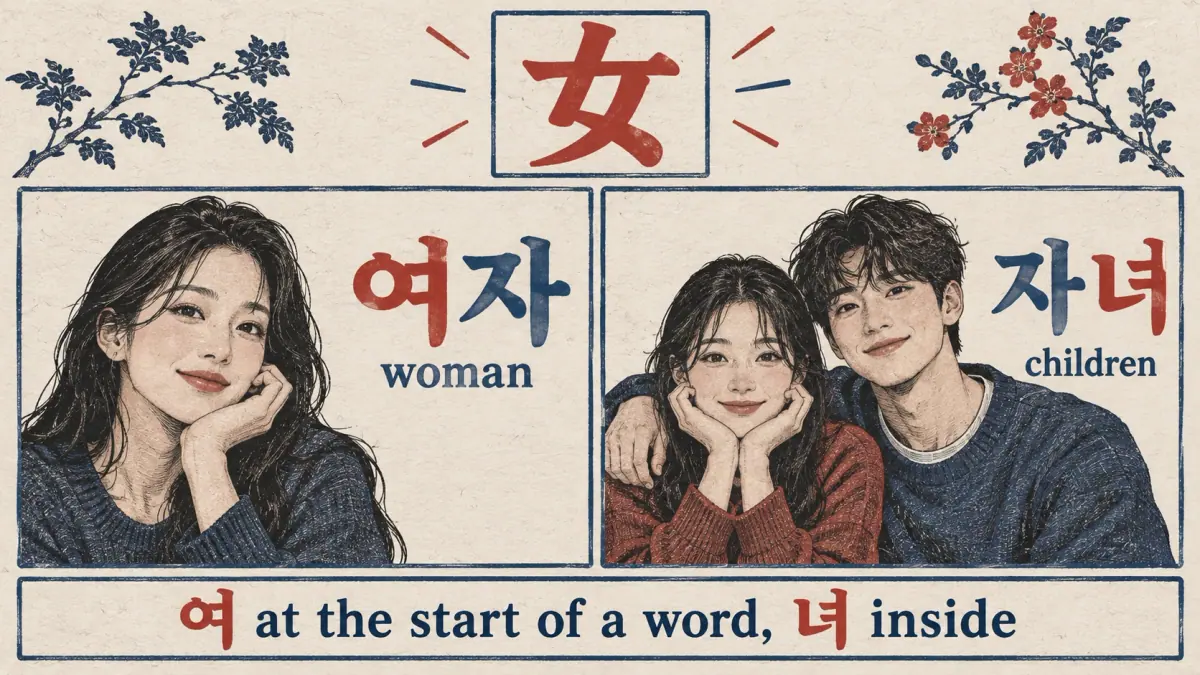
Watch for: 女 is 녀 inside a word (자녀) but 여 at the start (여자).
5. Body and Mind
Group page: hanja for body and mind. It covers mouth, eye, hand, foot, heart, ear, body, face, energy and power.
| Character | 음훈 | Reading | Example word | Hanja | Revised Romanization | Said | Meaning |
|---|---|---|---|---|---|---|---|
| 口 | 입 구 | 구 | 인구 | 人口 | ingu | as spelled | population |
| 目 | 눈 목 | 목 | 목적 | 目的 | mokjeok | [목쩍] | purpose |
| 手 | 손 수 | 수 | 가수 | 歌手 | gasu | as spelled | singer |
| 足 | 발 족 | 족 | 부족 | 不足 | bujok | as spelled | shortage |
| 心 | 마음 심 | 심 | 관심 | 關心 | gwansim | as spelled | interest |
| 耳 | 귀 이 | 이 | 이비인후과 | 耳鼻咽喉科 | ibiinhugwa | [이비인후꽈] | ear, nose and throat clinic |
| 身 | 몸 신 | 신 | 신체 | 身體 | sinche | as spelled | body |
| 面 | 낯 면 | 면 | 면접 | 面接 | myeonjeop | as spelled | interview |
| 氣 | 기운 기 | 기 | 공기 | 空氣 | gonggi | as spelled | air |
| 力 | 힘 력 | 력/역 | 능력 | 能力 | neungnyeok | [능녁] | ability |
Watch for: 力 is 력 inside a word (능력) but 역 at the start (역량).
6. Directions and Places
Group page: hanja for directions and places. It covers the four compass points, up, down, middle, inside, outside and direction.
| Character | 음훈 | Reading | Example word | Hanja | Revised Romanization | Said | Meaning |
|---|---|---|---|---|---|---|---|
| 東 | 동녘 동 | 동 | 동양 | 東洋 | dongyang | as spelled | the East, Asia |
| 西 | 서녘 서 | 서 | 서양 | 西洋 | seoyang | as spelled | the West |
| 南 | 남녘 남 | 남 | 남한 | 南韓 | namhan | as spelled | South Korea |
| 北 | 북녘 북 | 북 | 북한 | 北韓 | bukhan | [부칸] | North Korea |
| 上 | 윗 상 | 상 | 이상 | 以上 | isang | as spelled | or more, above |
| 下 | 아래 하 | 하 | 이하 | 以下 | iha | as spelled | or less, below |
| 中 | 가운데 중 | 중 | 중간 | 中間 | junggan | as spelled | middle |
| 內 | 안 내 | 내 | 국내 | 國內 | gungnae | [궁내] | domestic, within the country |
| 外 | 바깥 외 | 외 | 외국 | 外國 | oeguk | as spelled | foreign country |
| 方 | 모 방 | 방 | 방법 | 方法 | bangbeop | [방뻡] | method |
Watch for: 以上 (이상) and 以下 (이하) include the number: 18세 이상 means 18 and older.
7. School and Learning
Group page: hanja for school and learning. It covers study, school, teach, book, writing, letter, language, teacher, life and read.
| Character | 음훈 | Reading | Example word | Hanja | Revised Romanization | Said | Meaning |
|---|---|---|---|---|---|---|---|
| 學 | 배울 학 | 학 | 학생 | 學生 | haksaeng | [학쌩] | student |
| 校 | 학교 교 | 교 | 학교 | 學校 | hakgyo | [학꾜] | school |
| 敎 | 가르칠 교 | 교 | 교육 | 敎育 | gyoyuk | as spelled | education |
| 書 | 글 서 | 서 | 도서관 | 圖書館 | doseogwan | as spelled | library |
| 文 | 글월 문 | 문 | 문화 | 文化 | munhwa | as spelled | culture |
| 字 | 글자 자 | 자 | 한자 | 漢字 | hanja | as spelled | Chinese character |
| 語 | 말씀 어 | 어 | 외국어 | 外國語 | oegugeo | [외구거] | foreign language |
| 先 | 먼저 선 | 선 | 선생 | 先生 | seonsaeng | as spelled | teacher |
| 生 | 날 생 | 생 | 생일 | 生日 | saengil | as spelled | birthday |
| 讀 | 읽을 독 | 독 | 독서 | 讀書 | dokseo | [독써] | reading (books) |
Watch for: 學 and 語 start long chains: 학교, 학생, 대학 and 국어, 영어, 외국어. 先生 (선생) literally means "born earlier".
8. Country and Society
Group page: hanja for country and society. It covers country, Korea, company and society, public, market, city, gate and world.
| Character | 음훈 | Reading | Example word | Hanja | Revised Romanization | Said | Meaning |
|---|---|---|---|---|---|---|---|
| 國 | 나라 국 | 국 | 국가 | 國家 | gukga | [국까] | country, nation |
| 韓 | 나라 한 | 한 | 한국 | 韓國 | hanguk | as spelled | Korea |
| 社 | 모일 사 | 사 | 사회 | 社會 | sahoe | as spelled | society |
| 會 | 모일 회 | 회 | 회의 | 會議 | hoeui | as spelled | meeting |
| 公 | 공평할 공 | 공 | 공원 | 公園 | gongwon | as spelled | park |
| 場 | 마당 장 | 장 | 시장 | 市場 | sijang | as spelled | market |
| 市 | 저자 시 | 시 | 도시 | 都市 | dosi | as spelled | city |
| 門 | 문 문 | 문 | 대문 | 大門 | daemun | as spelled | main gate |
| 世 | 인간 세 | 세 | 세상 | 世上 | sesang | as spelled | the world |
| 界 | 지경 계 | 계 | 세계 | 世界 | segye | as spelled | the world |
Watch for: 社會 (사회, society) and 會社 (회사, company) use the same two characters in reverse order.
9. Time
Group page: hanja for time. It covers year, time, interval, now, before, after, noon, night, new and old.
| Character | 음훈 | Reading | Example word | Hanja | Revised Romanization | Said | Meaning |
|---|---|---|---|---|---|---|---|
| 年 | 해 년 | 년/연 | 연말 | 年末 | yeonmal | as spelled | end of the year |
| 時 | 때 시 | 시 | 시간 | 時間 | sigan | as spelled | time |
| 間 | 사이 간 | 간 | 순간 | 瞬間 | sungan | as spelled | moment |
| 今 | 이제 금 | 금 | 지금 | 只今 | jigeum | as spelled | now |
| 前 | 앞 전 | 전 | 이전 | 以前 | ijeon | as spelled | before, previously |
| 後 | 뒤 후 | 후 | 오후 | 午後 | ohu | as spelled | afternoon |
| 午 | 낮 오 | 오 | 오전 | 午前 | ojeon | as spelled | morning, a.m. |
| 夜 | 밤 야 | 야 | 야식 | 夜食 | yasik | as spelled | late-night snack |
| 新 | 새 신 | 신 | 신문 | 新聞 | sinmun | as spelled | newspaper |
| 古 | 예 고 | 고 | 고대 | 古代 | godae | as spelled | ancient times |
Watch for: 年 is 년 after a number (삼 년) and 연 at the start of a word (연말). 午前 and 午後 are "before noon" and "after noon".
10. Actions and Abstract Words
Group page: hanja for actions and abstract words. It covers go, out, in, matter, thing, not, none, have, same and move.
| Character | 음훈 | Reading | Example word | Hanja | Revised Romanization | Said | Meaning |
|---|---|---|---|---|---|---|---|
| 行 | 다닐 행 | 행 | 은행 | 銀行 | eunhaeng | as spelled | bank |
| 出 | 날 출 | 출 | 출구 | 出口 | chulgu | as spelled | exit |
| 入 | 들 입 | 입 | 입학 | 入學 | iphak | [이팍] | school entrance |
| 事 | 일 사 | 사 | 사건 | 事件 | sageon | [사껀] | incident, case |
| 物 | 물건 물 | 물 | 동물 | 動物 | dongmul | as spelled | animal |
| 不 | 아닐 불 | 불/부 | 불안 | 不安 | buran | [부란] | anxiety |
| 無 | 없을 무 | 무 | 무료 | 無料 | muryo | as spelled | free of charge |
| 有 | 있을 유 | 유 | 유료 | 有料 | yuryo | as spelled | paid, not free |
| 同 | 한가지 동 | 동 | 동의 | 同意 | dongui | as spelled | agreement |
| 動 | 움직일 동 | 동 | 운동 | 運動 | undong | as spelled | exercise |
Watch for: 不 is 부 before ㄷ and ㅈ (부족) and 불 elsewhere (불안). 有料 and 無料 are opposites: paid and free.
How Were the 100 Chosen?
The 100 were chosen editorially, for how many common words each character helps you read. Three tests were applied. First, the character appears in several words that learners meet in daily life, school or TOPIK-style texts. Second, it belongs to the Ministry of Education's list of 1,800 basic hanja (교육용 기초 한자). Third, it fits a theme with nine partners, so the group can be learned as a set. No official body publishes a ranked "top 100", and this page does not claim a corpus frequency count, so treat the list as a practical core rather than a ranking.
Why groups of ten rather than 100 single-character pages? A character on its own tells you little. Its value comes from the words it builds, and those are easier to see in a themed set: 東西南北 together, 父母兄弟 together, 日月火水木金土 together. The most productive characters, such as 學, 生 and 人, also open longer chains of words, which the hanja word families pages describe. For the structure of the official list itself, see 1800 hanja.
What the list leaves out is also useful to know. It does not teach stroke order, handwriting or the older forms of characters, and it does not prepare you for a hanja proficiency test. It also leaves out many partner characters, such as 短 (short) and 低 (low), which you will meet beside 長 and 高. The hanja for TOPIK page explains which characters help with the exam, which does not test hanja directly.
Which Readings Change?
Most of the 100 have one reading wherever they appear. Five change with position or with the neighbouring sound, and these are the ones to learn carefully. They all come from the initial-sound rule (두음법칙), which does not allow certain sounds at the start of a word, or from a sound rule that turns one sound into another next to certain consonants.
| Character | Readings | Rule | Examples |
|---|---|---|---|
| 不 | 불 / 부 | 부 before ㄷ and ㅈ, 불 elsewhere | 불안 (anxiety), 부족 (shortage) |
| 力 | 력 / 역 | 역 at the start of a word, 력 inside | 역량 (capability), 능력 (ability) |
| 女 | 녀 / 여 | 여 at the start of a word, 녀 inside | 여자 (woman), 자녀 (children) |
| 年 | 년 / 연 | 연 at the start of a word, 년 inside or after a number | 연말 (year end), 삼 년 (three years) |
| 六 | 륙 / 육 | 육 at the start of a word, 륙 inside | 육십 (sixty), 대륙 (continent) |
Two more characters have a second reading that is not a position rule. 金 is 금 in words (금요일) and 김 in a surname. 北 is 북 in nearly every word and 배 in 패배 (defeat). Treat these as small exceptions to learn once.
Also remember that the pronunciation of a whole word can differ from the sum of its parts. 월요일 is said [워료일], 학교 is said [학꾜], 삼월 is said [사뭘], and 국민 is said [궁민]. These are normal sound changes (linking, tensing, nasal sounds), and they affect spoken Korean without changing the spelling. The Sino-Korean tensification page explains the tense sounds.
In What Order Should You Learn Them?
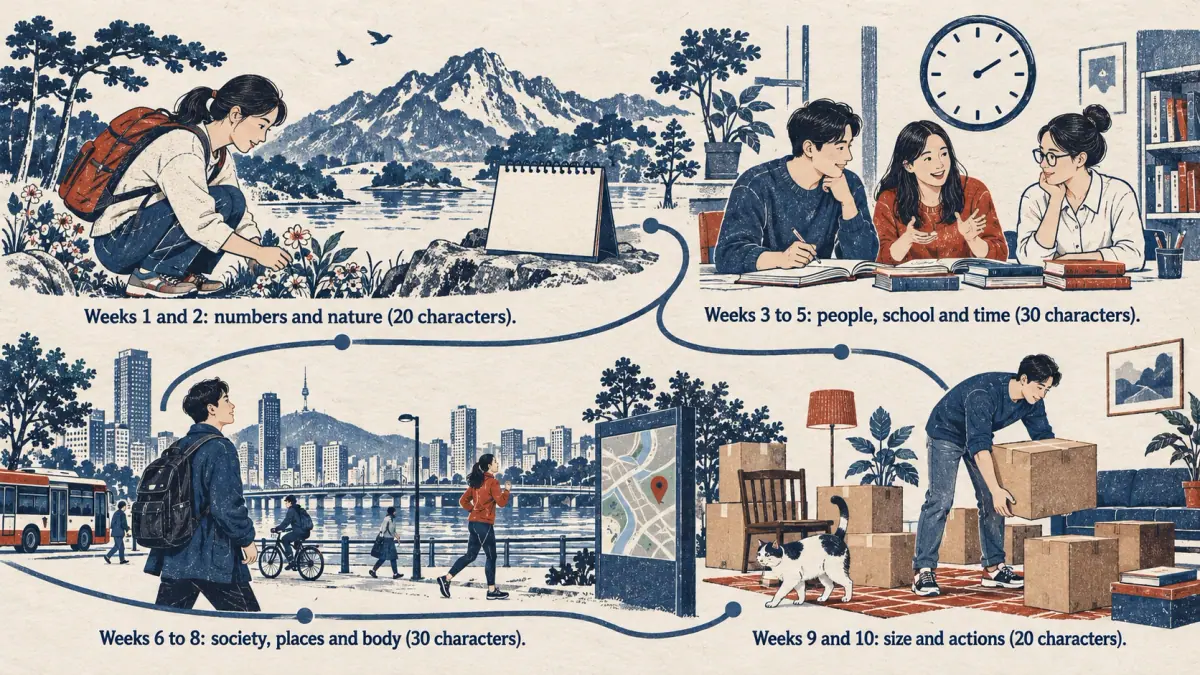
Start with the groups where you already know the words, then move to the groups that build the most vocabulary. The plan below takes ten weeks at ten new characters a week.
- Weeks 1 and 2: numbers and nature (20 characters). You already say 일월, 삼월 and 월요일, so only the shapes are new. Check them against the calendar and the months in Korean page.
- Weeks 3 to 5: people, school and time (30 characters). The words 가족, 학교 and 시간 appear in every beginner textbook.
- Weeks 6 to 8: society, places and body (30 characters). These give the vocabulary of news, signs and health.
- Weeks 9 and 10: size and actions (20 characters). These contain the sound changes (不 불/부) and the homophones (小/少), so leave them until your habits are steady.
The arithmetic is 20 + 30 + 30 + 20 = 100 characters in 10 weeks. At about 15 to 20 minutes a day on five days a week, that is 75 to 100 minutes a week, or roughly 12 to 17 hours over the ten weeks, including review. You can go faster or slower, but the order matters more than the speed: finish a group before you start the next, and review last week's group for five minutes before the new one.
Three habits help more than any trick. Say the word aloud every time, not only the character. Group by pairs and opposites (大小, 多少, 上下, 內外, 有無). And meet each character in a real word within a day, on a sign, in a news headline or in your word list.
Practise the 100 with Flashcards and a Quiz
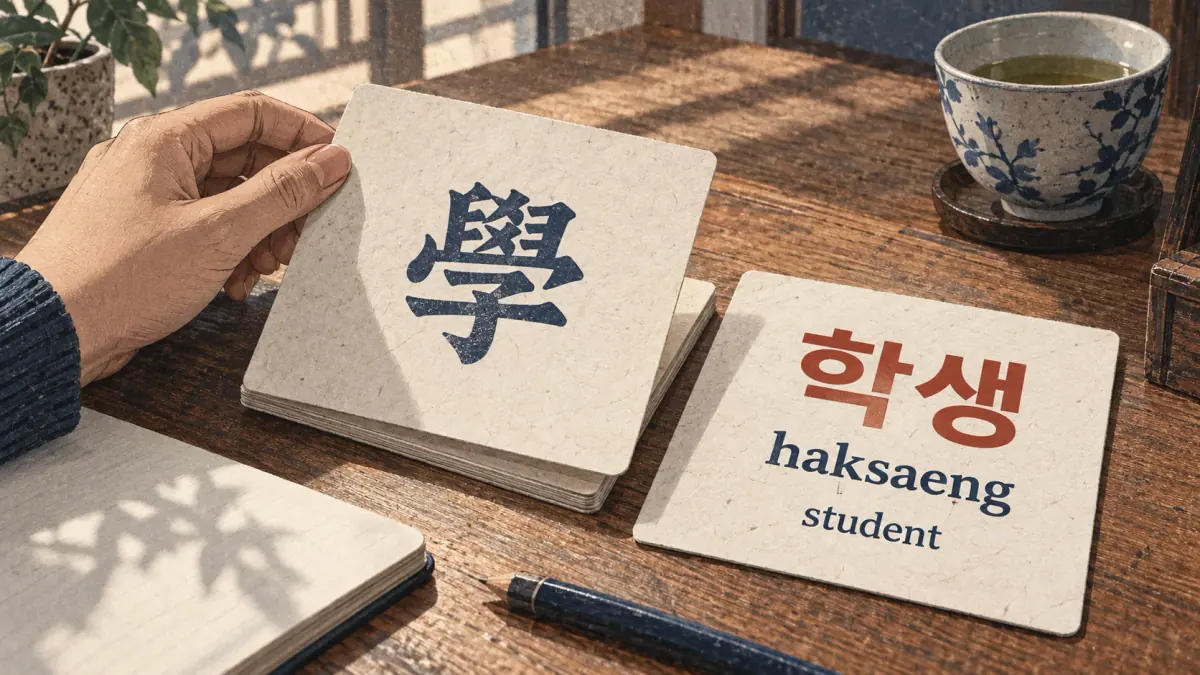
The deck below samples two characters from each group, 20 in total, using the example words from the tables. The table shows exactly what is in the deck, so you can read it first. Each group page has its own deck of ten with the other word of each pair.
| # | Korean | Revised Romanization | Meaning | Character note |
|---|---|---|---|---|
| 1 | 삼월 | samwol | March (三月) | 三 (석 삼), read 삼. |
| 2 | 유월 | yuwol | June (六月) | 六 (여섯 륙), read 륙/육. |
| 3 | 백화점 | baekhwajeom | department store (百貨店) | 百 (일백 백), read 백. |
| 4 | 중요 | jungyo | important (重要) | 重 (무거울 중), read 중. |
| 5 | 월요일 | woryoil | Monday (月曜日) | 月 (달 월), read 월. |
| 6 | 등산 | deungsan | hiking (登山) | 山 (메 산), read 산. |
| 7 | 가족 | gajok | family (家族) | 家 (집 가), read 가. |
| 8 | 부모 | bumo | parents (父母) | 父 (아비 부), read 부. |
| 9 | 공기 | gonggi | air (空氣) | 氣 (기운 기), read 기. |
| 10 | 관심 | gwansim | interest (關心) | 心 (마음 심), read 심. |
| 11 | 외국 | oeguk | foreign country (外國) | 外 (바깥 외), read 외. |
| 12 | 이상 | isang | or more, above (以上) | 上 (윗 상), read 상. |
| 13 | 학생 | haksaeng | student (學生) | 學 (배울 학), read 학. |
| 14 | 문화 | munhwa | culture (文化) | 文 (글월 문), read 문. |
| 15 | 사회 | sahoe | society (社會) | 社 (모일 사), read 사. |
| 16 | 세상 | sesang | the world (世上) | 世 (인간 세), read 세. |
| 17 | 시간 | sigan | time (時間) | 時 (때 시), read 시. |
| 18 | 신문 | sinmun | newspaper (新聞) | 新 (새 신), read 신. |
| 19 | 은행 | eunhaeng | bank (銀行) | 行 (다닐 행), read 행. |
| 20 | 동물 | dongmul | animal (動物) | 物 (물건 물), read 물. |
Practice · 20
- 01삼월
Show answer
samwol
March (三月)
- 02유월
Show answer
yuwol
June (六月)
- 03백화점
Show answer
baekhwajeom
department store (百貨店)
- 04중요
Show answer
jungyo
important (重要)
- 05월요일
Show answer
woryoil
Monday (月曜日)
- 06등산
Show answer
deungsan
hiking (登山)
- 07가족
Show answer
gajok
family (家族)
- 08부모
Show answer
bumo
parents (父母)
- 09공기
Show answer
gonggi
air (空氣)
- 10관심
Show answer
gwansim
interest (關心)
- 11외국
Show answer
oeguk
foreign country (外國)
- 12이상
Show answer
isang
or more, above (以上)
- 13학생
Show answer
haksaeng
student (學生)
- 14문화
Show answer
munhwa
culture (文化)
- 15사회
Show answer
sahoe
society (社會)
- 16세상
Show answer
sesang
the world (世上)
- 17시간
Show answer
sigan
time (時間)
- 18신문
Show answer
sinmun
newspaper (新聞)
- 19은행
Show answer
eunhaeng
bank (銀行)
- 20동물
Show answer
dongmul
animal (動物)
Check Yourself
Practice · 6
Which character is read 학 and means "study"?
Show answer
學
學 is read 학, as in 학생 and 학교. 校 is 교, 語 is 어 and 生 is 생.
Which character is read 불 before most sounds but 부 before ㄷ and ㅈ?
Show answer
不
不 means "not": 불안 (anxiety) but 부족 (shortage). 無 is always 무 and 有 is always 유.
What does 사회 (社會) mean?
Show answer
society
社會 is society. The same characters reversed, 會社, give 회사, a company.
Why is 年 read 연 in 연말 but 년 in 삼 년?
Show answer
Korean does not start a word with 년
The initial-sound rule changes 년 to 연 at the start of a word. After a number it keeps 년.
Which word means "free of charge"?
Show answer
무료
無料 is 무료, free of charge. 有料 is 유료, paid.
Which group do 日月火水木金土 belong to?
Show answer
Nature and weekdays
These seven characters are the weekday names and sit in the nature and weekdays group, with 山, 川 and 天.
Print the tables on this page for a reference to the 100 characters.
Frequently Asked Questions
Why these 100?
They are the characters that open the most common words in daily life, school and TOPIK-style reading, chosen editorially and drawn from the Ministry of Education's 1,800 basic list. No official body publishes a ranked top 100, so treat this set as a practical core: a hundred is small enough to finish in ten weeks and large enough to explain hundreds of everyday words.
In what order should I learn them?
Start with numbers and nature, because you already say those words. Then do people, school and time, then society, places and body, and finish with size and actions. The ten-week plan on this page follows that order, and it puts the groups with sound changes last.
Are they in the 1,800 list?
They are drawn from it. The 1,800 list is the Ministry of Education's set of basic hanja for school, split into 900 for middle school and 900 for high school, and this page picks 100 high-value characters from it. The 1800 hanja page explains how the full list is organised.
How long does it take to learn them?
At ten characters a week it takes ten weeks. With 15 to 20 minutes a day on five days a week, that is roughly 12 to 17 hours in total, including review. Learners who only want to recognise the characters in words can go faster, and learners who also want to write them will need much longer.
Do I need to write them?
No. For most learners the aim is recognition: seeing 學 and thinking 학, "study". Writing helps memory for some people and is needed for hanja tests, but it takes far longer. If you decide to write, learn the basic stroke order rules first and start with simple characters such as 一, 人 and 大.
What to Learn Next
Pick one group page to work through. If you want the numbers first, go to Korean numbers in hanja. If you want something you can use immediately, try days of the week in Korean hanja. To see how a single character grows into a family of words, go to hanja word families, and for the exam-focused view see TOPIK hanja. The hanja hub lists everything in the section, and Hangul vs Hanja is a good read if you are still deciding how much to study.