
Key facts
- They are used for hours, age (살), counting objects and counting people.
- They are normally used up to 99; from 100 Korean uses Sino-Korean 백.
What Are Native Korean Numbers?
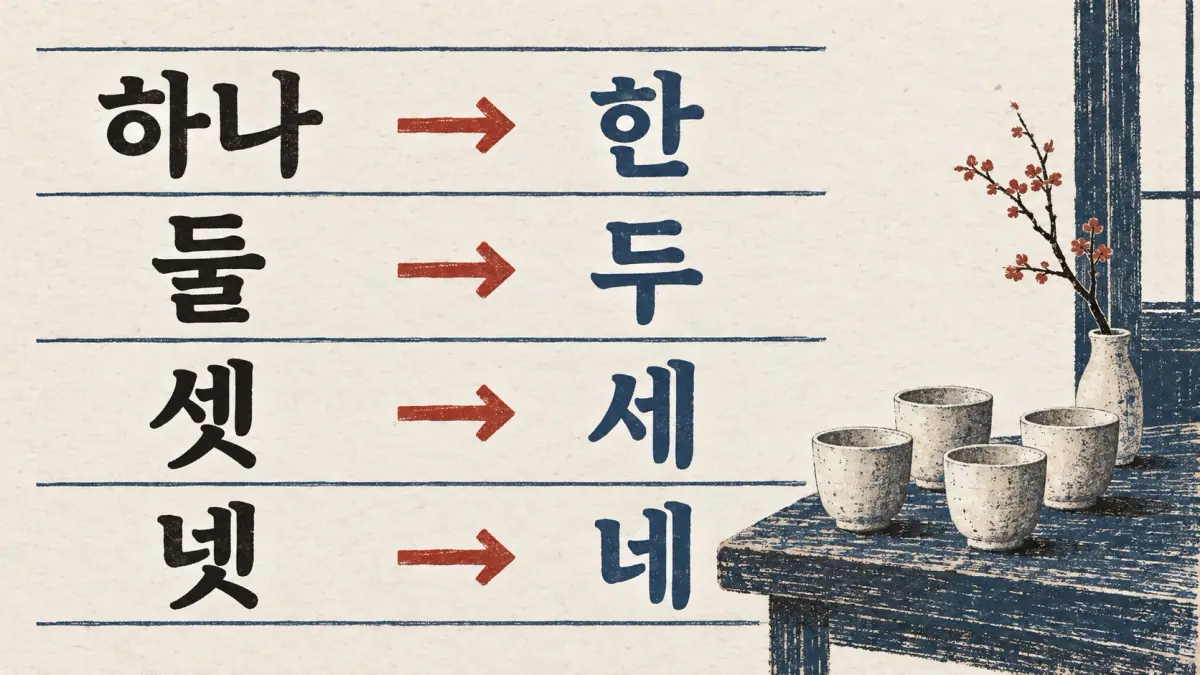
Native Korean numbers are the counting words that Korean had before it borrowed number words from Chinese. Linguists call them 고유어 수사 (goyu-eo susa), which means "native-word numerals". Learners meet them first when they count things aloud, tell the hour or give an age, so they are among the most useful words in the first weeks of study.
| Number | Hangul | Before a counter | Revised Romanization |
|---|---|---|---|
| 1 | 하나 | 한 | hana, han |
| 2 | 둘 | 두 | dul, du |
| 3 | 셋 | 세 | set, se |
| 4 | 넷 | 네 | net, ne |
| 5 | 다섯 | 다섯 | daseot |
| 6 | 여섯 | 여섯 | yeoseot |
| 7 | 일곱 | 일곱 | ilgop |
| 8 | 여덟 | 여덟 | yeodeol |
| 9 | 아홉 | 아홉 | ahop |
| 10 | 열 | 열 | yeol |
A counter is a small word that follows a number and says what kind of thing is counted, such as 개 for objects or 명 for people. The third column matters because the counting form (하나, 둘, 셋) and the form before a counter (한, 두, 세) are different words in sound and spelling. The other six numbers do not change.
Next, the tens complete the list.
The Native Tens: 열 to 아흔
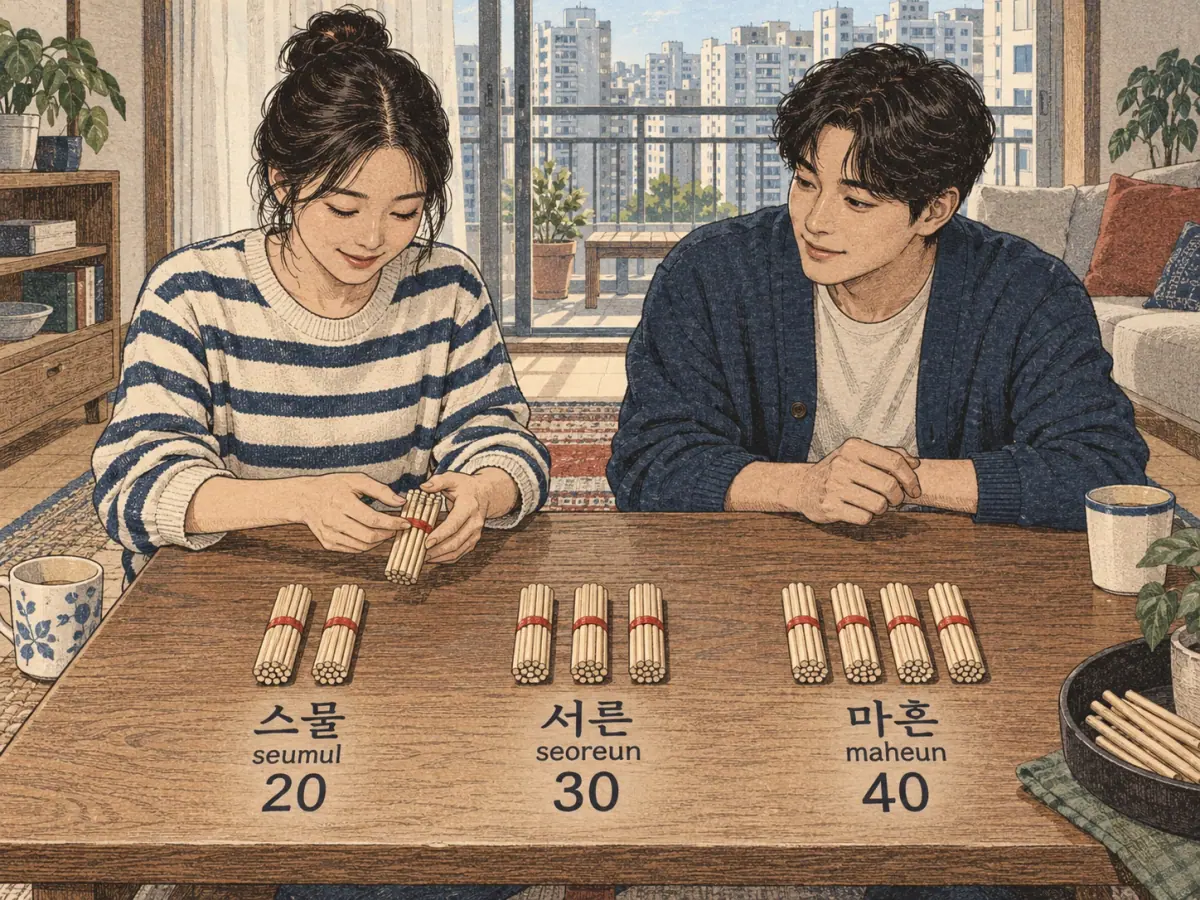
The native tens are 열 (10), 스물 (20), 서른 (30), 마흔 (40), 쉰 (50), 예순 (60), 일흔 (70), 여든 (80) and 아흔 (90). They do not share one pattern the way the Sino-Korean tens do, so each one is a separate word to learn. Add the ones digit directly after the ten, with no space: 스물다섯 is 25 and 마흔둘 is 42.
| Tens | Hangul | Revised Romanization | Example |
|---|---|---|---|
| 10 | 열 | yeol | 열둘 (12) |
| 20 | 스물 | seumul | 스물다섯 (25) |
| 30 | 서른 | seoreun | 서른하나 (31) |
| 40 | 마흔 | maheun | 마흔둘 (42) |
| 50 | 쉰 | swin | 쉰셋 (53) |
| 60 | 예순 | yesun | 예순넷 (64) |
| 70 | 일흔 | ilheun | 일흔여섯 (76) |
| 80 | 여든 | yeodeun | 여든일곱 (87) |
| 90 | 아흔 | aheun | 아흔아홉 (99) |
A memory grouping helps with the order: 열, 스물, 서른 come first; then 마흔, 쉰, 예순 in the middle; then 일흔, 여든, 아흔 at the end. Learn one group per day instead of nine words at once.
What Pages Are in This Section?
This section has three lessons, and each one answers the next question a learner asks. They run from the first ten words, to the full list, to ways of making the list stick.
Lists
Native Korean Numbers 1-10: 하나, 둘, 셋 to 열 With Audio teaches the ten basic words with audio, spelling and the short forms 한, 두, 세, 네. After it you can say how many things there are in a sentence.
Native Korean Numbers 1-100: Full List, Tens and Combining Rules covers every number to 99 and shows why exactly 20 becomes 스무 before a counter. It also explains why 100 is Sino-Korean 백.
Learning Aids
How to Memorize Native Korean Numbers: A 5-Day Plan is the page to use when the list will not stick. Native numbers are the harder set for most learners, because the words are unrelated to each other, so a study plan matters more than it does for Sino-Korean numbers.
Related Pages in Other Sections
The counters hub teaches the small words that follow native numbers, and Sino vs native Korean numbers helps you choose between the two systems in everyday situations.
Now the question is what each number is for.
When Do You Use Native Numbers?
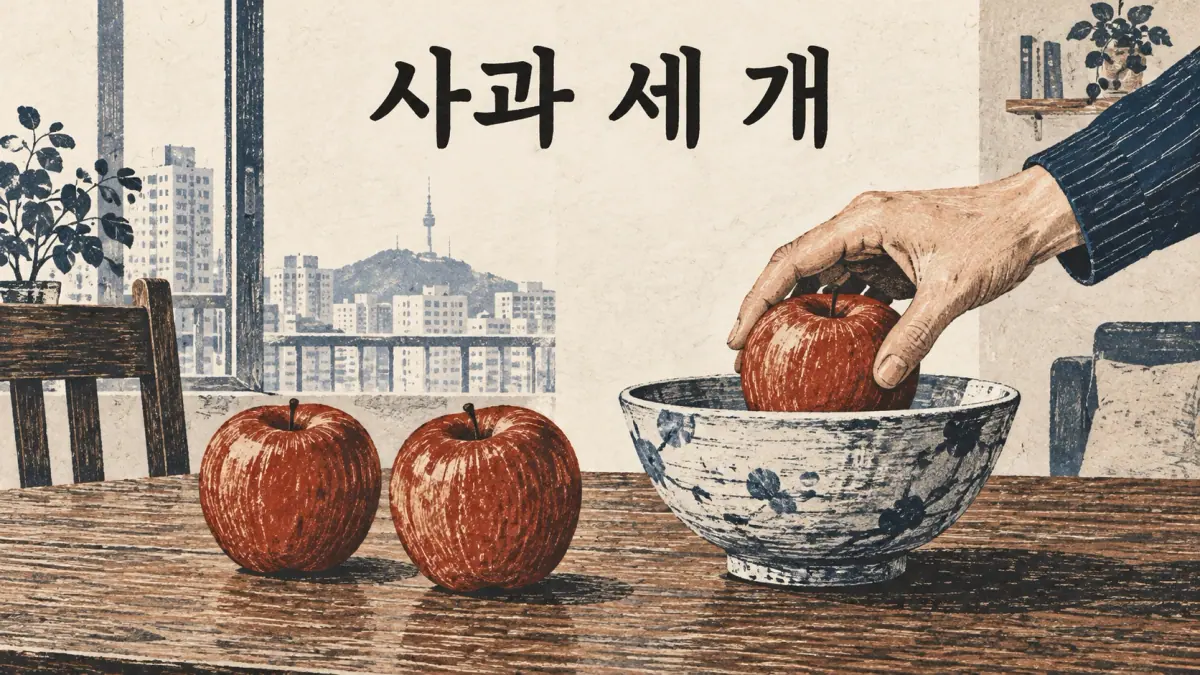
Use native numbers when you count things, people or animals, and when you say the hour or a spoken age. The table shows the main uses with one example each.
| Use | Counter | Example | Meaning |
|---|---|---|---|
| Objects | 개 | 사과 세 개 | three apples |
| People | 명 | 학생 두 명 | two students |
| Hours | 시 | 한 시 | one o'clock |
| Age, spoken | 살 | 스무 살 | twenty years old |
| Times | 번 | 한 번 | once |
| Duration in months | 달 | 두 달 | two months |
The pattern is always the same: noun, then number, then counter. The hour is the one place where beginners mix systems, because 세 시 십오 분 uses a native number for the hour and a Sino-Korean number for the minutes.
Why Does 100 Have No Everyday Native Word?
Native numbers stop at 99 in modern Korean because 백 (100), the Sino-Korean word, took over the larger numbers. An old native word for 100, 온, survives only in a few old words and is not used for counting. The same is true for 1,000, where Sino-Korean 천 is the normal word. So 백 개 (100 items) is normal, and a native "hundred" is not.
Sound Changes in 다섯, 여섯 and 여덟
Three native numbers end in two consonants or an unusual final sound, and the written form hides how they are said. According to the standard pronunciation rules (표준 발음법) of the National Institute of Korean Language (국립국어원), a final ㅅ is said [ㄷ], and the second consonant of 여덟 is not pronounced at the end of a word.
| Spelling | Said as | Note |
|---|---|---|
| 다섯 | [다섣] | final ㅅ sounds like [ㄷ] |
| 여섯 | [여섣] | the same change |
| 여덟 | [여덜] | ㅂ is silent at the end |
After 다섯 and 여섯, a counter that starts with ㄱ, ㄷ, ㅂ, ㅅ or ㅈ is said tense, because it follows the [ㄷ] sound. So 다섯 시 is said [다섣씨] and 다섯 개 is said [다섣깨]. After 여덟 the counter is also often heard tense, as in 여덟 시 [여덜씨]. You do not write this change; you only hear it.
What Is Not Covered Here?
This section teaches native numbers and their counter forms. It does not teach the counters themselves, which have their own hub, or Sino-Korean numbers, which are in the Sino-Korean numbers section. The native Korean numbers flashcards are the spaced-review deck for these words, while this section teaches the numbers and their uses.
Limitation: a few counters take older short forms, such as 석 for 3 and 넉 for 4 in 석 달 (three months) and 넉 달 (four months). These are lexical exceptions and are not explained in this beginner section.
Where to Start with Native Korean Numbers

Start with the ten words in the first table and say them aloud with the audio. Then learn the four short forms 한, 두, 세, 네, and read the tens list in its three groups. When you can count to ten without looking, open the 1 to 10 lesson, then the 1 to 100 lesson. Return here whenever you need to check which lesson comes next.
Frequently Asked Questions
Why do native numbers change before counters?
Five native numbers use a short form when a counter follows: 한, 두, 세, 네 and 스무. These forms work as modifiers in front of a noun-like word, much like "a" in front of "book" in English. The long forms 하나, 둘, 셋, 넷 and 스물 are used when you count aloud or answer a question.
How high do native numbers go?
Native numbers are normally used up to 99, which is 아흔아홉. From 100, Korean switches to the Sino-Korean 백. So you can say 아흔아홉 개 (99 items) in native numbers but 백 개 (100 items) in Sino-Korean. This is a teaching rule, and some old compounds go further.
Is 영 a native number?
No. 영 (zero) is a Sino-Korean word borrowed from Chinese. Native Korean has no everyday word for zero. If you need zero in a count, such as a score or a phone number, use 영 or 공, and keep the native numbers for 하나 and above.
Which is harder, native or Sino numbers?
Most learners find native numbers harder. The words have no pattern between them, so each one must be memorized, and five of them change before counters. Sino-Korean numbers need only ten words and one building rule. Native numbers pay off quickly, though, because they are needed for hours, age and counting objects.
Do I need native numbers for TOPIK I?
Native numbers appear in everyday situations such as telling the hour, counting items and giving age, which beginner exams cover in vocabulary and listening. Exam content changes, so check the official TOPIK guide for current topics. For daily life in Korea, you need both number systems from the first month.