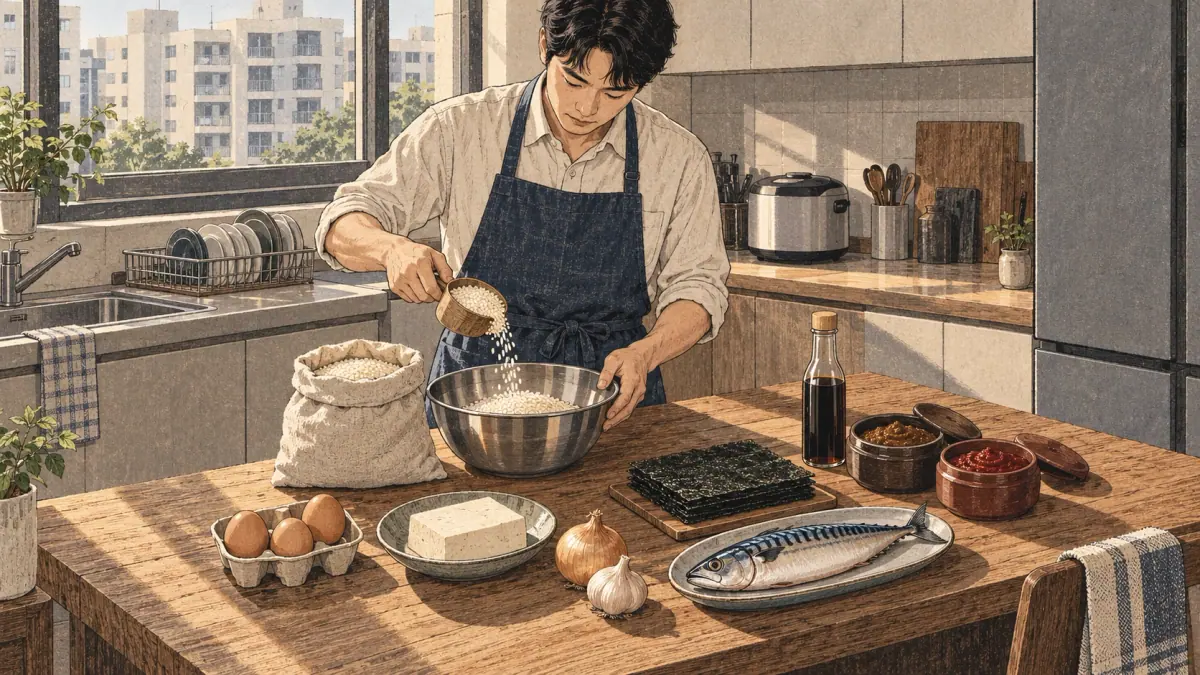
Korean Ingredients Vocabulary at a Glance
This list has 45 words in five groups, which follow the aisles of a Korean supermarket. It belongs to Food and Drink. Each group introduces nine headline words and links to the deeper page for that topic, so you can take the overview first and the detail later. The words are all common nouns, and a few are loanwords such as 햄, 치즈 and 버터.
| Group | Words | Use |
|---|---|---|
| Meat and eggs | 9 | Protein from animals |
| Seafood | 9 | Fish, shellfish and seaweed |
| Sauces and seasonings | 9 | Pastes, powders and oils |
| Basic staples | 9 | Rice, salt, sugar, tofu and dairy |
| Vegetables and bread | 9 | Vegetables and baked goods |
The group names also work as a study plan. Learn one group a day and review the earlier groups, and the whole list takes about a week.
Which Ingredient Words Should You Learn First?
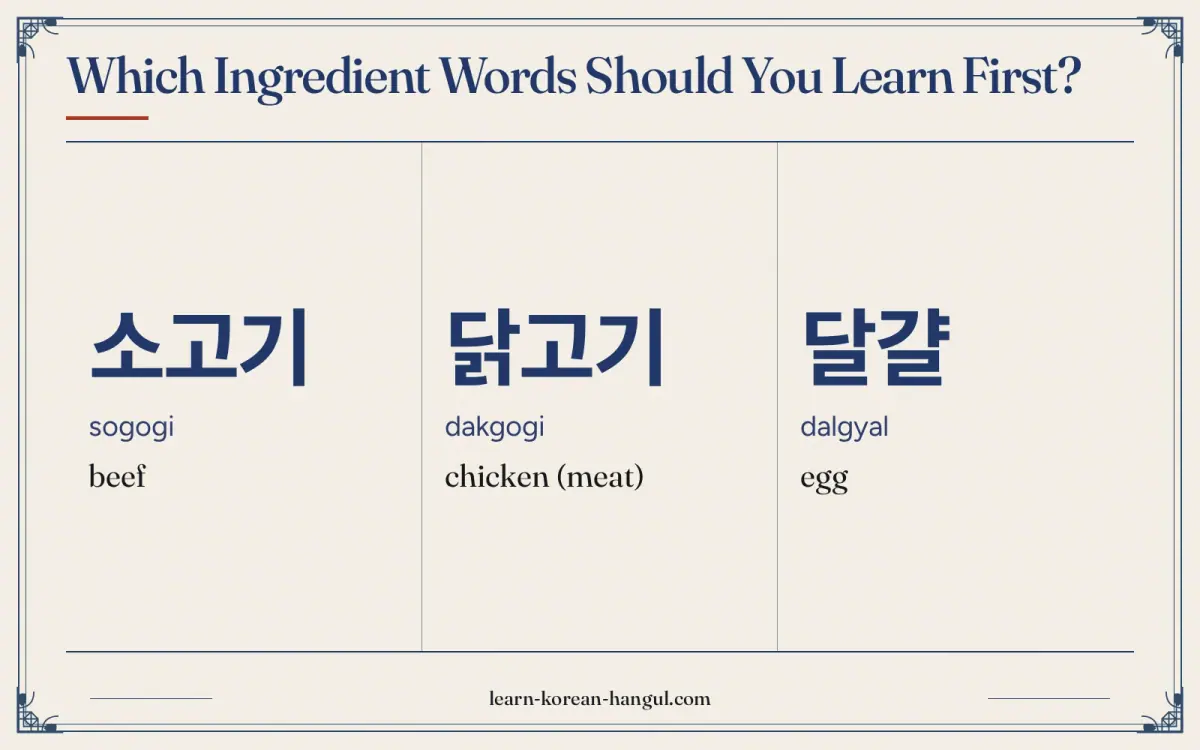
Learn 고기, 계란, 쌀, 소금 and 간장 first. Together they cover the basics of a Korean shopping list. A short sentence such as 계란 두 개 주세요 (two eggs, please) uses one of them with a counter.
- Words to say. 소고기, 돼지고기, 계란, 쌀, 소금. Use these when you shop.
- Words to recognise. 된장, 고추장, 참기름, 밀가루. They appear on labels.
- Words that need care. 쌀 (raw rice) and 밥 (cooked rice) are different foods.
The supermarket page uses these words in shopping dialogues. The scene below shows a supermarket shelf with numbered items that match the list.
Word · 23
- 1
소고기
sogogi
beef
- 2
닭고기
dakgogi
chicken (meat)
- 3
달걀
dalgyal
egg
- 4
노른자
noreunja
egg yolk
- 5
소시지
sosiji
sausage
- 6
고등어
godeungeo
mackerel
- 7
새우
saeu
shrimp
- 8
조개
jogae
clam; shellfish
- 9
김
gim
laver; seaweed
- 10
간장
ganjang
soy sauce
- 11
고추장
gochujang
red pepper paste
- 12
고춧가루
gochutgaru
red pepper flakes
- 13
식초
sikcho
vinegar
- 14
양념
yangnyeom
seasoning; marinade
- 15
소금
sogeum
salt
- 16
두부
dubu
tofu
- 17
국수
guksu
noodles
- 18
치즈
chijeu
cheese
- 19
채소
chaeso
vegetables
- 20
양파
yangpa
onion
- 21
감자
gamja
potato
- 22
상추
sangchu
lettuce
- 23
식빵
sikppang
sliced bread; loaf bread
Meat and Eggs
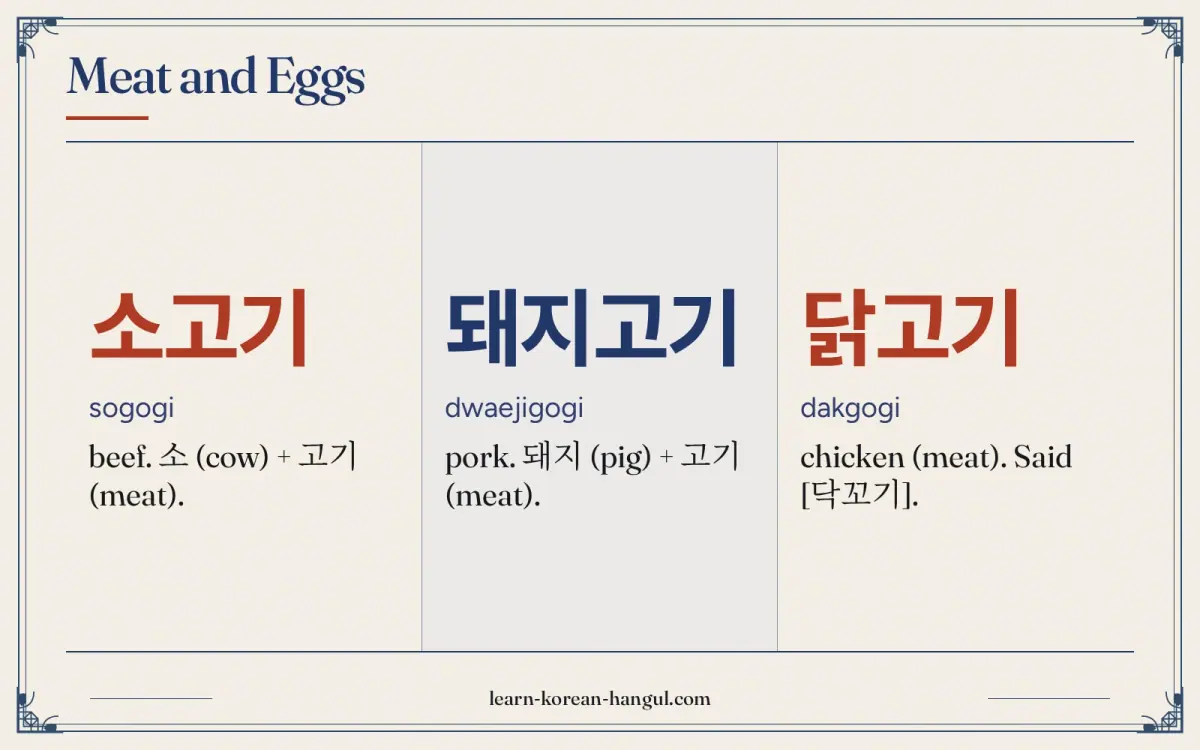
Meat and eggs make up the first aisle in a Korean supermarket. The three everyday meats are beef, pork and chicken, and each is named with 고기 (meat) after the animal. Eggs have two names: 계란 and 달걀. They mean the same thing, and both are common. For the full meat vocabulary, open Korean Meat Vocabulary.
| No. | Hangul | Revised Romanization | Meaning and note | Example sentence | Audio assetId |
|---|---|---|---|---|---|
| 1 | 소고기 | sogogi | beef. 소 (cow) + 고기 (meat). | 소고기는 비싸요. (Beef is expensive.) | au-pg-vocabulary-food-ingredients-1; example: au-pg-vocabulary-food-ingredients-46 |
| 2 | 돼지고기 | dwaejigogi | pork. 돼지 (pig) + 고기 (meat). | 돼지고기를 구워요. (I grill pork.) | au-pg-vocabulary-food-ingredients-2; example: au-pg-vocabulary-food-ingredients-47 |
| 3 | 닭고기 | dakgogi | chicken (meat). Said [닥꼬기]. | 닭고기는 담백해요. (Chicken is light in flavour.) | au-pg-vocabulary-food-ingredients-3; example: au-pg-vocabulary-food-ingredients-48 |
| 4 | 계란 | gyeran | egg. The Sino-Korean word; common in shops and recipes. | 계란 두 개 주세요. (Two eggs, please.) | au-pg-vocabulary-food-ingredients-4; example: au-pg-vocabulary-food-ingredients-49 |
| 5 | 달걀 | dalgyal | egg. The native Korean word; just as standard as 계란. | 달걀을 삶아요. (I boil the eggs.) | au-pg-vocabulary-food-ingredients-5; example: au-pg-vocabulary-food-ingredients-50 |
| 6 | 흰자 | huinja | egg white. 흰 means white. | 흰자만 따로 담아요. (I put only the egg white in a separate bowl.) | au-pg-vocabulary-food-ingredients-6; example: au-pg-vocabulary-food-ingredients-51 |
| 7 | 노른자 | noreunja | egg yolk. The yellow centre. | 노른자는 노래요. (The yolk is yellow.) | au-pg-vocabulary-food-ingredients-7; example: au-pg-vocabulary-food-ingredients-52 |
| 8 | 햄 | haem | ham. A loanword; common in lunch boxes and stews. | 햄을 구워요. (I fry the ham.) | au-pg-vocabulary-food-ingredients-8; example: au-pg-vocabulary-food-ingredients-53 |
| 9 | 소시지 | sosiji | sausage. A loanword. | 소시지를 먹어요. (I eat a sausage.) | au-pg-vocabulary-food-ingredients-9; example: au-pg-vocabulary-food-ingredients-54 |
달걀 and 계란 are a native-versus-Sino-Korean pair. 달걀 is the native word, and 계란 is the Sino-Korean one. Shops and menus use both: 계란말이 (rolled omelette) usually uses 계란, while textbooks and some style guides prefer the native 달걀. Both are standard dictionary words, and either is understood.
Example Sentences
Three frames carry most of the examples. The first is ingredient + 을/를 + cooking verb, as in 돼지고기를 구워요 (I grill pork). The second is ingredient + 이/가 + describing word, as in 식초가 시큼해요 (the vinegar is sour). The third is ingredient + number + counter + 주세요, as in 계란 두 개 주세요. Say each aloud after the audio and swap in another ingredient. Use 를 after a vowel (치즈를) and 을 after a consonant (소금을).
How Do You Say Seafood in Korean?
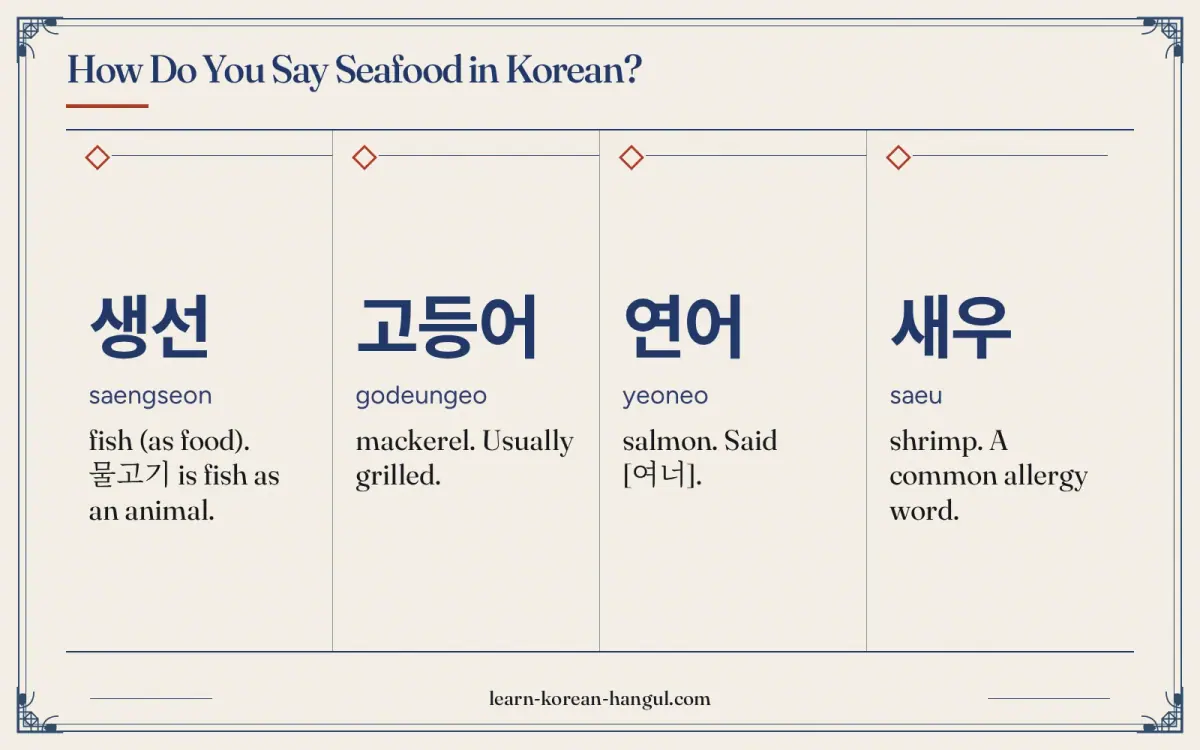
Seafood in Korea includes fish, shellfish and seaweed, and the market sells all three side by side. The general word for fish as food is 생선. Seaweed is part of daily meals, not a garnish. The detail is on the Korean Seafood Vocabulary page.
| No. | Hangul | Revised Romanization | Meaning and note | Example sentence | Audio assetId |
|---|---|---|---|---|---|
| 10 | 생선 | saengseon | fish (as food). 물고기 is fish as an animal. | 생선이 신선해요. (The fish is fresh.) | au-pg-vocabulary-food-ingredients-10; example: au-pg-vocabulary-food-ingredients-55 |
| 11 | 고등어 | godeungeo | mackerel. Usually grilled. | 고등어를 구워요. (I grill the mackerel.) | au-pg-vocabulary-food-ingredients-11; example: au-pg-vocabulary-food-ingredients-56 |
| 12 | 연어 | yeoneo | salmon. Said [여너]. | 연어를 사요. (I buy salmon.) | au-pg-vocabulary-food-ingredients-12; example: au-pg-vocabulary-food-ingredients-57 |
| 13 | 새우 | saeu | shrimp. A common allergy word. | 새우를 볶아요. (I stir-fry the shrimp.) | au-pg-vocabulary-food-ingredients-13; example: au-pg-vocabulary-food-ingredients-58 |
| 14 | 오징어 | ojingeo | squid. Fresh, dried or grilled. | 오징어를 데쳐요. (I blanch the squid.) | au-pg-vocabulary-food-ingredients-14; example: au-pg-vocabulary-food-ingredients-59 |
| 15 | 조개 | jogae | clam; shellfish. The general word for clams and similar bivalves. | 조개를 넣어요. (I put in the clams.) | au-pg-vocabulary-food-ingredients-15; example: au-pg-vocabulary-food-ingredients-60 |
| 16 | 굴 | gul | oyster. A winter seafood. | 굴을 먹어요. (I eat oysters.) | au-pg-vocabulary-food-ingredients-16; example: au-pg-vocabulary-food-ingredients-61 |
| 17 | 김 | gim | laver; seaweed. Dried sheets. | 김을 구워요. (I roast the laver.) | au-pg-vocabulary-food-ingredients-17; example: au-pg-vocabulary-food-ingredients-62 |
| 18 | 미역 | miyeok | sea mustard. Soaked before cooking. | 미역을 불려요. (I soak the seaweed.) | au-pg-vocabulary-food-ingredients-18; example: au-pg-vocabulary-food-ingredients-63 |
The seafood pair 생선 and 물고기 is worth remembering. A shopper asks for 생선, while a child looking at an aquarium points to 물고기.
Sauces and Seasonings
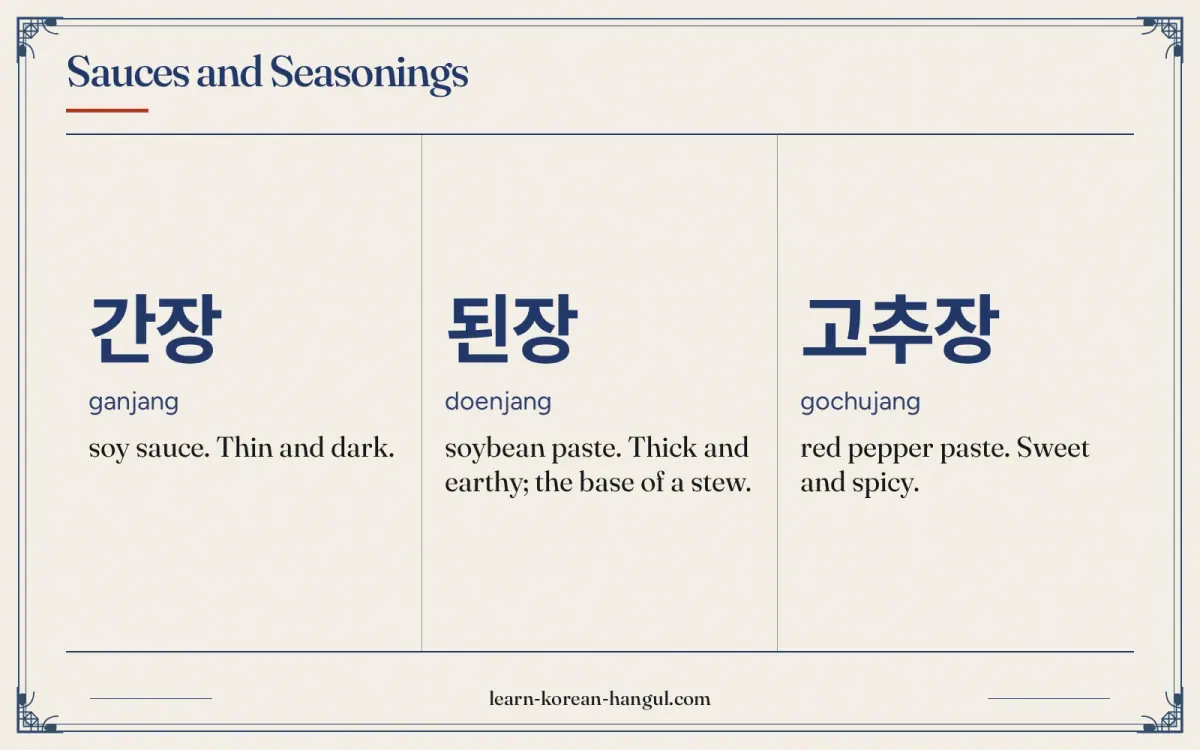
Sauces and seasonings are the pantry foundation. The three core items are 간장, 된장 and 고추장, which come from fermented soybeans. Add 참기름 and 고춧가루, and most Korean recipes can be made. The Korean Spices and Sauces Vocabulary page has the longer list.
| No. | Hangul | Revised Romanization | Meaning and note | Example sentence | Audio assetId |
|---|---|---|---|---|---|
| 19 | 간장 | ganjang | soy sauce. Thin and dark. | 간장이 짜요. (The soy sauce is salty.) | au-pg-vocabulary-food-ingredients-19; example: au-pg-vocabulary-food-ingredients-64 |
| 20 | 된장 | doenjang | soybean paste. Thick and earthy; the base of a stew. | 된장을 풀어요. (I dissolve the soybean paste.) | au-pg-vocabulary-food-ingredients-20; example: au-pg-vocabulary-food-ingredients-65 |
| 21 | 고추장 | gochujang | red pepper paste. Sweet and spicy. | 고추장이 매워요. (The red pepper paste is spicy.) | au-pg-vocabulary-food-ingredients-21; example: au-pg-vocabulary-food-ingredients-66 |
| 22 | 참기름 | chamgireum | sesame oil. A finishing oil. | 참기름 냄새가 좋아요. (The sesame oil smells good.) | au-pg-vocabulary-food-ingredients-22; example: au-pg-vocabulary-food-ingredients-67 |
| 23 | 고춧가루 | gochutgaru | red pepper flakes. Dry flakes, not paste. Said [고추까루] or [고춛까루]. | 고춧가루가 필요해요. (I need red pepper flakes.) | au-pg-vocabulary-food-ingredients-23; example: au-pg-vocabulary-food-ingredients-68 |
| 24 | 후추 | huchu | black pepper. A table spice. | 후추를 뿌려요. (I sprinkle pepper.) | au-pg-vocabulary-food-ingredients-24; example: au-pg-vocabulary-food-ingredients-69 |
| 25 | 식초 | sikcho | vinegar. Sour. | 식초가 시큼해요. (The vinegar is sour.) | au-pg-vocabulary-food-ingredients-25; example: au-pg-vocabulary-food-ingredients-70 |
| 26 | 깨 | kkae | sesame seeds. Toasted for garnish. | 깨가 고소해요. (The sesame seeds taste nutty.) | au-pg-vocabulary-food-ingredients-26; example: au-pg-vocabulary-food-ingredients-71 |
| 27 | 양념 | yangnyeom | seasoning; marinade. The general word for a flavour mix. | 양념을 섞어요. (I mix the seasoning.) | au-pg-vocabulary-food-ingredients-27; example: au-pg-vocabulary-food-ingredients-72 |
Three words lead the pantry: 간장, 된장 and 고추장. Their shared ending 장 means a fermented sauce or paste. See soy sauce in Korean for a single-word entry.
How Do You Say Basic Staples (rice, salt, sugar, tofu) in Korean?
Basic staples are the items you buy every week: rice, salt, sugar, tofu, flour, noodles and dairy. A trap here is rice. 쌀 is uncooked rice as a grain, while 밥 is cooked rice and also a meal. Shops sell 쌀 in sacks, and tables serve 밥 in bowls.
| No. | Hangul | Revised Romanization | Meaning and note | Example sentence | Audio assetId |
|---|---|---|---|---|---|
| 28 | 쌀 | ssal | uncooked rice. The grain, not the meal; cooked rice is 밥. | 쌀을 씻어요. (I wash the rice.) | au-pg-vocabulary-food-ingredients-28; example: au-pg-vocabulary-food-ingredients-73 |
| 29 | 소금 | sogeum | salt. The basic seasoning. | 소금을 넣어요. (I add salt.) | au-pg-vocabulary-food-ingredients-29; example: au-pg-vocabulary-food-ingredients-74 |
| 30 | 설탕 | seoltang | sugar. White sugar. | 설탕이 필요해요. (I need sugar.) | au-pg-vocabulary-food-ingredients-30; example: au-pg-vocabulary-food-ingredients-75 |
| 31 | 두부 | dubu | tofu. Sold fresh in blocks; 순두부 is the soft type. | 두부를 썰어요. (I slice the tofu.) | au-pg-vocabulary-food-ingredients-31; example: au-pg-vocabulary-food-ingredients-76 |
| 32 | 밀가루 | milgaru | wheat flour. 밀 (wheat) + 가루 (powder). | 밀가루로 반죽해요. (I knead dough with flour.) | au-pg-vocabulary-food-ingredients-32; example: au-pg-vocabulary-food-ingredients-77 |
| 33 | 국수 | guksu | noodles. Said [국쑤]. | 국수를 삶아요. (I boil the noodles.) | au-pg-vocabulary-food-ingredients-33; example: au-pg-vocabulary-food-ingredients-78 |
| 34 | 우유 | uyu | milk. Two even syllables. | 우유를 마셔요. (I drink milk.) | au-pg-vocabulary-food-ingredients-34; example: au-pg-vocabulary-food-ingredients-79 |
| 35 | 치즈 | chijeu | cheese. A loanword. | 치즈를 올려요. (I put cheese on top.) | au-pg-vocabulary-food-ingredients-35; example: au-pg-vocabulary-food-ingredients-80 |
| 36 | 버터 | beoteo | butter. A loanword. | 버터를 녹여요. (I melt the butter.) | au-pg-vocabulary-food-ingredients-36; example: au-pg-vocabulary-food-ingredients-81 |
For a longer look at the grain itself, see rice in Korean. The tofu words continue on the stews page, where 순두부 is a stew name.
Vegetables and Bread
Vegetables and bread finish the shopping list. Vegetables are named by type, and the general word is 채소. Bread is 빵 in general, and sliced loaf bread is 식빵. A full list of vegetables is on the Korean Vegetables Vocabulary page.
| No. | Hangul | Revised Romanization | Meaning and note | Example sentence | Audio assetId |
|---|---|---|---|---|---|
| 37 | 채소 | chaeso | vegetables. 야채 is also common. | 채소를 씻어요. (I wash the vegetables.) | au-pg-vocabulary-food-ingredients-37; example: au-pg-vocabulary-food-ingredients-82 |
| 38 | 배추 | baechu | napa cabbage. The main kimchi vegetable. | 배추가 싱싱해요. (The napa cabbage is fresh.) | au-pg-vocabulary-food-ingredients-38; example: au-pg-vocabulary-food-ingredients-83 |
| 39 | 양파 | yangpa | onion. Round onion. | 양파를 까요. (I peel the onion.) | au-pg-vocabulary-food-ingredients-39; example: au-pg-vocabulary-food-ingredients-84 |
| 40 | 마늘 | maneul | garlic. Used in most dishes. | 마늘을 넣어요. (I put in garlic.) | au-pg-vocabulary-food-ingredients-40; example: au-pg-vocabulary-food-ingredients-85 |
| 41 | 감자 | gamja | potato. Boiled, fried or in stews. | 감자를 깎아요. (I peel the potatoes.) | au-pg-vocabulary-food-ingredients-41; example: au-pg-vocabulary-food-ingredients-86 |
| 42 | 당근 | danggeun | carrot. Sweet and orange. | 당근이 달아요. (The carrot is sweet.) | au-pg-vocabulary-food-ingredients-42; example: au-pg-vocabulary-food-ingredients-87 |
| 43 | 상추 | sangchu | lettuce. Eaten as a wrap with meat. | 상추를 뜯어요. (I tear the lettuce.) | au-pg-vocabulary-food-ingredients-43; example: au-pg-vocabulary-food-ingredients-88 |
| 44 | 빵 | ppang | bread. The general word. | 빵을 구워요. (I bake bread.) | au-pg-vocabulary-food-ingredients-44; example: au-pg-vocabulary-food-ingredients-89 |
| 45 | 식빵 | sikppang | sliced bread; loaf bread. Said [식빵]; the tense ㅃ stays. | 식빵에 잼을 발라요. (I spread jam on the bread.) | au-pg-vocabulary-food-ingredients-45; example: au-pg-vocabulary-food-ingredients-90 |
식빵 is built from 식 (food) and 빵 (bread). It is the plain loaf used for sandwiches and toast. Specialty breads add their own names.
Allergy Words on Menus
Food labels and menus list the main allergens. The key phrase is 알레르기가 있어요, which means I have an allergy. Put the allergen before it: 땅콩 알레르기가 있어요 (I have a peanut allergy). Four allergen words come up most often.
| Hangul | Revised Romanization | Meaning |
|---|---|---|
| 땅콩 | ttangkong | peanut |
| 견과류 | gyeongwaryu | nuts (tree nuts) |
| 갑각류 | gapgangnyu | crustaceans |
| 유제품 | yujepum | dairy products |
These words help you read a label, but they do not replace a conversation with the staff. Use the restaurant phrases page for full requests.
How Do You Pronounce These Words?
Ingredient words contain tense sounds and linking. Standard pronunciation follows the National Institute of Korean Language (국립국어원) rules, and the romanization follows the Revised Romanization of Korean, which writes the sound you hear in some cases and the spelling in others.
| Spelling | Sounds like | What changes |
|---|---|---|
| 닭고기 | [닥꼬기] | The final ㄺ is said [ㄱ], and the ㄱ after it becomes tense [ㄲ]. |
| 국수 | [국쑤] | The ㅅ after a final ㄱ becomes a tense [ㅆ]. |
| 연어 | [여너] | The final ㄴ of 연 links to the vowel of 어. |
| 갑각류 | [갑깡뉴] | The ㄱ after a final ㅂ is tense; the ㄹ of 류 becomes [ㄴ] after ㄱ, and that ㄱ then becomes [ㅇ]. |
| 식빵 | [식빵] | The ㅂ after a final ㄱ is already tense; the final ㄱ is held. |
When you say a tense consonant, keep your throat tight and let very little air out. That tightness is the difference between 빵 and 방.
Audio and Slow Playback
Each word and sentence has its own clip. The five clips below replay the hardest words slowly. Play one, repeat it aloud, then play it again and compare.
What Mistakes Do Learners Make with Ingredient Words?
Five mistakes appear often.
- Using 밥 for raw rice. 밥 is cooked rice or a meal. Raw rice is 쌀.
- Using 물고기 for fish on the menu. 물고기 is the living animal. As food, say 생선.
- Thinking 계란 and 달걀 are different things. They both mean egg. One is Sino-Korean, the other native.
- Mixing 고추장 and 고춧가루. The paste is wet and the flakes are dry.
- Using 야채 and 채소 as if only one is right. Both are used. 채소 is the form recommended for writing, and 야채 is common in speech.
Fixing these keeps your shopping list accurate. For one word at a time, see egg in Korean.
Practice: Flashcards and Worksheet
Study in three steps. First, run the flashcard deck in recognition mode until you recognise all 45 words. Second, switch to listening mode. Third, take the quiz. The deck holds all 45 words with audio, and your progress stays in your browser. The vocabulary flashcard decks page lists the other decks.
Practice · 95
- 01소고기
Show answer
headword 1: beef
- 02돼지고기
Show answer
headword 2: pork
- 03닭고기
Show answer
headword 3: chicken (meat)
- 04계란
Show answer
headword 4: egg
- 05달걀
Show answer
headword 5: egg
- 06흰자
Show answer
headword 6: egg white
- 07노른자
Show answer
headword 7: egg yolk
- 08햄
Show answer
headword 8: ham
- 09소시지
Show answer
headword 9: sausage
- 10생선
Show answer
headword 10: fish (as food)
- 11고등어
Show answer
headword 11: mackerel
- 12연어
Show answer
headword 12: salmon
- 13새우
Show answer
headword 13: shrimp
- 14오징어
Show answer
headword 14: squid
- 15조개
Show answer
headword 15: clam; shellfish
- 16굴
Show answer
headword 16: oyster
- 17김
Show answer
headword 17: laver; seaweed
- 18미역
Show answer
headword 18: sea mustard
- 19간장
Show answer
headword 19: soy sauce
- 20된장
Show answer
headword 20: soybean paste
- 21고추장
Show answer
headword 21: red pepper paste
- 22참기름
Show answer
headword 22: sesame oil
- 23고춧가루
Show answer
headword 23: red pepper flakes
- 24후추
Show answer
headword 24: black pepper
- 25식초
Show answer
headword 25: vinegar
- 26깨
Show answer
headword 26: sesame seeds
- 27양념
Show answer
headword 27: seasoning; marinade
- 28쌀
Show answer
headword 28: uncooked rice
- 29소금
Show answer
headword 29: salt
- 30설탕
Show answer
headword 30: sugar
- 31두부
Show answer
headword 31: tofu
- 32밀가루
Show answer
headword 32: wheat flour
- 33국수
Show answer
headword 33: noodles
- 34우유
Show answer
headword 34: milk
- 35치즈
Show answer
headword 35: cheese
- 36버터
Show answer
headword 36: butter
- 37채소
Show answer
headword 37: vegetables
- 38배추
Show answer
headword 38: napa cabbage
- 39양파
Show answer
headword 39: onion
- 40마늘
Show answer
headword 40: garlic
- 41감자
Show answer
headword 41: potato
- 42당근
Show answer
headword 42: carrot
- 43상추
Show answer
headword 43: lettuce
- 44빵
Show answer
headword 44: bread
- 45식빵
Show answer
headword 45: sliced bread; loaf bread
- 46소고기는 비싸요.
Show answer
example for 소고기
- 47돼지고기를 구워요.
Show answer
example for 돼지고기
- 48닭고기는 담백해요.
Show answer
example for 닭고기
- 49계란 두 개 주세요.
Show answer
example for 계란
- 50달걀을 삶아요.
Show answer
example for 달걀
- 51흰자만 따로 담아요.
Show answer
example for 흰자
- 52노른자는 노래요.
Show answer
example for 노른자
- 53햄을 구워요.
Show answer
example for 햄
- 54소시지를 먹어요.
Show answer
example for 소시지
- 55생선이 신선해요.
Show answer
example for 생선
- 56고등어를 구워요.
Show answer
example for 고등어
- 57연어를 사요.
Show answer
example for 연어
- 58새우를 볶아요.
Show answer
example for 새우
- 59오징어를 데쳐요.
Show answer
example for 오징어
- 60조개를 넣어요.
Show answer
example for 조개
- 61굴을 먹어요.
Show answer
example for 굴
- 62김을 구워요.
Show answer
example for 김
- 63미역을 불려요.
Show answer
example for 미역
- 64간장이 짜요.
Show answer
example for 간장
- 65된장을 풀어요.
Show answer
example for 된장
- 66고추장이 매워요.
Show answer
example for 고추장
- 67참기름 냄새가 좋아요.
Show answer
example for 참기름
- 68고춧가루가 필요해요.
Show answer
example for 고춧가루
- 69후추를 뿌려요.
Show answer
example for 후추
- 70식초가 시큼해요.
Show answer
example for 식초
- 71깨가 고소해요.
Show answer
example for 깨
- 72양념을 섞어요.
Show answer
example for 양념
- 73쌀을 씻어요.
Show answer
example for 쌀
- 74소금을 넣어요.
Show answer
example for 소금
- 75설탕이 필요해요.
Show answer
example for 설탕
- 76두부를 썰어요.
Show answer
example for 두부
- 77밀가루로 반죽해요.
Show answer
example for 밀가루
- 78국수를 삶아요.
Show answer
example for 국수
- 79우유를 마셔요.
Show answer
example for 우유
- 80치즈를 올려요.
Show answer
example for 치즈
- 81버터를 녹여요.
Show answer
example for 버터
- 82채소를 씻어요.
Show answer
example for 채소
- 83배추가 싱싱해요.
Show answer
example for 배추
- 84양파를 까요.
Show answer
example for 양파
- 85마늘을 넣어요.
Show answer
example for 마늘
- 86감자를 깎아요.
Show answer
example for 감자
- 87당근이 달아요.
Show answer
example for 당근
- 88상추를 뜯어요.
Show answer
example for 상추
- 89빵을 구워요.
Show answer
example for 빵
- 90식빵에 잼을 발라요.
Show answer
example for 식빵
- 91닭고기
Show answer
slow playback: 닭고기
- 92국수
Show answer
slow playback: 국수
- 93연어
Show answer
slow playback: 연어
- 94식빵
Show answer
slow playback: 식빵
- 95갑각류
Show answer
slow playback: 갑각류
Practice · 6
What does 소고기 (sogogi) mean?
Show answer
beef
소고기 means beef. Example: 소고기는 비싸요. (Beef is expensive.)
What does 햄 (haem) mean?
Show answer
ham
햄 means ham. Example: 햄을 구워요. (I fry the ham.)
What does 조개 (jogae) mean?
Show answer
clam; shellfish
조개 means clam; shellfish. Example: 조개를 넣어요. (I put in the clams.)
What does 참기름 (chamgireum) mean?
Show answer
sesame oil
참기름 means sesame oil. Example: 참기름 냄새가 좋아요. (The sesame oil smells good.)
What does 소금 (sogeum) mean?
Show answer
salt
소금 means salt. Example: 소금을 넣어요. (I add salt.)
What does 버터 (beoteo) mean?
Show answer
butter
버터 means butter. Example: 버터를 녹여요. (I melt the butter.)
Korean Ingredients Vocabulary Worksheet (PDF)
A printable worksheet for these words (word list, matching, writing practice, fill-in-the-blank exercises and answer key) is available in A4 and US Letter from the download card on this page. For practice, write a five-item shopping list in Korean from this page.
Pages in This Section
Three deeper lists expand the topics on this page. Each has its own audio, deck and quiz.
- Korean Meat Vocabulary: 30 words for beef, pork, chicken, cuts and cooking styles, built on the animal + 고기 pattern.
- Korean Seafood Vocabulary: 30 words for fish, shellfish, squid, seaweed and the fish market, including the four pollock names.
- Korean Spices and Sauces Vocabulary: 30 words for pastes, spices, oils, sweeteners and dips, from 고추장 to 초간장.
Where to Go Next
Once the core Korean ingredients vocabulary feels familiar, move from raw foods to drinks and finished dishes. After this page, continue with Drinks. To see the full food topic, return to Food and Drink. The Korean Dishes page shows how these ingredients become meals.
Frequently Asked Questions
How Do You Say Ingredients in Korean?
Ingredients is 재료 (jaeryo) and food ingredients is 식재료 (sikjaeryo). A recipe lists its 재료 first, then the steps. This page lists the names of common ingredients and groups them like supermarket aisles. Ask 재료가 뭐예요? to find out what is in a dish.
What Is the Difference between 계란 and 달걀?
They both mean egg. 달걀 is the native Korean word and 계란 is the Sino-Korean word. Both are used in shops and recipes, and both are understood. The single-word page on egg in Korean covers the pair.
What Is the Difference between 쌀 and 밥?
쌀 is uncooked rice, the grain you buy in a bag. 밥 is cooked rice, and it also means a meal. A sentence like 밥 먹었어요? asks if you have eaten, and 쌀 would not fit it.
Which Sauces Should I Learn First?
Start with 간장 (soy sauce), 된장 (soybean paste) and 고추장 (red pepper paste). They are the core of the Korean pantry. The ending 장 marks a fermented sauce or paste, and the deeper page lists more. With 참기름 and 고춧가루 added, you can cook most everyday Korean dishes.
How Do I Say I Have a Food Allergy in Korean?
Say the allergen, then 알레르기가 있어요. For peanuts, 땅콩 알레르기가 있어요 means I have a peanut allergy. The page lists four common allergen words. For a full request, use the restaurant phrases page. A written card with the Korean word is safer than speech in a busy kitchen.
Is the Romanization on This Page Official?
It follows the Revised Romanization of Korean, which South Korea adopted on 7 July 2000 and whose rules the National Institute of Korean Language (국립국어원) publishes. It is a learning aid, so rely on the Hangul and the audio.