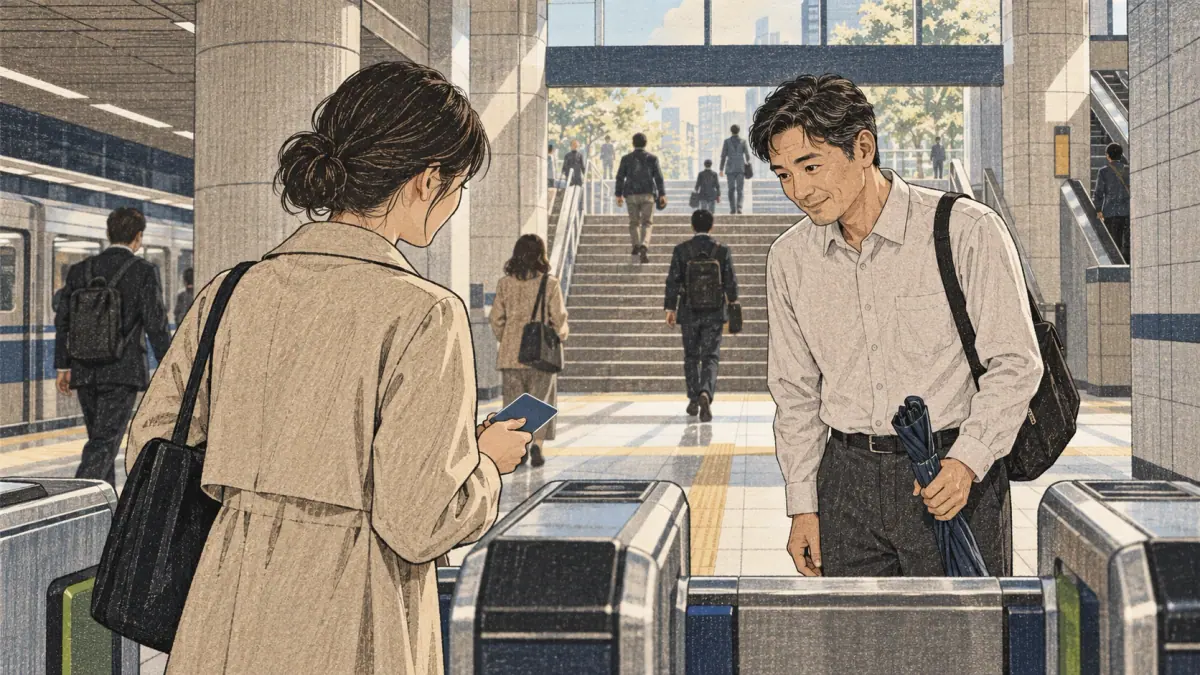
What Are the Most Useful Korean Greetings to Learn First?
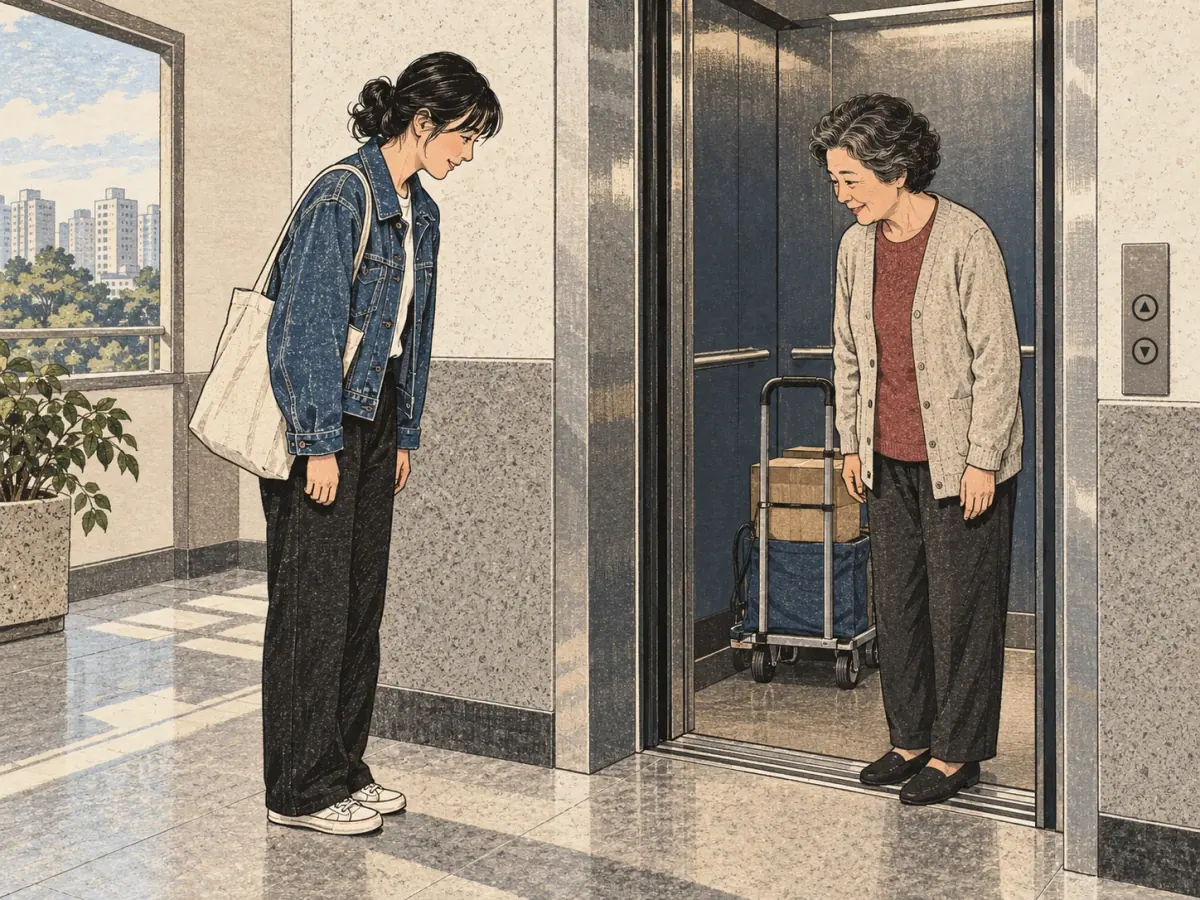
Learn five greetings first: 안녕하세요 (annyeonghaseyo, hello), 안녕히 가세요 (annyeonghi gaseyo, goodbye), 좋은 아침이에요 (joeun achimieyo, good morning), 잘 지내세요? (jal jinaeseyo, how are you) and 안녕히 주무세요 (annyeonghi jumuseyo, good night). Together they cover meeting, leaving, morning, small talk and bedtime.
| Order | Situation | Korean | Revised Romanization | Page |
|---|---|---|---|---|
| 1 | Meeting someone | 안녕하세요 | annyeonghaseyo | hello in Korean |
| 2 | Leaving | 안녕히 가세요 | annyeonghi gaseyo | goodbye in Korean |
| 3 | Morning | 좋은 아침이에요 | joeun achimieyo | good morning in Korean |
| 4 | Small talk | 잘 지내세요? | jal jinaeseyo | how are you in Korean |
| 5 | Bedtime | 안녕히 주무세요 | annyeonghi jumuseyo | good night in Korean |
Revised Romanization (the South Korean government standard of 2000) is shown only as a reading aid. Learn the Hangul first. Korean also has one hello for the whole day: 안녕하세요 works in the morning, afternoon and evening, so time-of-day phrases such as 좋은 아침 sound translated when spoken to a coworker. The next section explains how to pick the form for each listener.
How Do You Choose between Formal, Polite and Casual Korean Greetings?
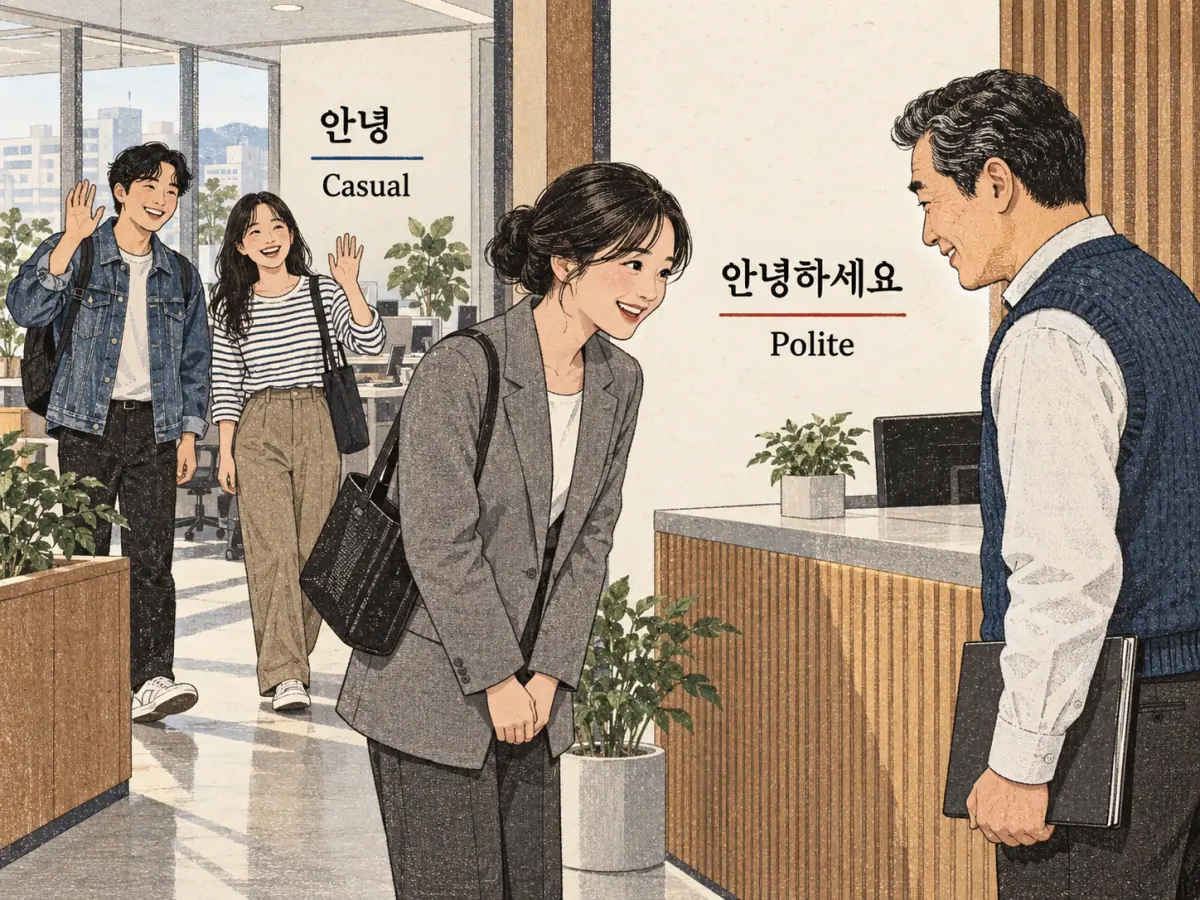
Pick the greeting by the situation first (meeting, leaving, sleeping), then by the listener: 안녕하세요 for almost everyone, 안녕 only for friends. Korean grammar marks the listener with three styles, and the page on Korean speech levels explains them in depth. The polite style (해요체) is the safe default, the casual style (해체) is for close friends and younger people, and the formal style (합쇼체) is for speeches and news.
| Situation | Polite (safe default) | Casual (friends) | Formal (speeches) |
|---|---|---|---|
| Hello | 안녕하세요 | 안녕 | 안녕하십니까 |
| Goodbye to the person leaving | 안녕히 가세요 | 잘 가 | 안녕히 가십시오 |
| Goodbye to the person staying | 안녕히 계세요 | 잘 있어 | 안녕히 계십시오 |
| Good night | 안녕히 주무세요 | 잘 자 | 안녕히 주무십시오 |
| How are you | 잘 지내세요? | 잘 지내? | 잘 지내십니까? |
Choosing the style is only half the work. Some Korean greetings are built on questions, and some belong to the home, so the next section covers both.
Question Greetings and Home Rituals in Korean
Korean often greets people by checking on them. A question such as 잘 지내세요? (jal jinaeseyo?, "are you doing well?") or 밥 먹었어요? (bap meogeosseoyo?, "have you eaten?") acts like hello between people who know each other, and the listener answers with a short report instead of repeating the question. The meal question is a caring opener, much as "how are you" is in English.
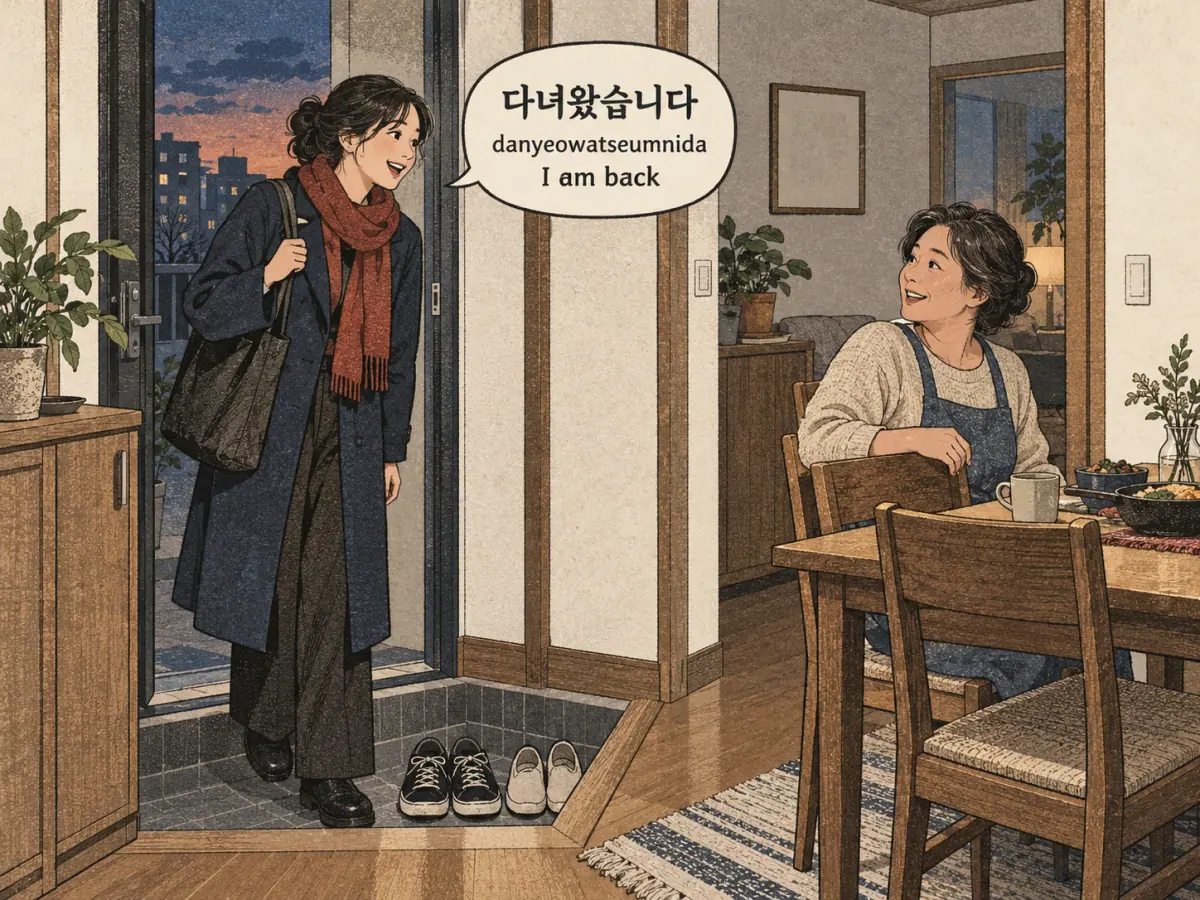
Home rituals are the second group. A person who comes home says 다녀왔습니다 (danyeowatseumnida, "I have been out and I am back"), and a person who leaves says 다녀올게요 (danyeoolgeyo, "I will go and come back"), to which the family answers 다녀오세요 (danyeooseyo, "go and come back"). No English greeting list covers these pairs, and they appear in the guide to I'm home in Korean and the other cards below.
All Korean Greetings Guides
The list below has all 20 guides, each with its lead phrase and a short audio clip. Start with the five main pages, then use the alphabetical list for the rest. Every guide follows the same layout: a quick answer, a register table, pronunciation with audio, usage scenes, short dialogues and common mistakes. The Korean phrases hub holds the other situation clusters.
Start Here
Hello in Korean
The lead phrase is 안녕하세요 (annyeonghaseyo), which means "hello." The polite hello that works at any hour and with any listener. Close friends and younger people hear the casual 안녕 (annyeong) instead. The page covers both and the formal 안녕하십니까.
Goodbye in Korean
The lead phrase is 안녕히 가세요 (annyeonghi gaseyo), which means "goodbye to the person leaving." Korean has two polite goodbyes. You say 안녕히 가세요 to the person who is leaving and 안녕히 계세요 (annyeonghi gyeseyo) to the person who stays. The page shows how to pick the right one by who walks away.
Good Morning in Korean
The lead phrase is 좋은 아침이에요 (joeun achimieyo), which means "good morning." A polite phrase that sounds natural in messages and broadcasts. In speech, most people say 안녕하세요 or ask 잘 잤어요? (did you sleep well?). The page ranks four morning forms by listener.
How Are You in Korean
The lead phrase is 잘 지내세요? (jal jinaeseyo), which means "how are you." A polite question for someone you have met before. It literally asks whether the person is getting along well. The page lists casual and formal versions and the replies that go with each.
Good Night in Korean
The lead phrase is 안녕히 주무세요 (annyeonghi jumuseyo), which means "good night." The respectful wish you give to an elder before sleep, using the honorific verb 주무시다 (to sleep). Friends say 잘 자 (jal ja). The page covers both and the reply.
More Phrases
The remaining 15 guides are listed in alphabetical order.
Come In
The lead phrase is 들어오세요 (deureooseyo), which means "please come in." The invitation to step through a door, with a formal form 들어오십시오 and a casual 들어와. The page adds the shoes-at-the-entrance custom and the 들어오다 versus 들어가다 difference.
Good Afternoon
The lead phrase is 안녕하세요 (annyeonghaseyo), which means "hello, used in the afternoon." Korean has no everyday spoken phrase that means only good afternoon. The page explains why 안녕하세요 works and when the lunch question 점심 먹었어요? takes its place.
Good Evening
The lead phrase is 안녕하세요 (annyeonghaseyo), which means "hello, used in the evening." The same hello works all evening, while 좋은 저녁입니다 belongs to announcements. The page also covers the dinner question 저녁 드셨어요?.
Have a Good Day
The lead phrase is 좋은 하루 보내세요 (joeun haru bonaeseyo), which means "have a good day." A polite wish used when leaving a shop or ending a call, with the common variant 좋은 하루 되세요. The page explains which listeners suit each form.
Have a Nice Weekend
The lead phrase is 주말 잘 보내세요 (jumal jal bonaeseyo), which means "have a good weekend." The Friday wish between coworkers, paired with the Monday question 주말 잘 보냈어요?. The page shows when 수고하세요 fits better.
Have a Safe Trip
The lead phrase is 조심히 가세요 (josimhi gaseyo), which means "go carefully, have a safe trip." A caring goodbye for someone heading out on the road or a journey. The page compares it with 안녕히 가세요 and gives the replies.
I'm Fine
The lead phrase is 잘 지내요 (jal jinaeyo), which means "I am doing well." The standard answer to how are you. The page lists polite and casual answers, and shows how to say 그저 그래요 (so-so) when things are average.
I'm Home
The lead phrase is 다녀왔습니다 (danyeowatseumnida), which means "I am back." A home ritual that no English greeting matches. The person who comes back says 다녀왔습니다, and the person at home answers. The page covers the matching 다녀오세요 for someone leaving.
Long Time No See
The lead phrase is 오랜만이에요 (oraenmanieyo), which means "it has been a while." The polite line for meeting someone after a long gap. The page gives casual and formal versions and the follow-up questions people ask next.
See You Later
The lead phrase is 나중에 봐요 (najunge bwayo), which means "see you later." A relaxed polite goodbye for a meeting later the same day or another day. The page separates it from the more specific tomorrow and soon forms.
See You Soon
The lead phrase is 곧 봐요 (got bwayo), which means "see you soon." A short polite line for a meeting expected in the near future. The page shows the casual form and the sound change in 곧.
See You Tomorrow
The lead phrase is 내일 봐요 (naeil bwayo), which means "see you tomorrow." A clear polite goodbye with a fixed meeting day. The page covers casual and formal forms and the way to name other days.
Take Care
The lead phrase is 몸조심하세요 (momjosimhaseyo), which means "take care of yourself." A caring wish for someone who is ill, travelling or working hard. The page explains how it differs from the plain goodbye.
Welcome
The lead phrase is 어서 오세요 (eoseo oseyo), which means "welcome." What shop staff and hosts say as you arrive. The page separates it from the reply you give and from 환영합니다 (hwanyeonghamnida) in announcements.
What's Up
The lead phrase is 뭐 해요? (mwo haeyo), which means "what are you doing." A friendly opener that literally asks what someone is doing. The page covers the casual 뭐 해? and when the question is a real one.
How Do You Practise Korean Greetings?
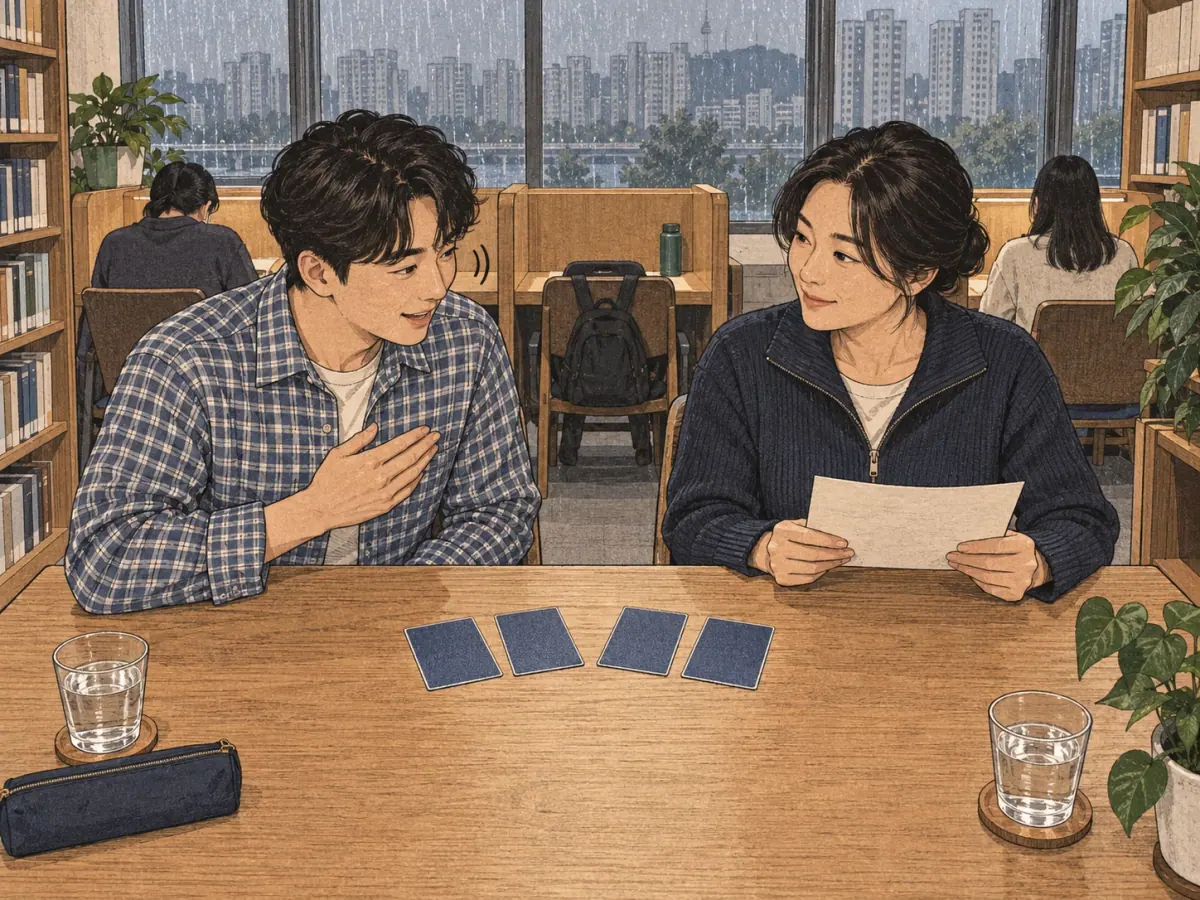
Greetings improve fastest when you hear them, say them and switch the listener on purpose. Use this routine for ten minutes a day:
- Play the clip beside a greeting above and repeat it twice, matching the speed.
- Say the polite form, then the casual form, and name a listener for each.
- Cover the Romanization and read the Hangul alone.
- Drill the cluster with the phrase flashcards, which pair each phrase with audio.
Ten minutes spread across a week beats one long session, because greetings are short and need to come out without thought. After practice, watch for the mistakes below.
What Mistakes Do Learners Make with Korean Greetings?
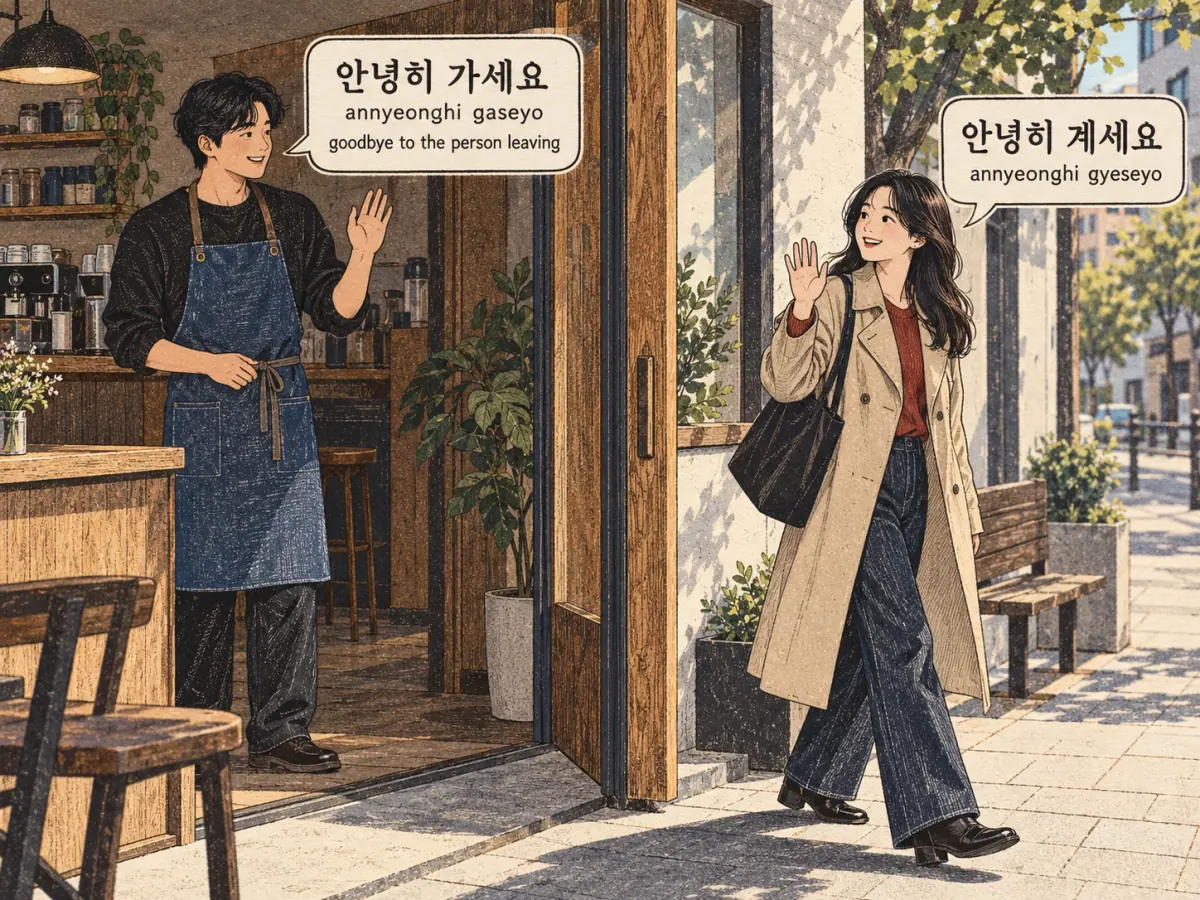
Learners most often mix up the two goodbyes: 안녕히 가세요 goes to the person leaving, and 안녕히 계세요 goes to the person staying. Four more mistakes appear often:
- Translating good morning word for word. Fix: say 안녕하세요 in speech and keep 좋은 아침이에요 for messages.
- Using 안녕 with a teacher or boss. The casual form is rude to a senior person. Fix: use 안녕하세요.
- Dropping the 요 or 세요 ending. Fix: keep it with anyone who is not a close friend.
- Expecting a separate word for afternoon and evening. Fix: use 안녕하세요 for both.
Each fix comes from picking the listener first and the words second. The questions below cover details that the cards do not.
Frequently Asked Questions
The answers below add details about Korean greetings beyond the guides above.
What is the most common greeting in Korean?
안녕하세요 (annyeonghaseyo) is the most common greeting in Korean. It means "hello," it is polite, and it works in the morning, afternoon and evening with strangers, elders, coworkers and most friends. Only very close friends and younger people use the casual 안녕 instead.
Is there a Korean word for good afternoon?
There is a written form, 좋은 오후예요 (joeun ohuyeyo), but it is rare in speech. In daily life Koreans say 안녕하세요 in the afternoon, and coworkers may ask 점심 먹었어요? ("have you eaten lunch?") as a friendly opener. The good afternoon page explains both.
When do I say annyeong instead of annyeonghaseyo?
Use 안녕 (annyeong) with close friends, siblings and people younger than you. It works as both hello and goodbye in casual speech. Never use it with a teacher, a boss or an elder, because the polite 안녕하세요 is expected, and dropping the ending sounds rude.
Do Koreans bow when they greet?
Many Koreans give a small bow or nod with a greeting, and the bow gets deeper with age, rank and formality. Friends of the same age often just wave or nod. In business, a handshake can come with a light bow. When unsure, a small nod with 안녕하세요 is safe.
What do Koreans say when they answer the phone?
The classic phone greeting is 여보세요 (yeoboseyo), which means "hello" on the phone only. At work, people often answer with the company name and a polite phrase instead. Learners can use 여보세요 for personal calls and 안녕하세요 once they know who is calling.